
A threat hunter reviewing outbound proxy and session logs notices internal workstations establishing recurring TLS connections directly to external public resolver addresses on port 443 while internal DNS logs show no matching lookups. Which activity does this pattern most likely represent?
Select an answer to reveal the explanation.
Short Explanation
When your workstations start whispering directly to outside directories over encrypted web ports, your internal DNS logs go dark. Adversaries and unauthorized tools use encrypted name resolution to slip past domain monitoring, so never assume port 443 traffic is ordinary web browsing.
Full Explanation
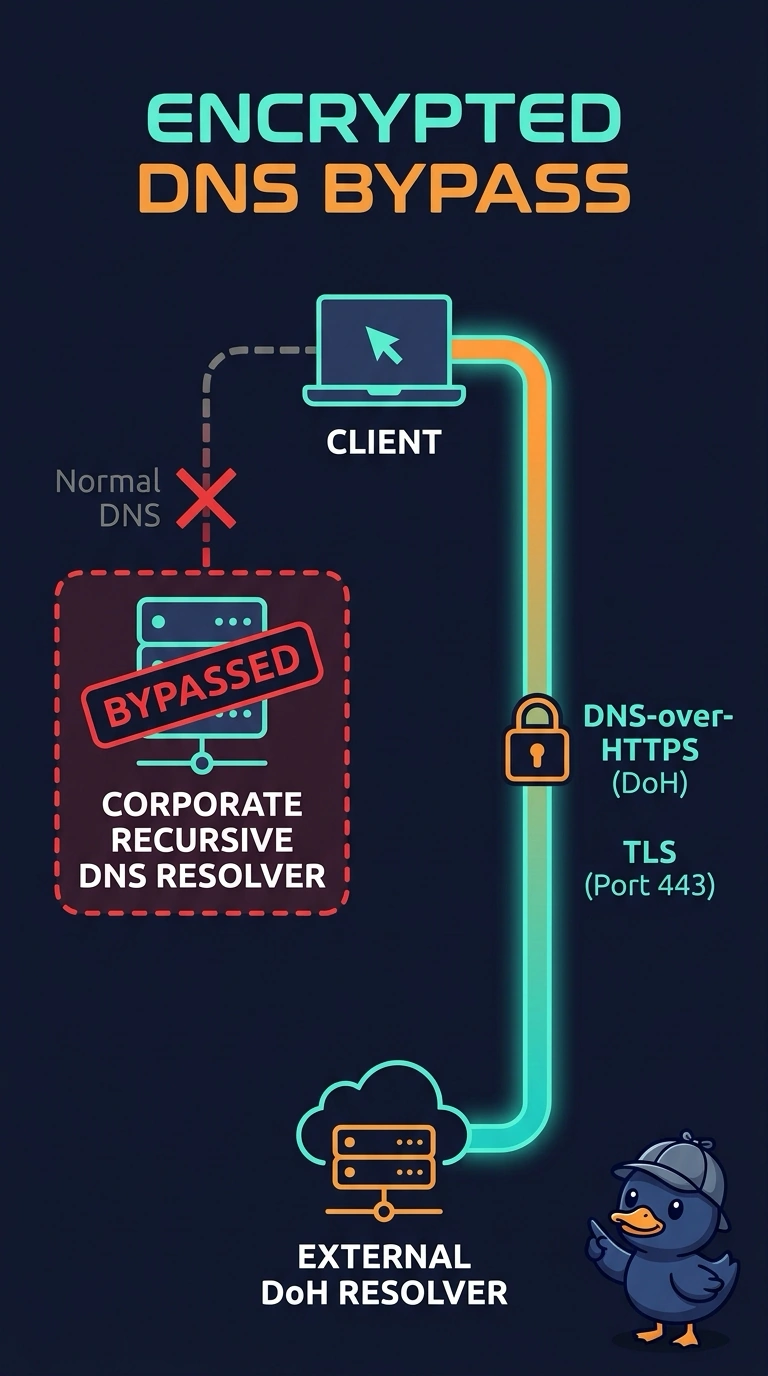
Direct port 443 sessions to external public resolvers alongside missing internal lookup records indicate encrypted DNS-over-HTTPS queries bypassing the corporate recursive DNS resolver. Because the queries are wrapped inside standard HTTPS traffic, traditional UDP port 53 sensors and internal DNS logging lose visibility into which domains compromised hosts are resolving. Routine internal DHCP lease renewals broadcast across the local workstation VLAN occur locally on UDP ports rather than over external TLS sessions. Authorized software updates fetched directly from the corporate patch server stay on internal network segments instead of contacting external public resolvers. Standard internal Kerberos ticket requests directed to the primary domain controller also remain internal and use authentication ports rather than external HTTPS connections. As a caveat, modern browsers sometimes enable encrypted DNS features by default, so not every match is malicious. For an operational check, correlate those external TLS destinations with endpoint process-creation logs to verify whether a browser or an unexpected binary initiated the connection.