
A threat hunter queries SIEM telemetry to uncover lateral movement across internal Windows servers where an adversary uses valid administrative credentials to execute commands remotely. Which event correlation best reveals this technique?
Select an answer to reveal the explanation.
Short Explanation
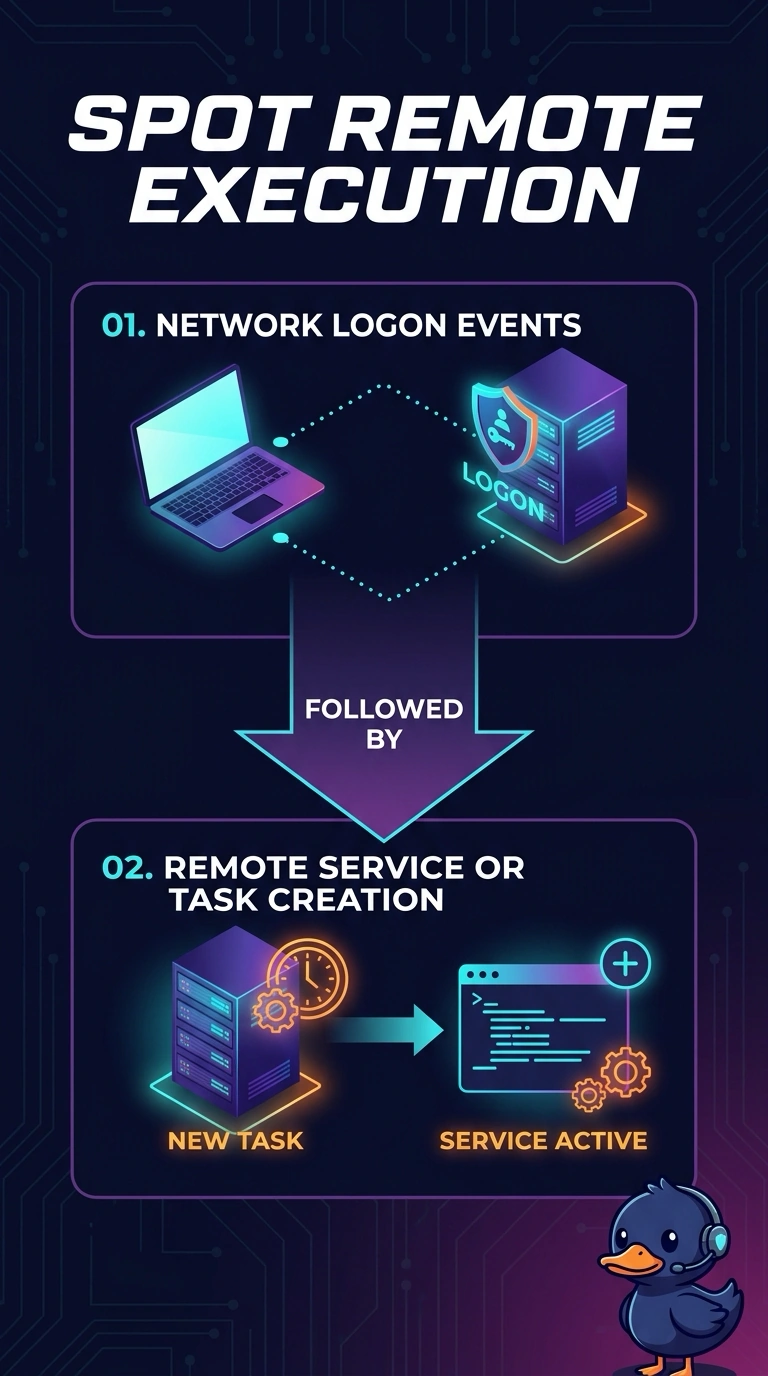
When valid credentials cross the network and immediately spin up a new service or scheduled task, you are likely watching lateral execution in motion. The trap is focusing on failed logins when attackers already hold working keys.
Full Explanation
Correlating Network logon events followed by remote service or task creation directly exposes remote command execution performed with valid administrative credentials. Attackers frequently authenticate over network protocols to a target server and then register a temporary service or scheduled task to launch payloads under system privileges without interactive desktop access. Looking for Successful local console logons followed by normal browser launches reflects routine interactive user activity rather than remote server-to-server lateral movement. Tracking Failed VPN authentication attempts followed by account lockouts highlights external brute-force or password-guessing noise, not successful internal execution using valid credentials. Reviewing Routine patch-management reboots followed by antivirus updates captures expected maintenance behavior rather than adversary-driven task or service creation. As a caveat, legitimate systems-management tools also create remote services during software deployment, so baselines are essential. Perform an operational check by filtering out known management servers and investigating any unexpected source workstations initiating remote service creation.