
During a cloud-native threat hunt, an analyst suspects an intruder gained administrative API access and is trying to blind security monitoring before exfiltrating data. Which cloud control-plane audit event most strongly indicates this defense-evasion technique?
Select an answer to reveal the explanation.
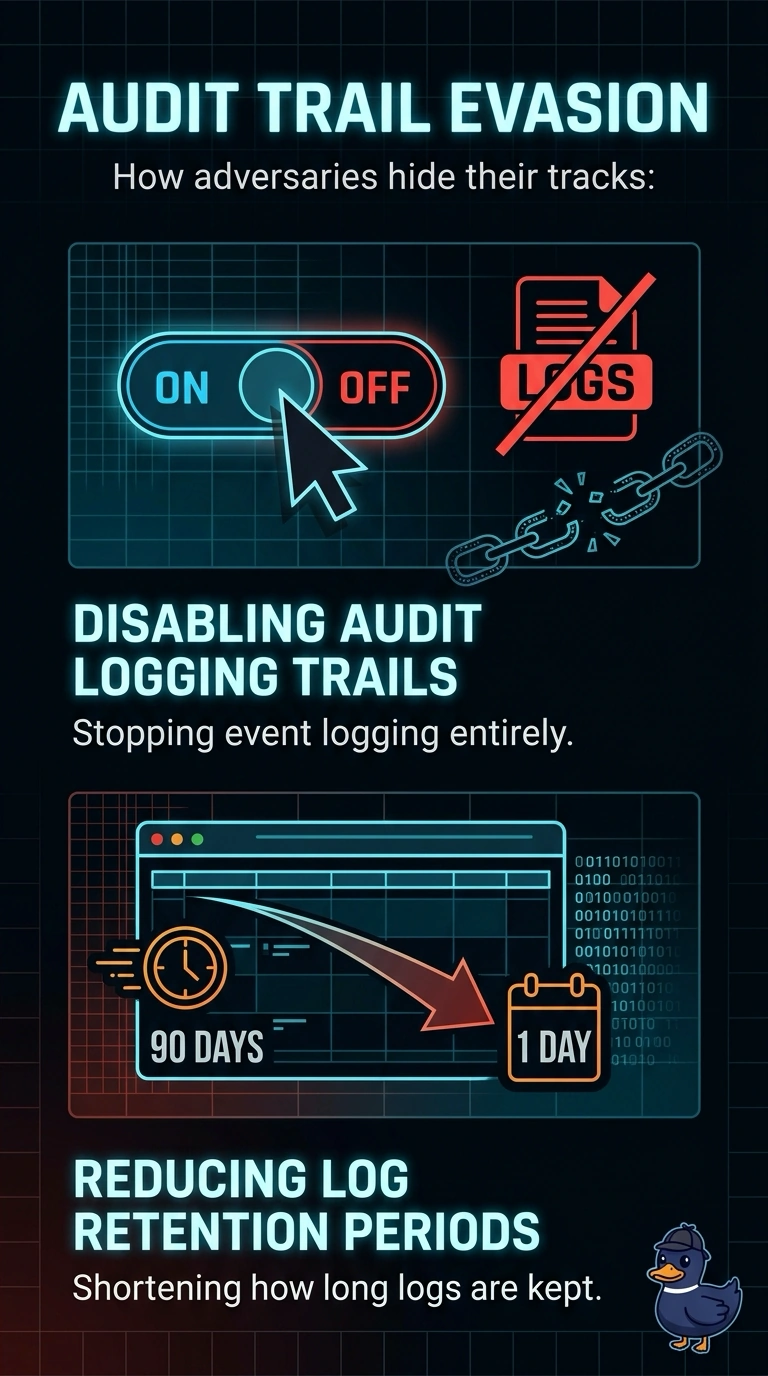
Short Explanation
If an intruder breaks into your cloud control plane, one of their first moves is turning off the security cameras before touching sensitive data. The trap is chasing routine autoscaling or certificate maintenance while missing an explicit API call that stops audit logging.
Full Explanation
Disabling audit logging trails or reducing log retention periods directly indicates cloud defense evasion because an adversary with elevated management permissions attempts to suppress future API telemetry or accelerate log deletion before performing data access. Routine autoscaling of stateless web compute instances reflects normal elasticity driven by workload demand and does not impair visibility. Normal read-only listing of public object storage buckets may represent expected application behavior or basic discovery rather than deliberate monitoring sabotage. Scheduled rotation of TLS certificates on load balancers is standard cryptographic hygiene that maintains secure communications without blinding audit trails. As a caveat, legitimate cloud administrators may occasionally modify logging configurations during migrations or cost-optimization reviews, so actor identity and change tickets must be correlated. As an operational check, configure immutable, cross-account log archiving and alert immediately whenever control-plane API calls modify or stop audit trail collection.