
A threat hunter investigates suspected data theft in a cloud environment where endpoint agents and network firewalls around a production database show no anomalous outbound transfers. Which cloud control-plane audit activity could explain how an attacker stole the data?
Select an answer to reveal the explanation.
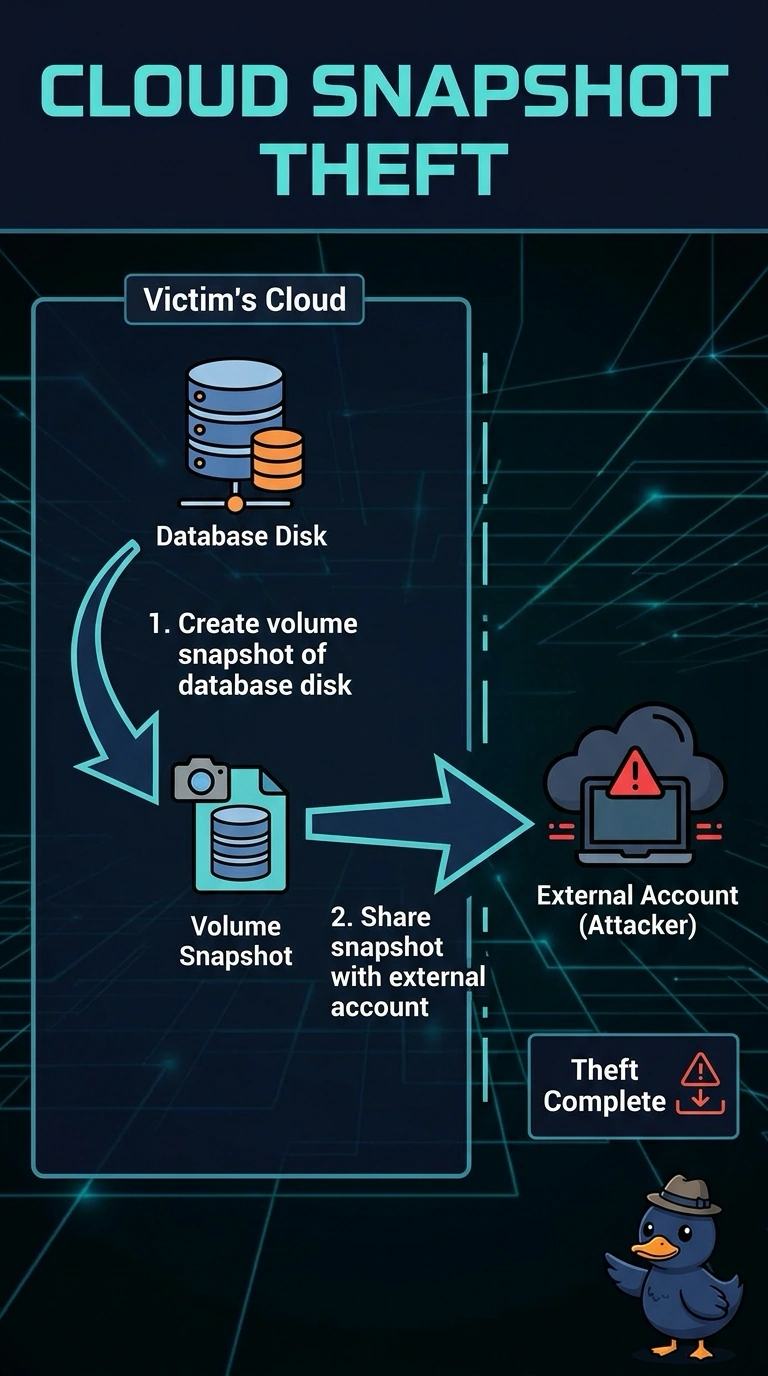
Short Explanation
Why sneak files past your firewall when an attacker with cloud admin rights can photocopy the entire hard drive and hand it to an outside account? The trap is staring only at network egress and endpoint agents while your cloud control-plane logs hold the real story.
Full Explanation
In cloud environments, adversaries with compromised IAM permissions can exfiltrate storage volumes via management APIs without OS-level reads or VPC traffic from the database host. Creating a volume snapshot of the database disk and sharing it with an external account is the exfiltration path. Sharing changes snapshot access permissions; the recipient can then create a volume or copy/read accessible snapshot data without guest-host egress. Sharing alone is not a copy event, and encrypted snapshots additionally require usable customer-managed KMS-key permissions; snapshots encrypted with the default AWS-managed key cannot be shared directly. Routine automated health checks polling the load balancer over internal private addresses are availability probes that move no database data outward. Scheduled operating system package updates installed from the cloud provider repository pull packages inbound rather than exfiltrating disks. Normal TLS certificate renewal on the public-facing web application gateway configuration only refreshes edge credentials without exposing backend volume data. Caveat: legitimate disaster-recovery may copy snapshots to secondary accounts owned by the same organization, so verify destination IDs against approved lists. Operational check: query control-plane audit logs for snapshot creation, encryption-key policy edits, and cross-account share calls.