
A threat hunter inspects network session and application-protocol metadata from an internal corporate segment and notices sustained TLS-encrypted connections originating from a workstation to an external host over TCP port 4444. Which analytical conclusion best guides the next investigative step?
Select an answer to reveal the explanation.
Short Explanation
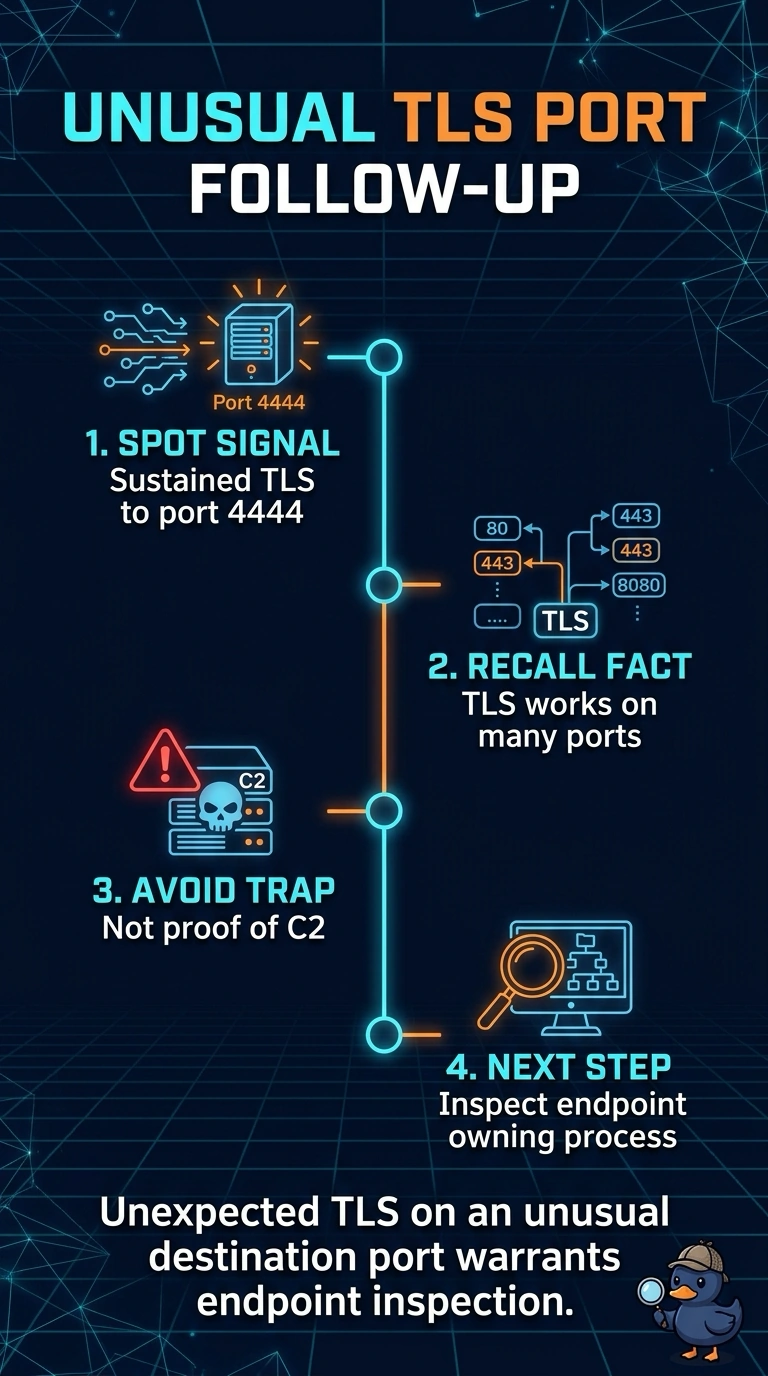
You spot sustained TLS to an external host on 4444 and you know to look closer at the source endpoint! Remember TLS can use many ports; 4444 alone is not a protocol violation or proof of C2, so verify the owning process before you escalate.
Full Explanation
Threat hunters use session and protocol metadata to prioritize follow-up even when encryption hides the application payload. Recognizing that Unexpected TLS on an unusual destination port warrants endpoint inspection directs the analyst to correlate the network socket with the exact local binary, parent process, and user context on the workstation. TLS can use many ports; 4444 alone is not a protocol violation or proof of C2. Per RFC 8446 TLS is not restricted to port 443. Assuming The traffic is guaranteed to be benign because encryption prevents payload inspection is a dangerous blind spot, since adversaries routinely wrap C2 traffic in TLS to evade payload signatures. Concluding The workstation is performing standard domain name resolution for internal services is incorrect because standard DNS uses port 53 to internal or designated resolvers rather than sustained external TLS sessions on port 4444. Assuming The connection represents an authorized software update using a reserved system port is flawed because TCP port 4444 is not a well-known reserved system port and software updates typically use standard HTTPS over port 443. Caveat: developer or remote-support tools sometimes use non-standard ports legitimately, so verify the originating binary before isolating the host. Operational check: query endpoint process and network telemetry for port 4444 to identify the owning executable.