
A threat hunter reviewing Windows domain controller authentication logs spots a standard user workstation requesting dozens of Kerberos service tickets for unrelated application service accounts within minutes, many negotiating legacy RC4 encryption. Which activity does this indicate?
Select an answer to reveal the explanation.
Short Explanation
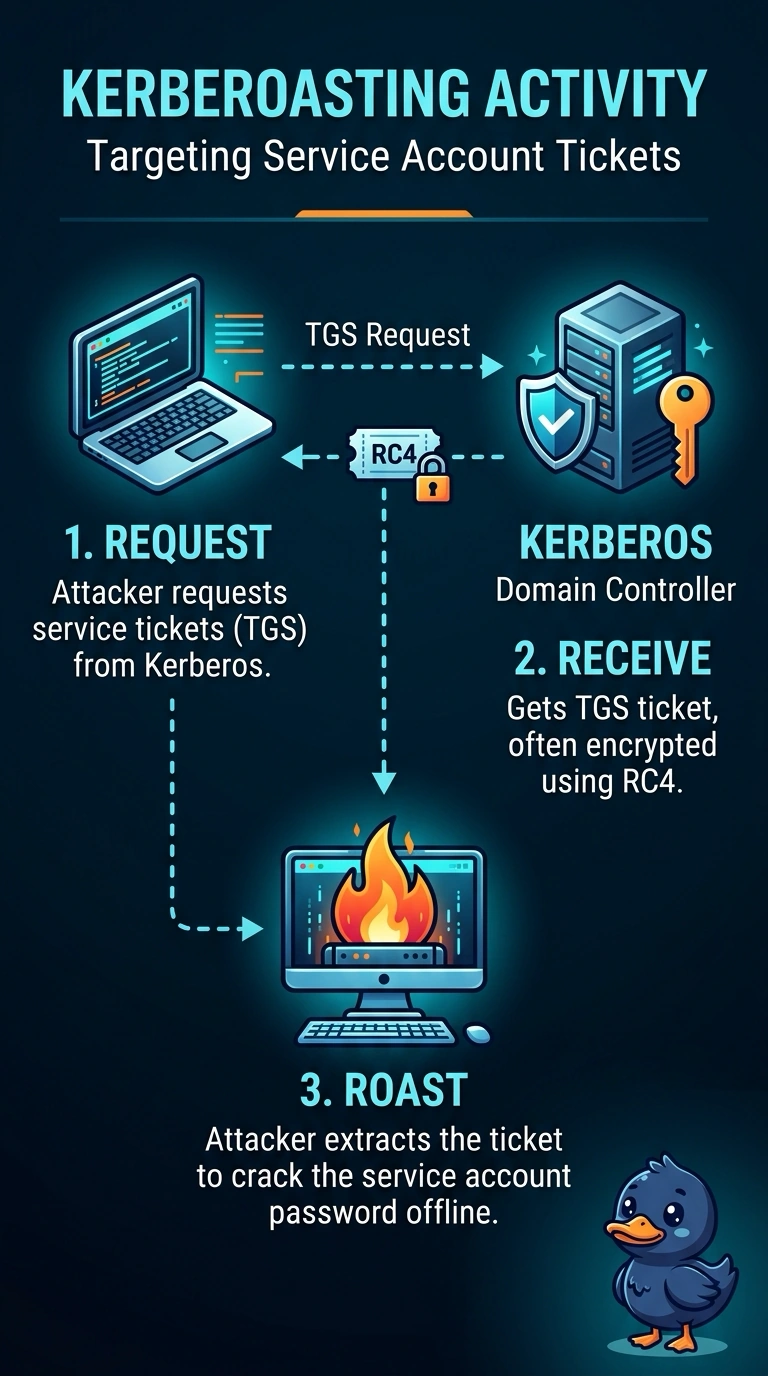
When you see a standard user workstation request tickets for dozens of unrelated services within minutes, you’re right to look beyond routine domain controller replication. Kerberoasting fits the burst of service-ticket requests and legacy RC4 encryption; you can check the source workstation’s activity for confirmation.
Full Explanation
This pattern indicates Kerberoasting activity targeting service account tickets: an authenticated user requests Kerberos service tickets for accounts with Service Principal Names, and the encrypted ticket portions can then be cracked offline. Legacy RC4 encryption makes offline password cracking significantly faster than stronger modern ciphers. Routine domain controller replication across trusted sites involves domain controller machine accounts and directory replication protocols, not bursts of user-initiated service-ticket requests. Interactive RDP lateral movement between administrative hosts produces network logon and remote desktop session events, rather than mass service-ticket requests for unrelated applications. Local SAM registry hive extraction from an offline system targets local account hashes on one machine and does not cause a domain controller spike in Kerberos ticket requests. Exam caveat: vulnerability scanners or misconfigured service monitors can occasionally generate bursts of ticket requests, so this pattern alone is not conclusive. Practical check: correlate the ticket-request spike with endpoint process-creation logs on the source workstation to identify enumeration scripts or abnormal PowerShell execution.