
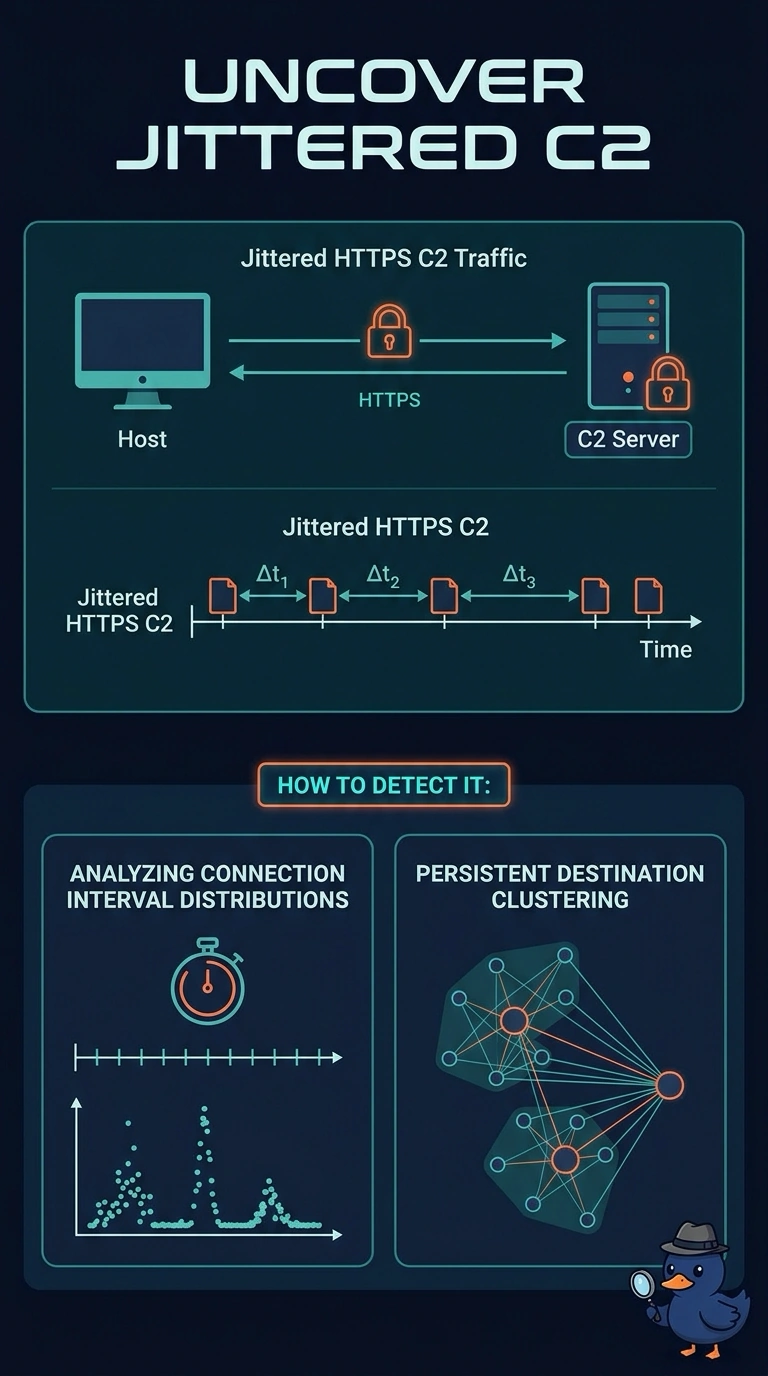
A threat hunter analyzes outbound HTTPS flow logs and suspects an adversary's command-and-control agent is using randomized sleep jitter to evade fixed-interval beaconing detectors. Which analytical method best uncovers this C2 channel?
Select an answer to reveal the explanation.
Short Explanation
Modern command-and-control agents add random jitter so their heartbeats look messy, and your fixed-timer rules will miss them completely. The trap is looking for clockwork precision instead of statistical clustering over time.
Full Explanation
Analyzing connection interval distributions and persistent destination clustering uncovers jittered command-and-control beaconing by looking at the statistical spread of sleep times and repeated contact with the same external endpoints over hours or days. Even when malware randomizes each callback delay by a percentage, the intervals still cluster around a consistent mean and target a narrow set of destinations. Filtering exclusively for outbound connections that occur at exact second intervals only catches rigid timers and misses any agent configured with jitter. Blocking all outbound HTTPS traffic to every cloud hosting provider worldwide would sever critical business applications rather than isolating covert channels. Searching firewall logs solely for known malicious file hashes in packet payloads fails because flow logs do not store full file hashes and encrypted HTTPS hides payload bytes. One caveat is that legitimate software update checks and telemetry agents can also exhibit periodic clustering, so analysts must baseline normal applications. As an operational check, group outbound HTTPS flows by source host and destination over a 24-hour window and review low-variance interval clusters against known software inventories.