
A threat hunter reviews internal NetFlow and session metadata across a corporate campus network to uncover potential lateral movement. Which traffic pattern warrants immediate investigation?
Select an answer to reveal the explanation.
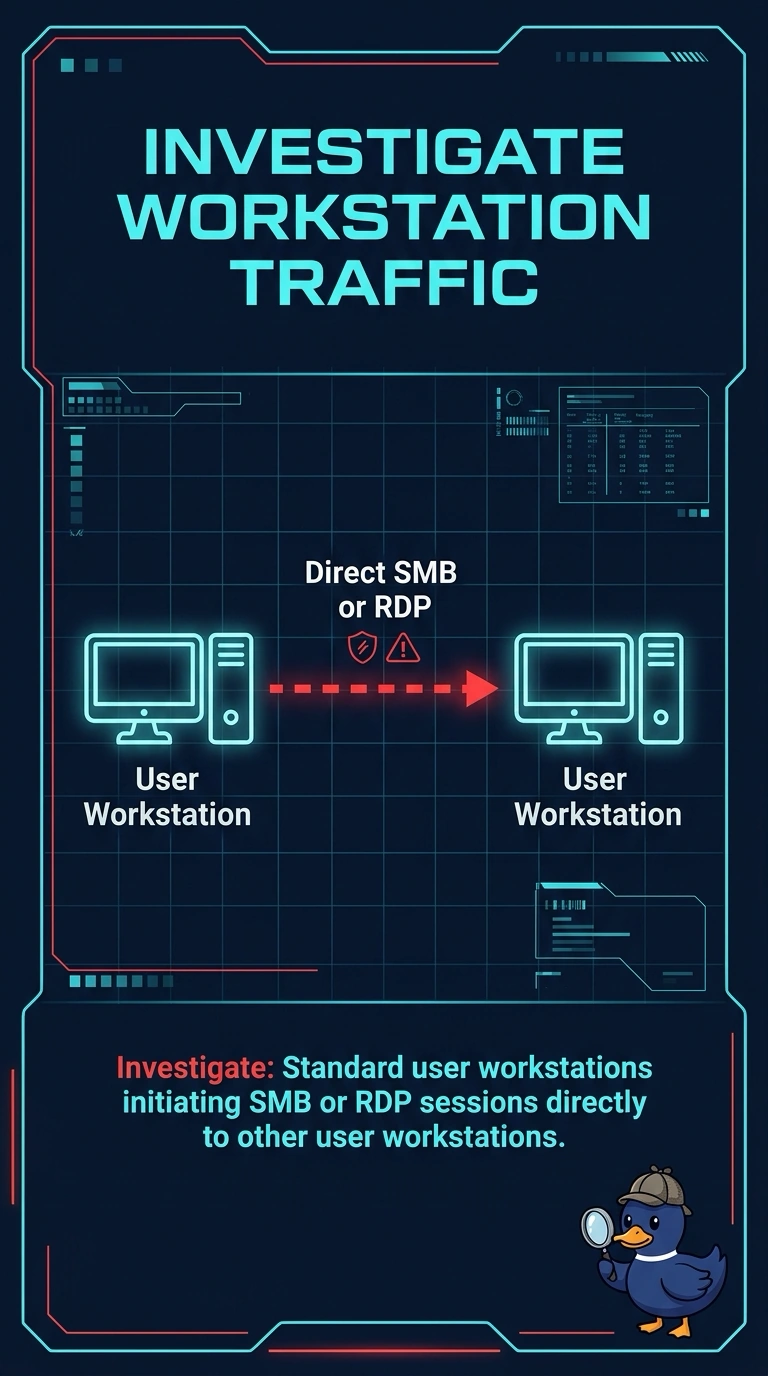
Short Explanation
In a healthy network, user workstations talk to servers, not to each other's administrative doors. The trap is overlooking internal east-west traffic between peer endpoints because your perimeter firewall only watches traffic leaving the building.
Full Explanation
Hunting for lateral movement in session and flow metadata relies on spotting standard user workstations initiating SMB or RDP sessions directly to other user workstations. In most enterprise architectures, unexpected peer SMB or RDP can indicate lateral movement, but file sharing, collaboration, and remote support may be legitimate; compare the traffic with approved workflows and endpoint evidence. By contrast, workstations establishing scheduled HTTPS connections to the internal software update repository represent normal patch management activity. Similarly, domain controllers replicating directory changes with each other over standard administrative ports reflect expected identity infrastructure synchronization. Branch office printers sending periodic SNMP status responses to the centralized print management server also align with routine device monitoring rather than adversary movement. As a caveat, IT help desk teams occasionally use remote support tools to reach user machines, so hunters must distinguish authorized support jump hosts from arbitrary peer workstations. As an operational check, baseline normal east-west administrative traffic by source subnet and pivot to endpoint process-creation logs whenever an unexpected workstation initiates internal SMB or RDP sessions.