
A SaaS security engineer is conducting a cloud-native threat hunt across a managed container orchestration cluster to uncover potential container escape attempts. Which orchestration audit event most strongly warrants immediate investigation?
Select an answer to reveal the explanation.
Short Explanation
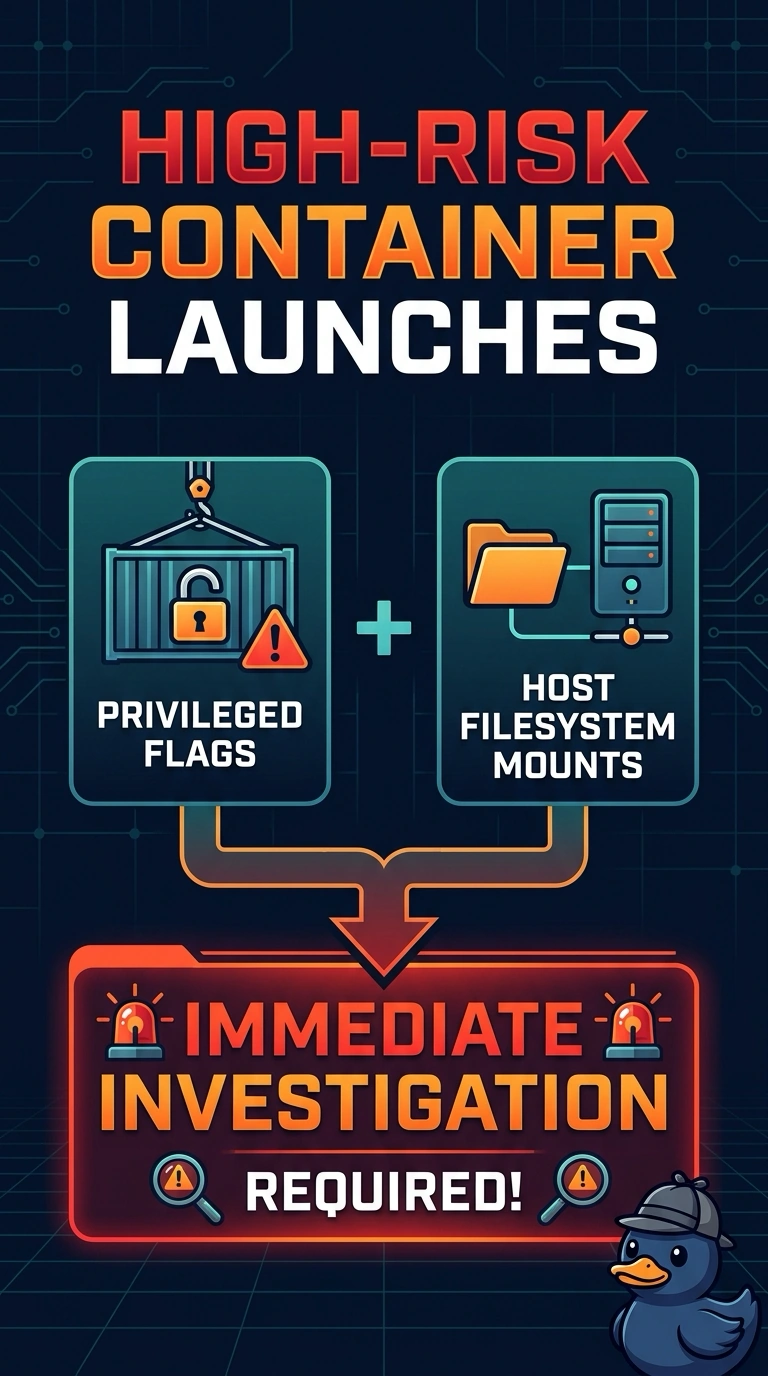
Containers are meant to stay isolated, so giving one direct keys to the underlying host should immediately catch your eye. Containers launched with privileged flags and host filesystem mounts create a direct path for container escape and host persistence. The trap is focusing only on normal scaling events while ignoring risky runtime configurations.
Full Explanation
The correct finding to investigate is Containers launched with privileged flags and host filesystem mounts. Running a container in privileged mode disables key kernel isolation boundaries, and mounting sensitive host directories gives a process inside the container direct read or write access to the underlying node's operating system and credentials. Adversaries routinely abuse these settings to break out of a workload and establish persistence on the host. In contrast, Containers pulling signed base images from an approved private registry reflects standard supply-chain hygiene rather than an escape attempt. Automated horizontal pod scaling triggered by scheduled daytime traffic is expected elasticity driven by legitimate demand. Likewise, Read-only configuration maps mounted into isolated application namespaces follow least-privilege design and do not expose host kernel resources. As an important caveat, certain legitimate monitoring or storage daemon workloads require elevated permissions, so validate findings against approved cluster manifests. For an operational check, query orchestration audit logs for pod creation events requesting privileged execution or host-path volume mounts and verify the initiating service account.