
A threat hunter reviews endpoint process-creation telemetry to detect living-off-the-land attackers abusing legitimate built-in operating system utilities. Which command-line anomaly most strongly warrants investigation?
Select an answer to reveal the explanation.
Short Explanation
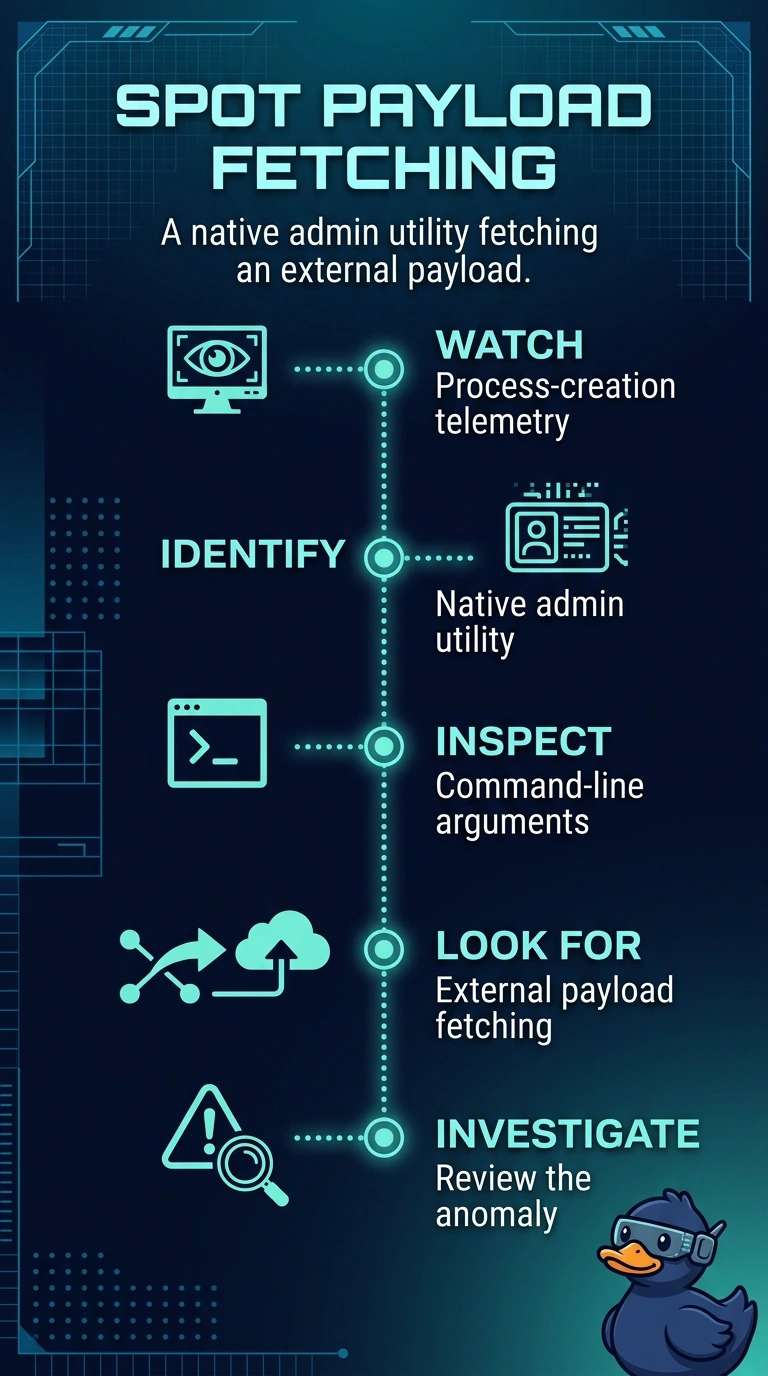
Living-off-the-land attackers love using tools you already trust, so the binary name alone won't set off alarms. The trap is ignoring routine system utilities, when your real clue sits in the unusual command-line arguments telling them to reach out to the internet.
Full Explanation
Endpoint process-creation telemetry becomes far more actionable when hunters inspect full command-line arguments rather than executable names alone. A native administrative utility invoked with arguments that fetch an external payload is a classic indicator of living-off-the-land abuse, where attackers repurpose built-in tools to download and stage follow-on code without dropping custom binaries. By contrast, A signed backup agent running on its scheduled nightly maintenance window reflects expected operational activity aligned with change schedules. A local package manager updating approved libraries from an internal mirror represents normal software maintenance from a trusted internal source. An endpoint security agent verifying file signatures during a routine scan is expected defensive telemetry rather than suspicious staging. One caveat is that legitimate administrators occasionally use native utilities to pull internal scripts, so hunters should baseline approved administrative destinations. As an operational check, query process-creation records for built-in system utilities making outbound network requests or passing encoded strings, and validate any unfamiliar remote targets.