
A threat hunter suspects an adversary has established stealthy persistence inside a cloud tenant without deploying traditional endpoint malware. Which cloud identity log activity best indicates this persistence technique?
Select an answer to reveal the explanation.
Short Explanation
In the cloud, attackers do not need malware on a hard drive when they can mint themselves a spare key in your directory. The trap is hunting only for endpoint files while ignoring identity-layer changes like new service principals or MFA registrations.
Full Explanation
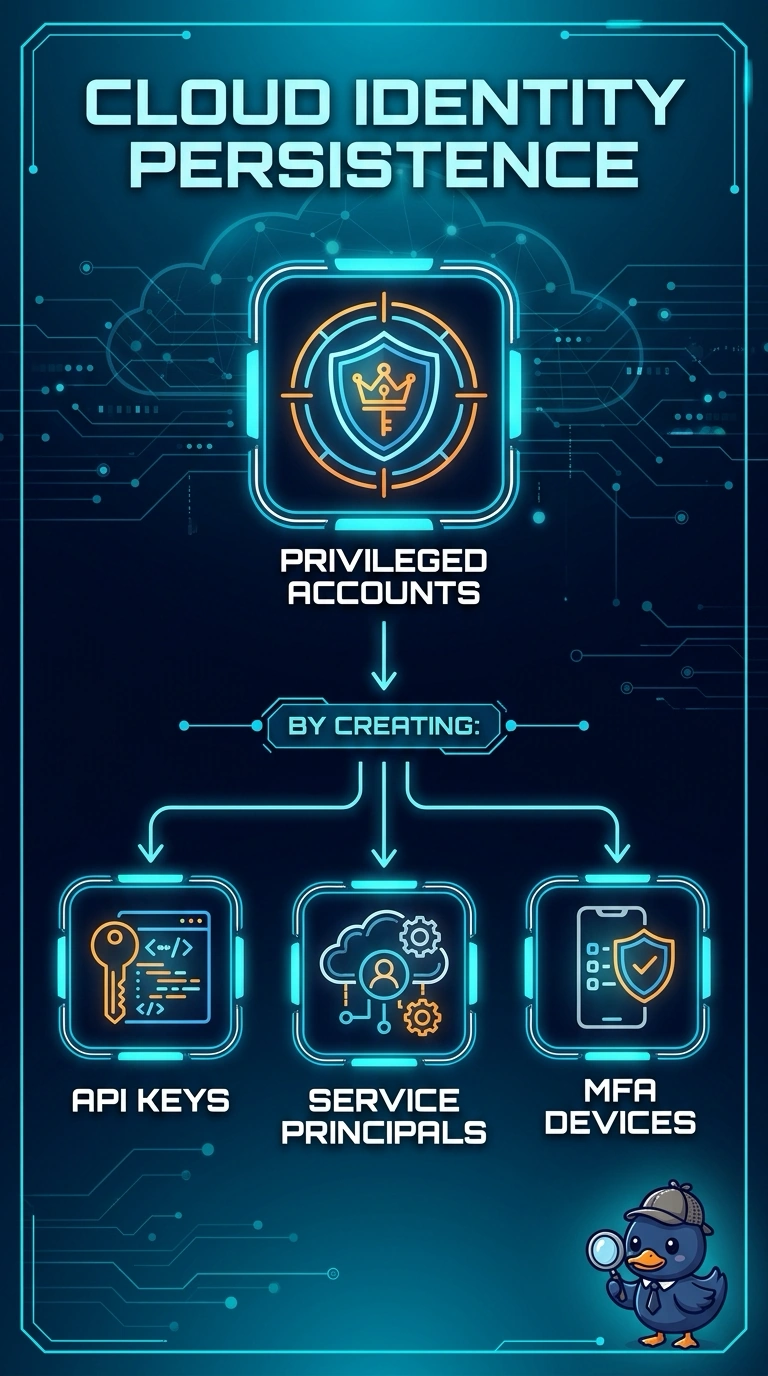
Cloud-native threat hunting for identity persistence focuses on spotting the creation of new API keys, service principals, or MFA devices on privileged accounts. Adversaries who compromise an administrative session often register secondary authentication factors or non-human service credentials so they can regain access even if the original user's password is reset. By contrast, users downloading approved software packages from an internal artifact repository during work hours represent routine development or operational workflows. Similarly, automated load balancers scaling web application instances during peak customer traffic reflect normal cloud elasticity rather than identity tampering. Scheduled nightly backups writing encrypted snapshots to an isolated storage vault also align with standard data protection operations. As a caveat, legitimate DevOps automation frequently provisions service principals and API keys, so hunters must correlate identity changes with approved change tickets and source IP context. As an operational check, query your cloud control-plane audit logs for privileged identity modifications originating outside normal administrative IP ranges or change windows and verify each new credential with its listed owner.