
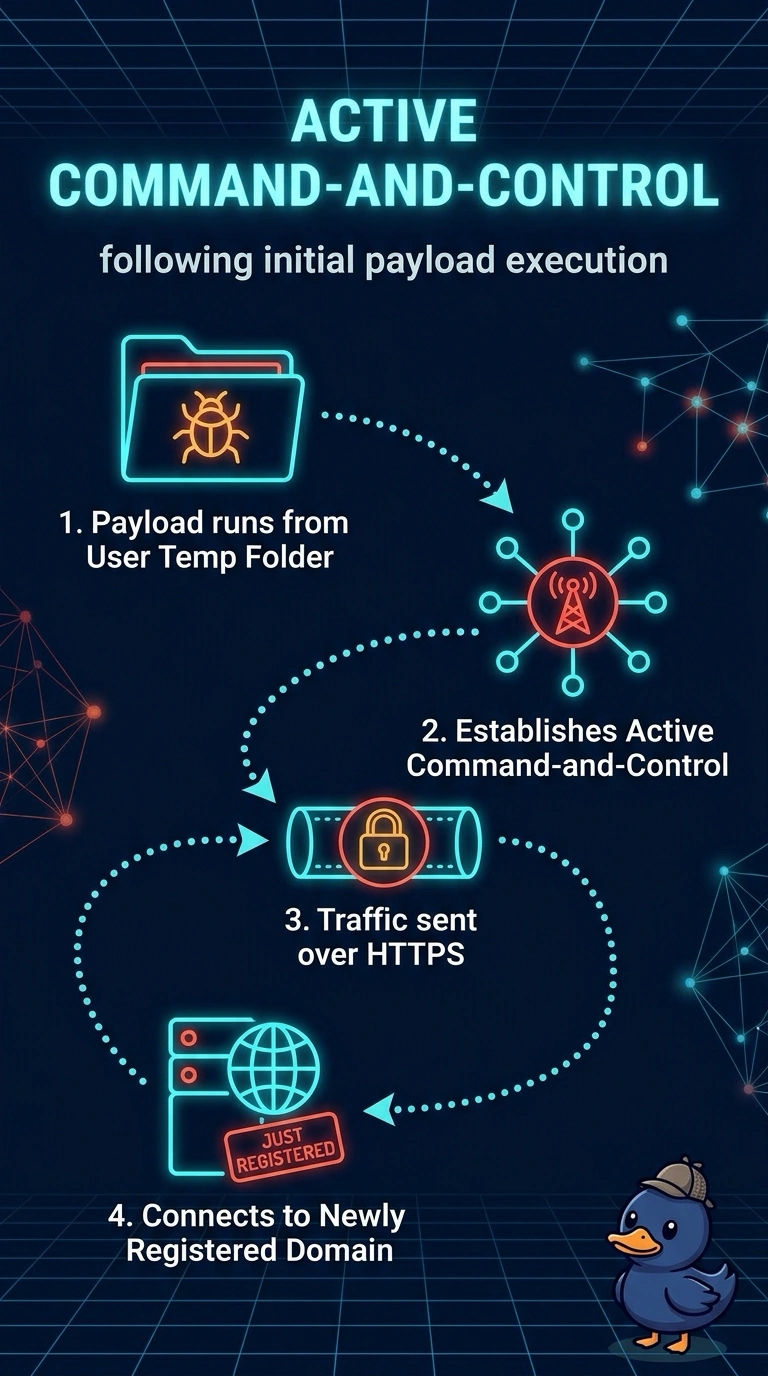
A threat hunter correlates DNS, proxy, and endpoint process logs and observes an office workstation downloading an archive from a newly registered domain, spawning a script interpreter from a user temp folder, and initiating periodic outbound HTTPS connections. Which infection stage does this sequence indicate?
Select an answer to reveal the explanation.
Short Explanation
When an endpoint downloads a suspicious archive, launches a script, and starts phoning home on a steady timer, you are watching the intrusion come alive. The trap is mistaking active post-execution network check-ins for early preparation or late-stage cleanup. Recognizing active command-and-control after execution helps you contain the host before lateral movement begins.
Full Explanation
Correlating delivery, local script execution, and periodic outbound check-ins points directly to Active command-and-control following initial payload execution, because the adversary has already achieved code execution on the host and established a remote control channel. By contrast, Passive external reconnaissance conducted prior to target engagement occurs outside the victim environment using open-source intelligence and leaves no endpoint execution trail. Similarly, Pre-compromise weaponization inside adversary infrastructure happens before the archive is ever delivered to the target workstation. Meanwhile, Final data destruction after lateral movement has completed describes late-stage impact rather than initial payload execution and beaconing on a single workstation. Caveat: periodic outbound HTTPS traffic alone can resemble legitimate software telemetry, so process-to-network correlation is essential to confirm the infection stage. As an operational check, inspect the parent process and command-line arguments of the script interpreter alongside the destination domain's registration age.