
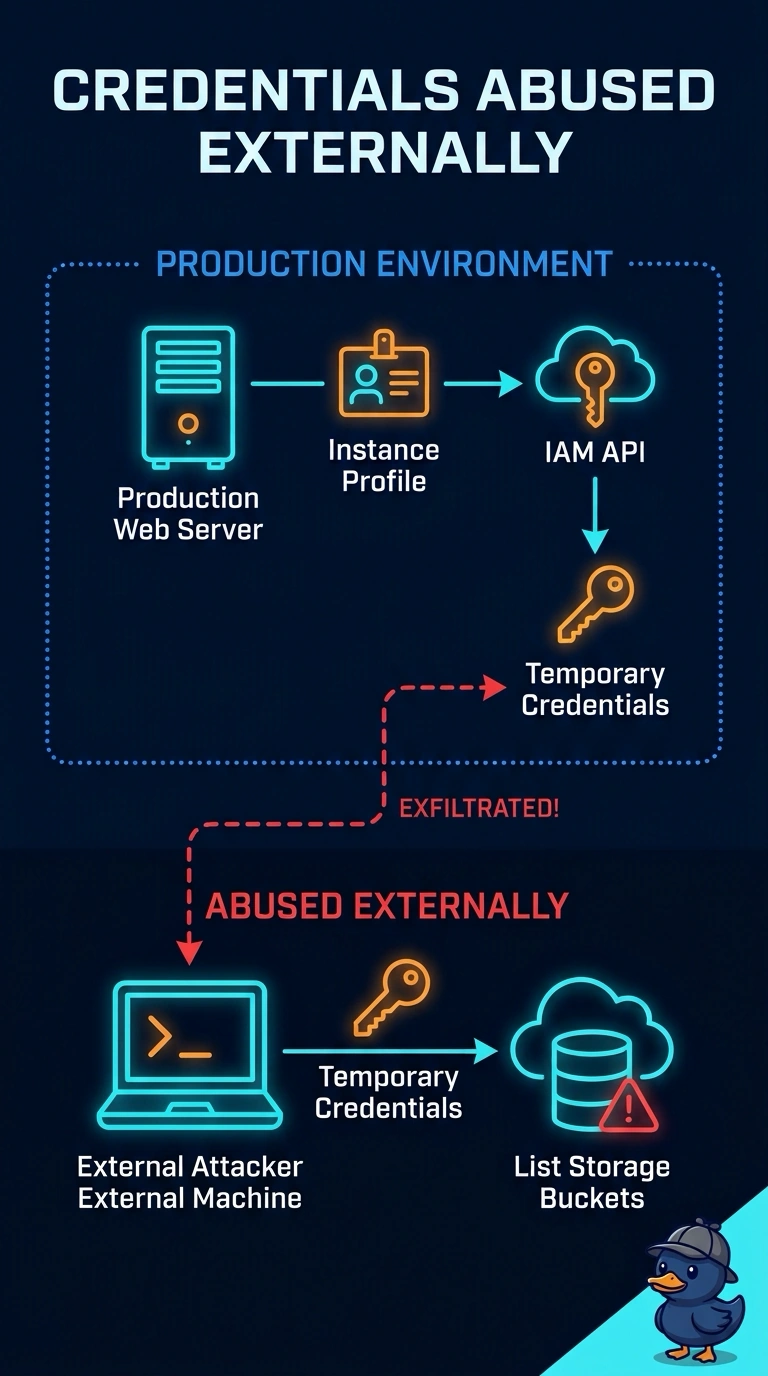
A threat hunter reviewing cloud audit logs notices that temporary IAM credentials assigned to a production web server's instance profile are making API calls to list storage buckets from an unfamiliar external IP address. What does this indicate?
Select an answer to reveal the explanation.
Short Explanation
You’re right to flag this: temporary instance credentials should remain with the cloud workload that requested them. Calls from an unfamiliar external IP suggest credential abuse, even when the credentials are short-lived.
Full Explanation
This activity indicates that the workload’s temporary credentials were likely exfiltrated and abused externally. An attacker might obtain them through a server-side request forgery flaw or remote code execution on the web server, read them from the instance metadata service, and replay the session token from outside the cloud environment. The cloud provider’s internal control plane performing routine automated bucket backups does not explain why this compute instance’s specific IAM role is authenticating from an unfamiliar external IP. A TLS certificate expiration would cause TLS validation errors; it would not relocate API client traffic to an external source IP or force unencrypted API calls. Use CloudTrail userIdentity, role session ARN, session issuer, and source IP to distinguish expected instance activity from replay; human use of assumed-role credentials can also appear as an assumed-role session, so an identity’s label alone does not establish origin. One caveat is that a misconfigured corporate egress proxy can make legitimate traffic appear to come from an unfamiliar external address, so verify the IP against known NAT gateways before concluding the credentials were stolen. As a practical check, revoke the active role sessions, inspect web application logs for requests to the metadata service, and audit all storage access performed by that role.