
A threat hunter examines recursive DNS query logs from a research lab and suspects an attacker is using DNS to exfiltrate files covertly. Which protocol anomaly most strongly indicates DNS tunneling?
Select an answer to reveal the explanation.
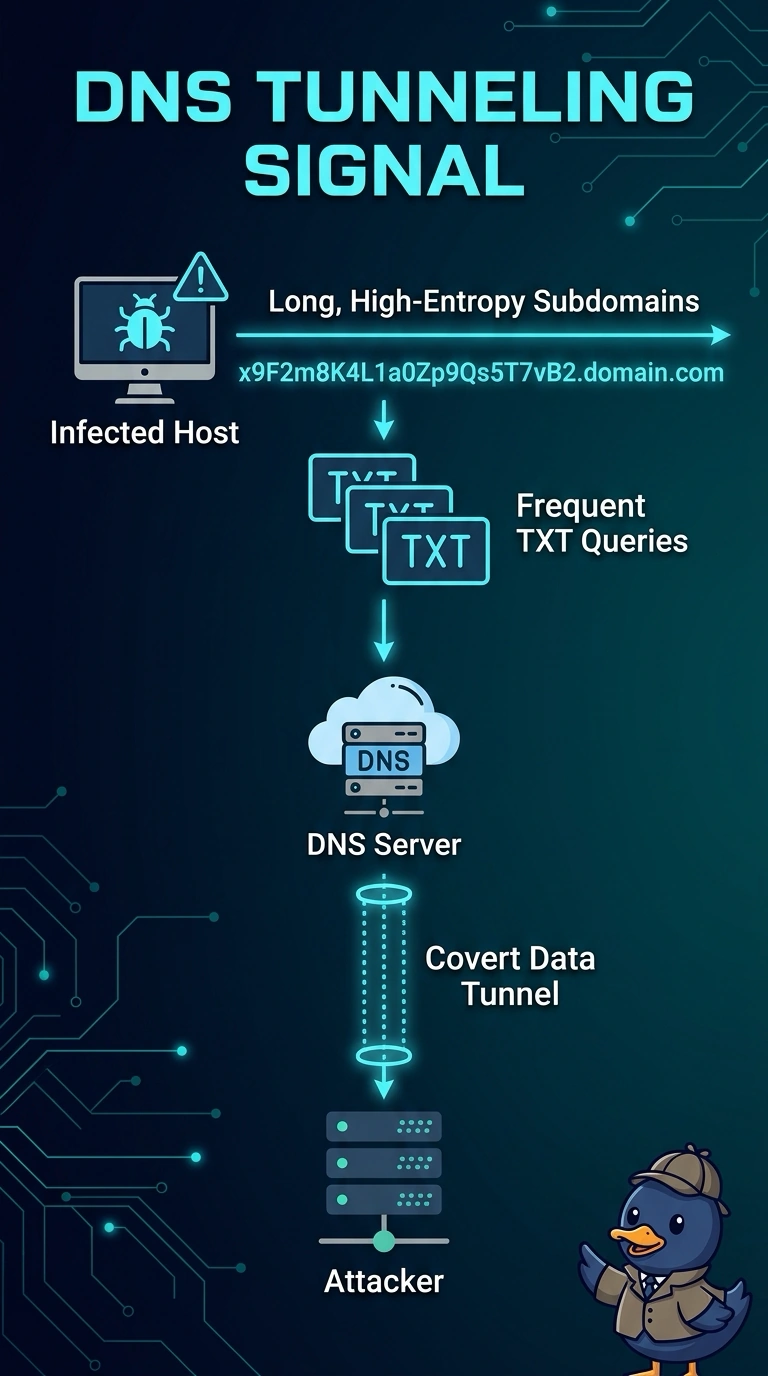
Short Explanation
DNS was built to translate names, not carry hidden cargo in oversized labels. When you spot scrambled, unusually long subdomains paired with heavy TXT traffic, someone may be smuggling data out through name resolution. The trap is mistaking normal infrastructure lookups for a covert encoding channel.
Full Explanation
Long, high-entropy subdomain labels with frequent TXT queries strongly indicate DNS tunneling because attackers encode outbound data into subdomain strings and receive encoded commands or payloads inside larger response records such as TXT. This encoding produces random-looking character sequences and unusually high query volumes to a single parent domain. Standard A-record lookups for well-known content delivery domains reflect normal web browsing and application traffic with short, predictable hostnames. Periodic NTP time synchronization requests to corporate servers use a separate time protocol rather than DNS and represent expected infrastructure maintenance. Low-volume reverse PTR lookups generated by internal mail relays are routine anti-spam and logging checks rather than high-throughput covert data channels. One caveat is that some legitimate security products and software updaters also embed short encoded tokens in DNS queries, so baseline comparisons are essential. As an operational check, measure subdomain length and Shannon entropy per parent domain in your DNS logs and investigate outliers.