
A hospital security team suspects that connected infusion pumps without endpoint agents have been compromised to relay internal traffic outward. Which investigative technique is most effective for uncovering unauthorized behavior on these embedded IoT devices?
Select an answer to reveal the explanation.
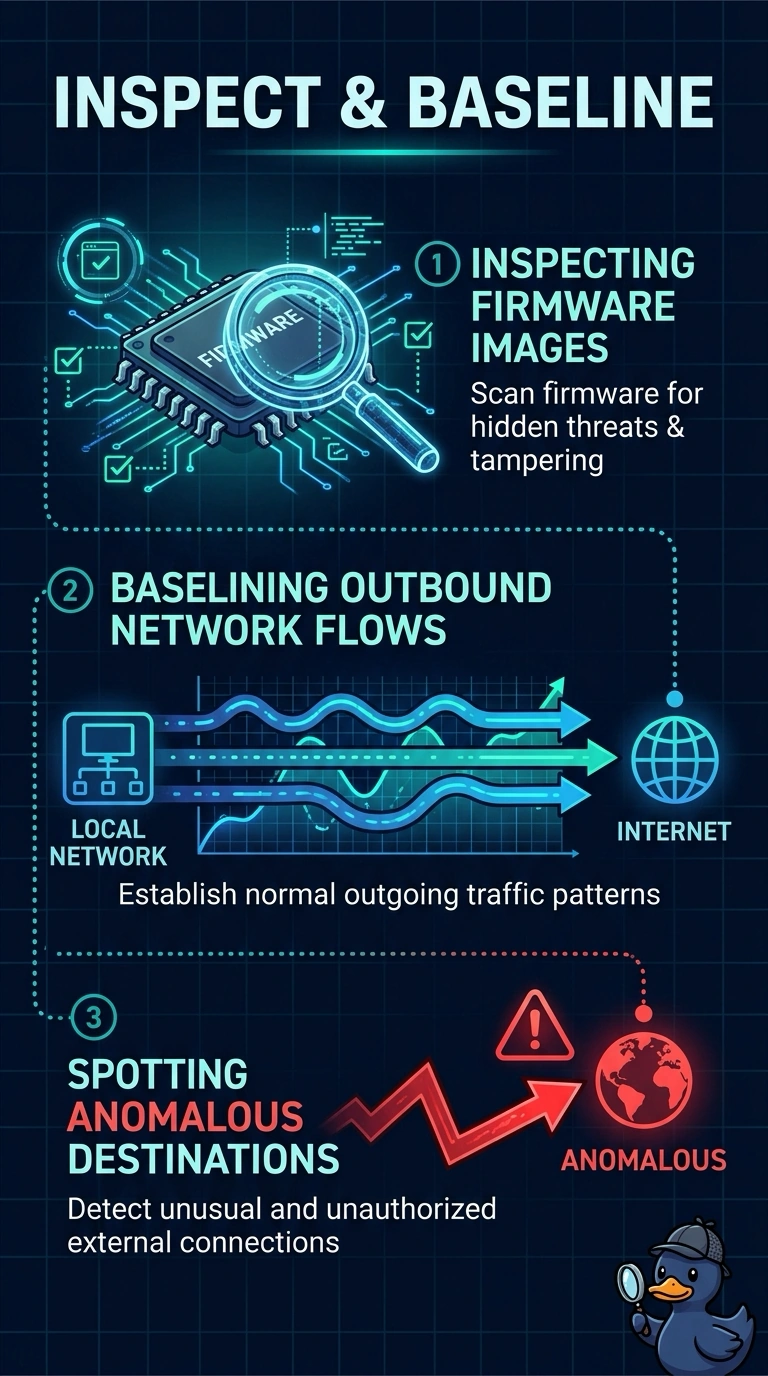
Short Explanation
Embedded medical devices do not behave like corporate laptops, so your usual endpoint playbook may not work here. You can examine firmware integrity and network conversations to spot hidden relays. The trap is trying to force desktop agents or Windows tools onto constrained IoT hardware.
Full Explanation
Inspecting firmware images and baselining outbound network flows for anomalous destinations addresses both host integrity and external communication on agentless embedded systems. Comparing extracted firmware with vendor-verified images can reveal unauthorized binary modifications, while flow baselines can highlight unexpected external connections or unusual port usage. Deploying standard desktop antivirus agents onto pump firmware fails because embedded medical devices run specialized, resource-constrained operating systems that may not support third-party agents; deploying them could also cause clinical disruption. Running interactive PowerShell queries against the embedded OS is ineffective because IoT appliances typically run stripped-down Linux or real-time operating systems without PowerShell. Reviewing local Windows Event Logs from the clinical workstation shows activity on that workstation, not covert traffic originating directly from the infusion pumps. A caveat is that capturing firmware or altering clinical devices requires coordination with biomedical engineering to protect patient safety. As a practical check, mirror the switch port serving the IoT VLAN and compare outbound destinations against approved vendor endpoints.