
A threat hunter is investigating suspected unauthorized privilege escalation inside a multi-tenant cloud environment where traditional network packet sensors lack visibility into management actions. Which data source should the hunter examine first?
Select an answer to reveal the explanation.
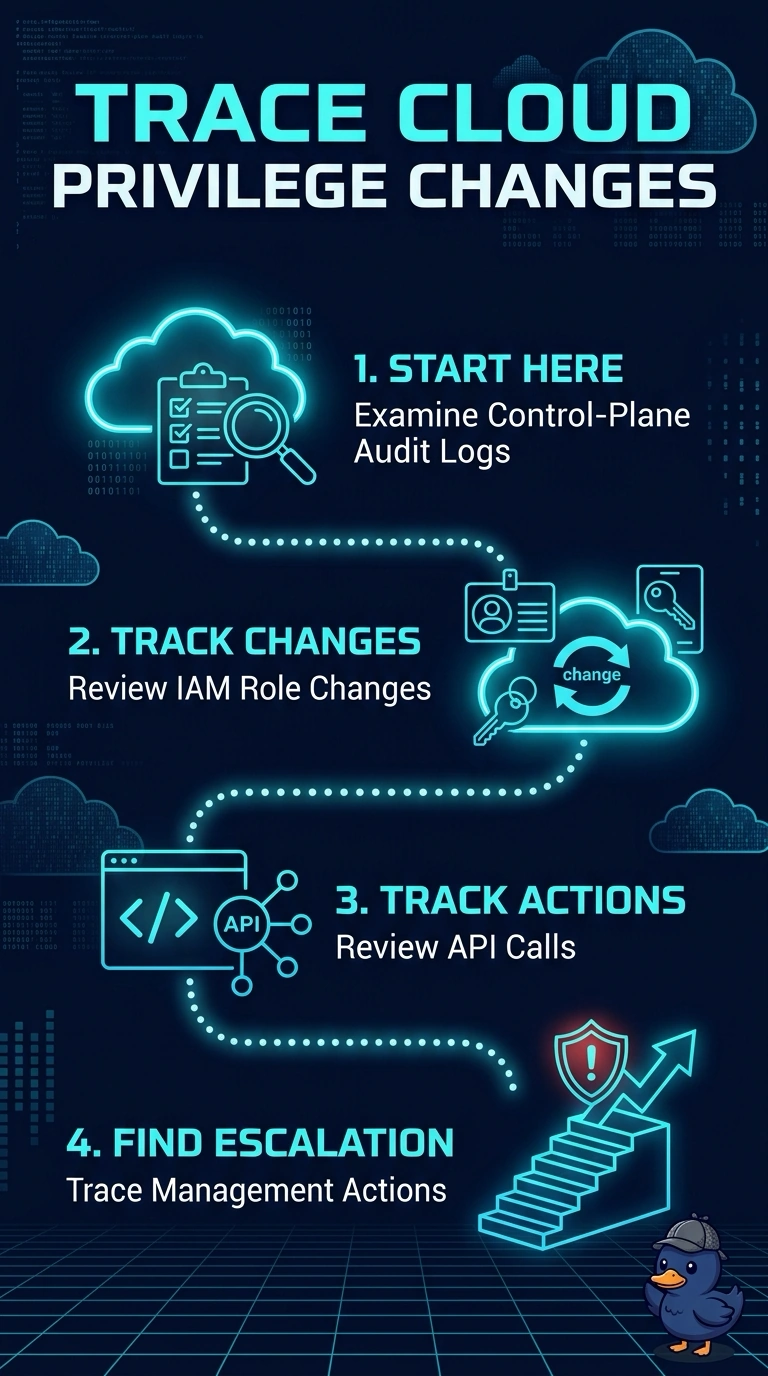
Short Explanation
When an intruder escalates privileges in the cloud, the action happens at the management API layer rather than on a physical wire you can tap. The trap is chasing traditional perimeter or workstation telemetry while missing the cloud control plane entirely.
Full Explanation
Examining "Cloud control-plane audit logs recording IAM role changes and API calls" is the most effective first step because cloud privilege escalation relies on identity and management API operations that bypass traditional network packet inspection. By comparison, "Local workstation browser history and cached DNS records" offers only narrow client-side context and misses programmatic API calls made from external or compromised cloud workloads. Likewise, "Physical data center badge access logs and switch port counters" applies to on-premises hardware infrastructure rather than tenant-level cloud identity operations. In addition, "Perimeter firewall connection summaries for outbound web traffic" shows high-level session metadata but cannot reveal which cloud permissions were modified or which IAM roles were assumed. A key caveat is that control-plane logs must be shipped to an immutable central repository so an attacker with elevated cloud privileges cannot alter or disable them. As an operational check, query your cloud audit log stream for unexpected role assumptions, policy attachments, or newly created access keys outside normal automation workflows.