
A threat hunting lead at a university must estimate the likelihood of an active compromise against several campus research servers before allocating deep forensic resources. Which combination of factors provides the most accurate likelihood assessment?
Select an answer to reveal the explanation.
Short Explanation
Estimating attack likelihood is about checking whether a door is unlocked, facing the street, and whether burglars are actively testing handles on your block. The trap is letting administrative inventory details distract you from exposure, reachability, and real-world targeting.
Full Explanation
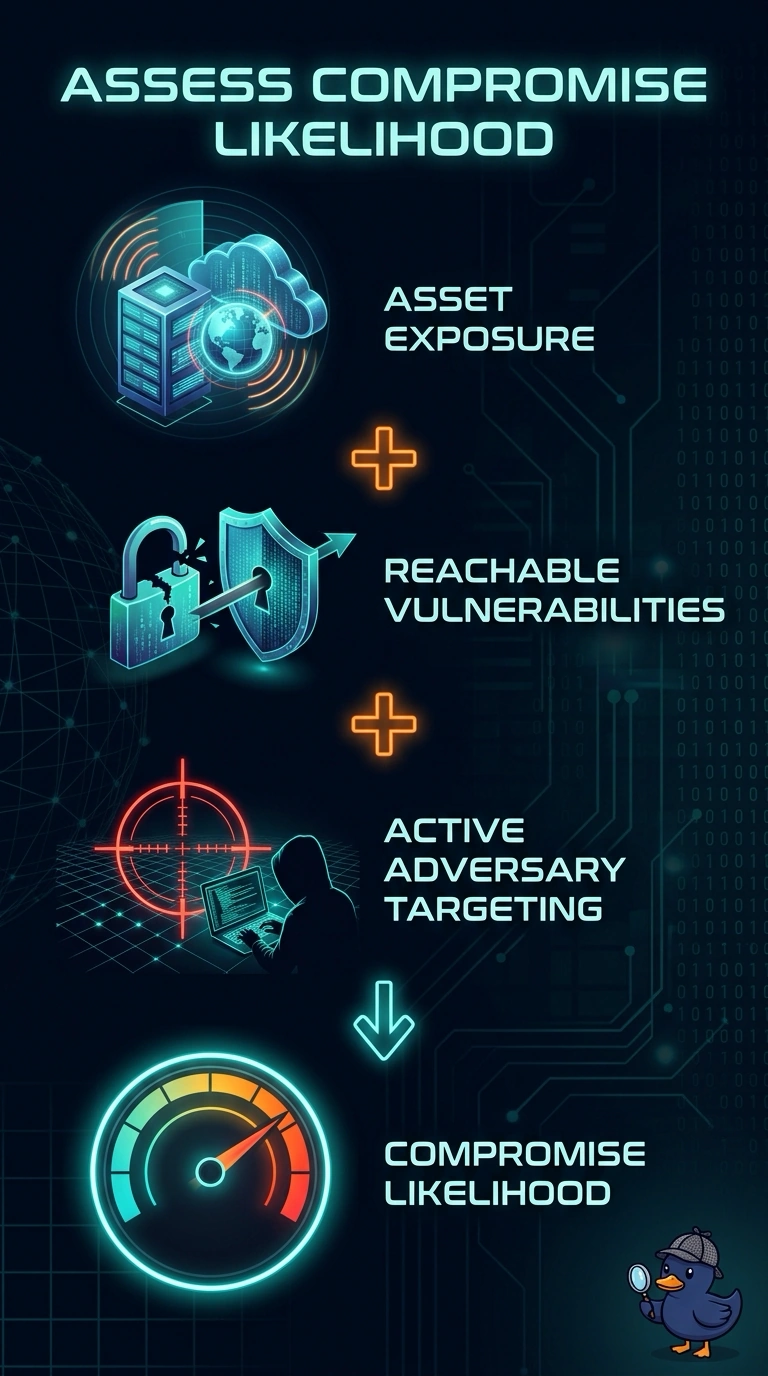
Asset exposure, reachable vulnerabilities, and active adversary targeting is correct because attack likelihood depends on whether an attacker can reach the system, whether an exploitable weakness or exposed service exists, and whether threat intelligence shows adversaries actively pursuing that technology. Server hardware purchase cost, rack location, and remaining vendor warranty fails because procurement and lifecycle metadata reflect financial value rather than technical exploitability or attacker interest. Total number of local user accounts created during initial operating system setup fails because default account counts alone do not indicate whether services are exposed or targeted. Alphabetical host naming conventions and physical building floor assignments fails because organizational labeling has no bearing on remote attack paths or adversary capability. As a caveat, high likelihood does not automatically equate to high business impact, so hunt prioritization should weigh likelihood alongside the sensitivity of the data hosted on each server. For an operational check, cross-reference external attack-surface scan results against your vulnerability management records and current threat intelligence advisories to rank which exposed research hosts warrant immediate hunting.