
A threat hunter at an insurance firm needs to ingest multi-format JSON and CSV telemetry exports from several cloud providers, normalize timestamps, and correlate anomalous API sequences across accounts. Which approach is best suited for this cross-platform data-processing task?
Select an answer to reveal the explanation.
Short Explanation
When you are juggling messy telemetry from three different cloud providers, a flexible script turns hours of manual copy-paste into a repeatable workflow. The trap is reaching for web proxies or binary inspectors that are built for live HTTP requests or executables rather than multi-format log records.
Full Explanation
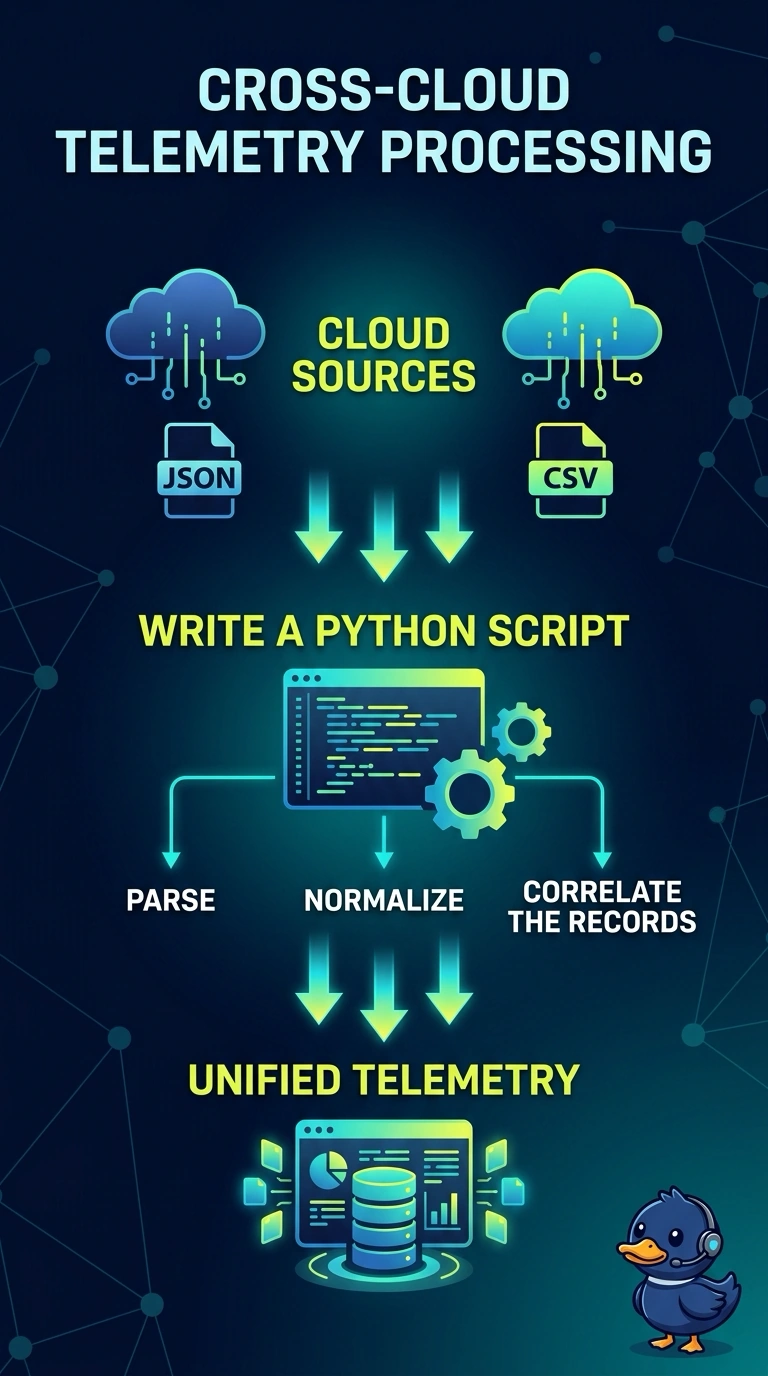
Writing a Python script to parse, normalize, and correlate the records is correct because Python provides native libraries for structured JSON and CSV parsing, timezone normalization, and cross-account correlation across large telemetry exports on any operating system. Running manual string searches inside a graphical text editor on each export fails because manual inspection does not scale to large datasets, cannot reliably normalize mismatched timestamp formats, and misses multi-event API sequences. Inspecting live browser traffic through an intercepting web proxy on a workstation fails because proxies capture interactive HTTP sessions rather than historical cloud control-plane telemetry exports. Extracting Portable Executable section headers using a static binary inspection tool fails because PE inspection analyzes Windows binaries rather than cloud API audit records. As a caveat, custom hunting scripts must handle malformed log entries and timezone offsets consistently so correlation windows do not silently drop events. For an operational check, validate your script against a small sample of known-good and simulated anomalous API records to confirm normalized UTC timestamps align before running the full hunt.