
A network defender is analyzing NetFlow session records to uncover potential command-and-control beaconing from compromised internal hosts. Which traffic pattern best indicates beaconing behavior?
Select an answer to reveal the explanation.
Short Explanation
Command-and-control beaconing acts like a lighthouse heartbeat, checking in on a steady rhythm even when nothing seems to happen. When you spot periodic outbound connections to the same external host, you have a strong hunting lead. The trap is chasing one-off large transfers that turn out to be routine backups.
Full Explanation
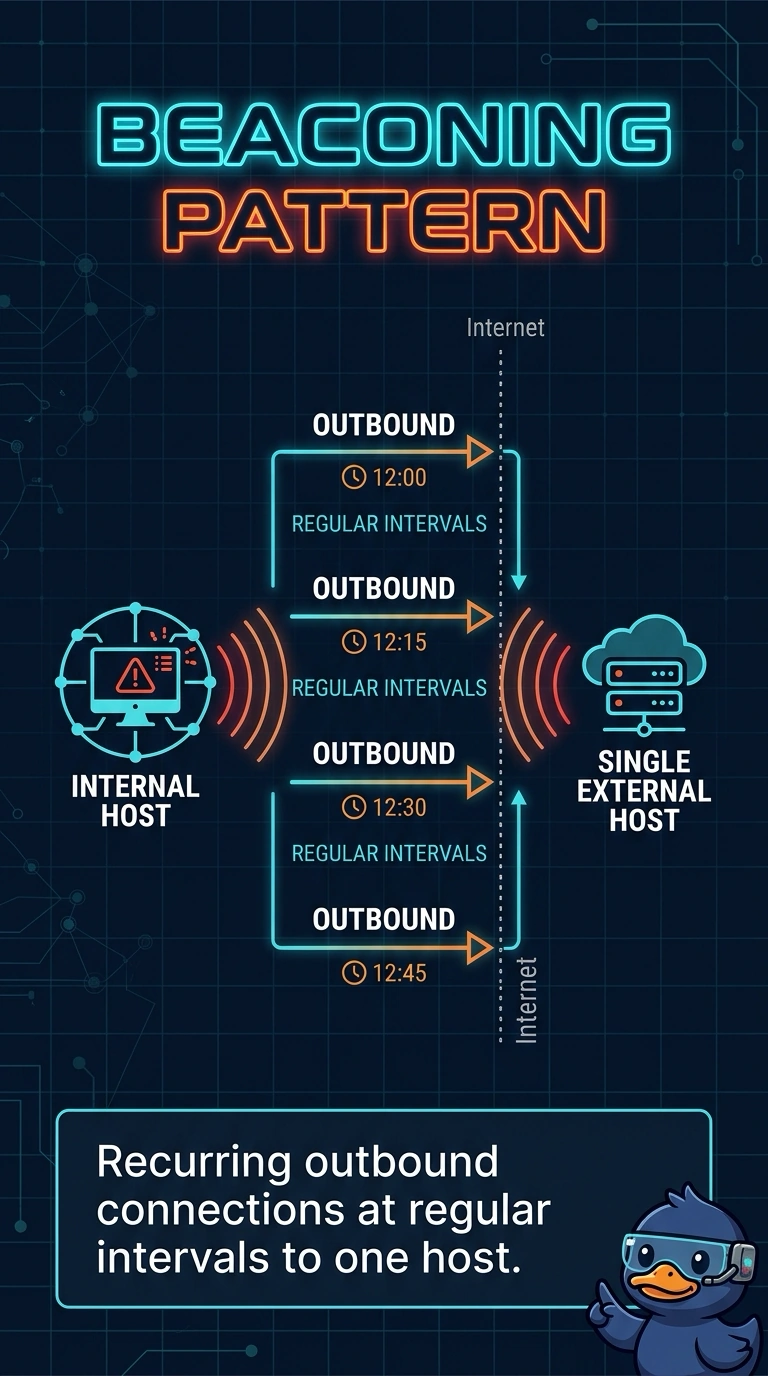
Recurring outbound connections at regular intervals to one host is the classic signature of automated beaconing, where an implant periodically polls an external server for commands with consistent timing and small, uniform byte counts. A single large outbound file transfer during scheduled backup hours points toward legitimate bulk data movement or late-stage exfiltration rather than periodic check-in beaconing. High-volume inbound DNS responses from an internal domain controller reflects normal internal name resolution or local traffic rather than an external implant checking in. Randomly timed local broadcast packets across the same subnet typically represent standard discovery protocols like ARP or service announcements rather than routed command-and-control sessions. As a caveat, sophisticated implants add timing jitter to disguise fixed intervals, so analysts should inspect statistical variance alongside exact periodicity. As an operational check, group NetFlow records by source-destination pair and calculate inter-arrival time standard deviation to surface low-jitter sessions.