
A software security engineer needs to scan multiple application repositories for insecure API usage patterns during continuous integration without executing the code. Which tool is best suited for this task?
Select an answer to reveal the explanation.
Short Explanation
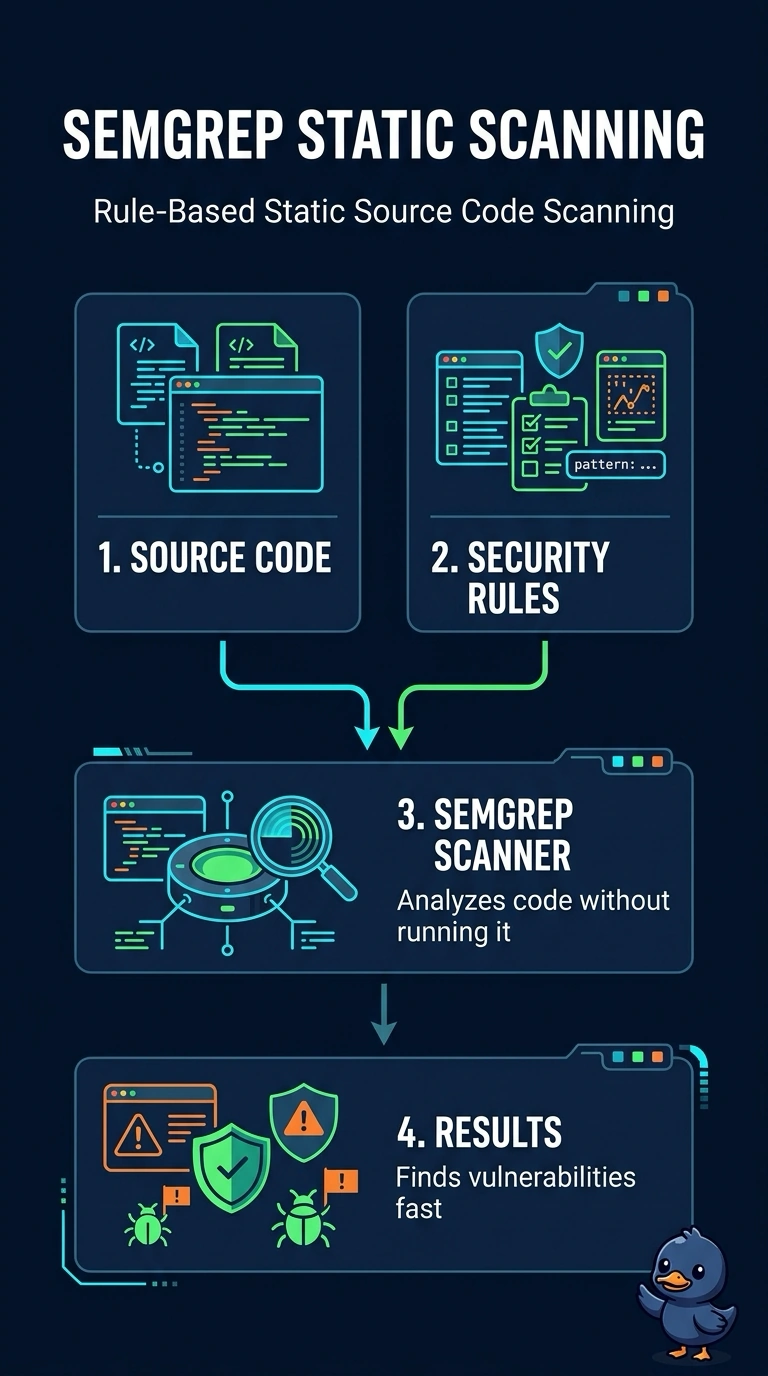
Picking the right analysis tool is like choosing between an X-ray and a stress test for your application. When you need to inspect source code in a pipeline without running it, Semgrep gives you fast, pattern-based visibility. The trap is reaching for a live web proxy or a memory forensics tool when you only have static repositories.
Full Explanation
Semgrep, which performs rule-based static source code scanning is designed to analyze source code syntax trees against custom or community rules directly inside continuous integration pipelines without compiling or running the application. Burp Suite, which intercepts and modifies live web application traffic requires a running web service and active HTTP requests, making it a dynamic testing tool rather than a static repository scanner. PE Checker, which inspects compiled Windows portable executable headers focuses on binary metadata and sections of compiled Windows executables rather than multi-language source repositories. Volatility, which extracts artifacts from captured system memory analyzes volatile RAM images from live or compromised hosts rather than pre-build source code. As a caveat, static pattern matching can miss runtime configuration flaws and third-party dependency vulnerabilities unless paired with complementary checks. As an operational check, run a targeted Semgrep ruleset against a pull request branch in your pipeline and confirm that flagged findings map cleanly to line numbers.