
An application security hunter at an e-commerce company suspects that an attacker is abusing hidden parameters in a checkout API over HTTPS. Which tool is best suited to intercept, inspect, and replay those live web requests?
Select an answer to reveal the explanation.
Short Explanation
When an attacker is poking at live web requests, static scanners and memory tools are looking in the wrong place. You want a proxy that sits right in the HTTP stream so you can see every header and parameter in motion, without getting sidetracked by binary or source-only utilities.
Full Explanation
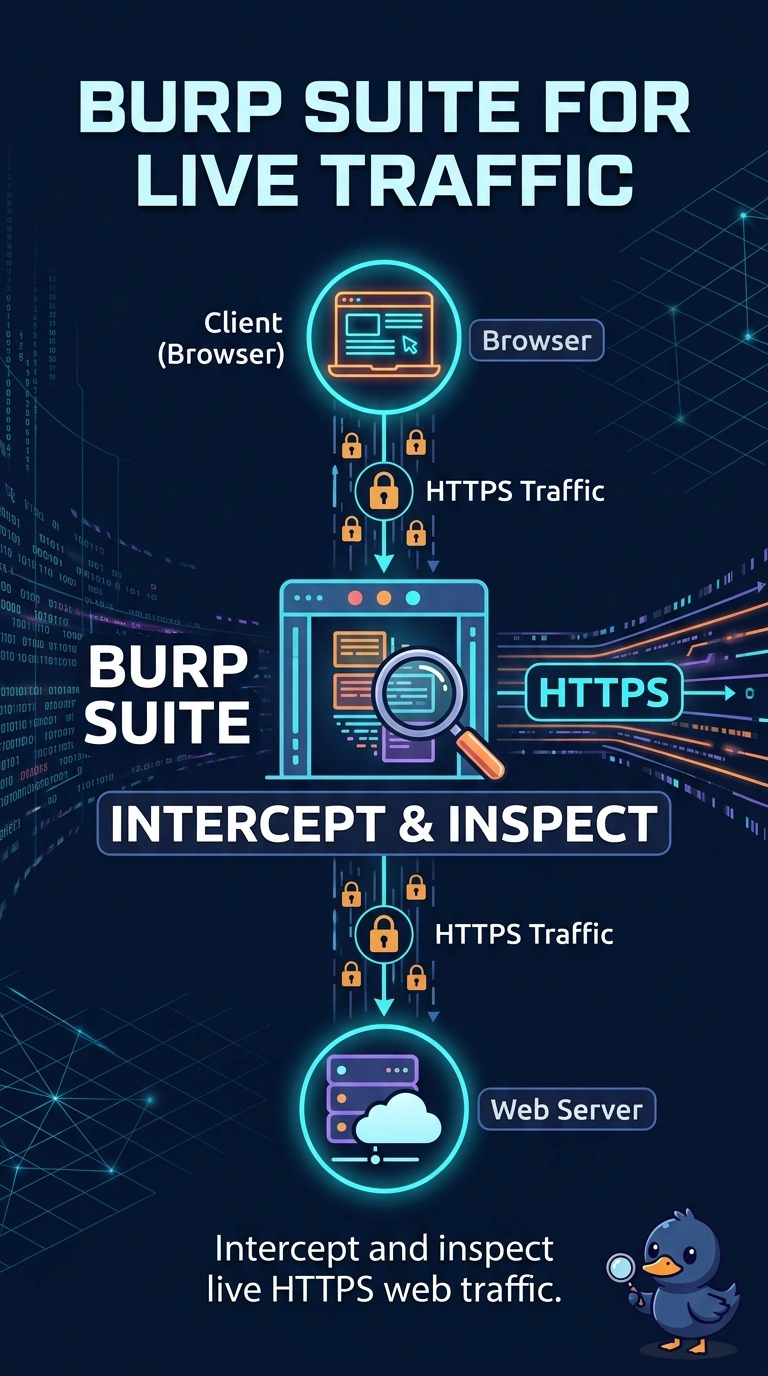
Burp Suite to intercept and inspect live web traffic is correct because Burp Suite operates as an intercepting HTTP/HTTPS proxy that lets analysts capture, modify, and replay live application requests and responses to uncover parameter tampering or logic abuse. Volatility to parse kernel structures in memory images is built for offline forensic analysis of host RAM captures, not live web protocol inspection. PE Checker to inspect portable executable header sections examines compiled Windows binary metadata for anomalies or packing indicators rather than web API traffic. Semgrep to scan static source files before compilation performs rule-based static code analysis on repositories at rest, which cannot observe runtime request manipulation or server responses. As a caveat, inspecting TLS-encrypted traffic with an intercepting proxy requires installing the proxy's root certificate on the test client and should only be performed in authorized environments. As an operational check, confirm that your test proxy scope is restricted to the target staging domain and verify that sensitive customer tokens are redacted from saved session logs.