
During static triage of a suspicious Windows executable, an analyst wants to determine whether the binary is capable of memory-resident process injection before running it in a sandbox. Which finding in the binary's import table best supports this?
Select an answer to reveal the explanation.
Short Explanation
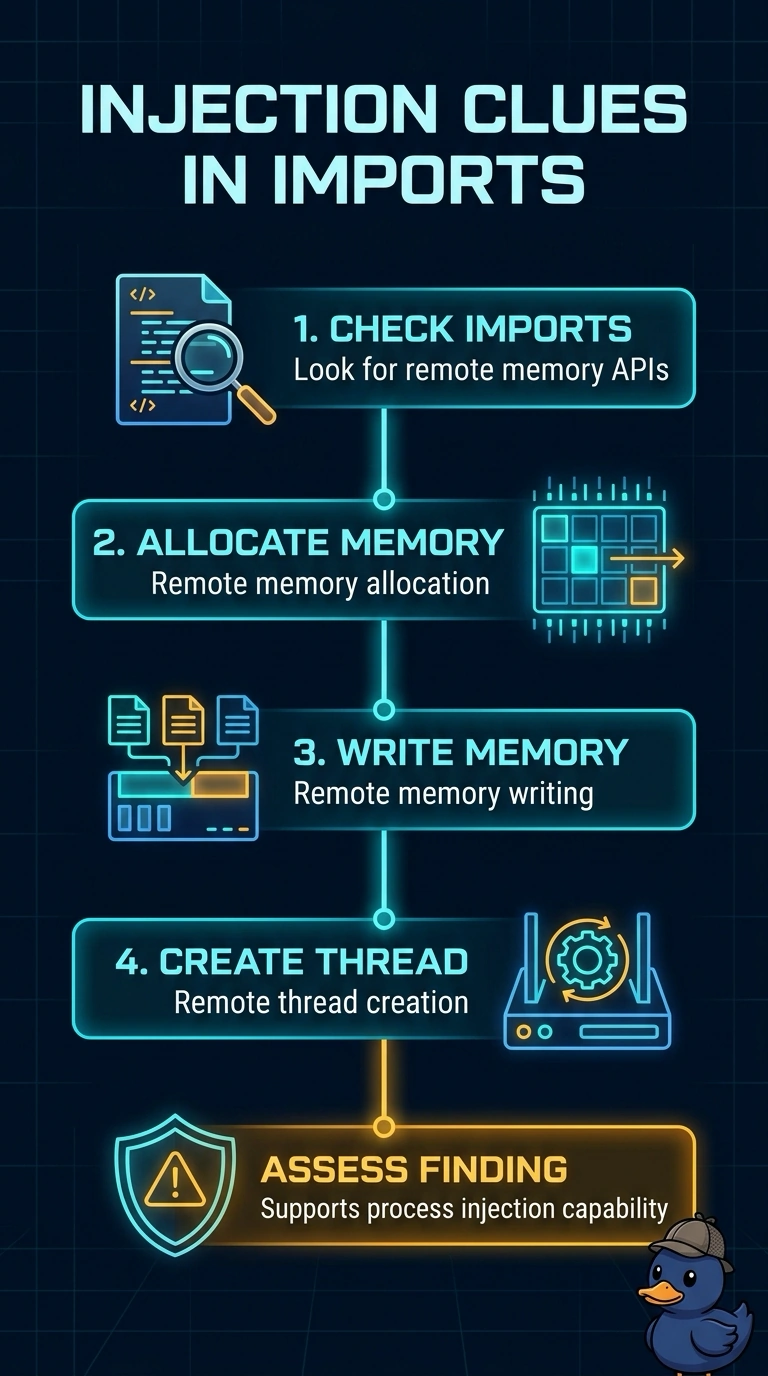
Remote allocation, writing, and thread APIs support a common injection implementation, but benign tools also use them and other injection methods use different primitives. Imports establish potential capability, not malicious intent or actual execution; inspect call sites and runtime telemetry. You can use that potential to focus what you validate next.
Full Explanation
Remote allocation, writing, and thread APIs support a common injection implementation, but benign tools also use them and other injection methods use different primitives. Imports establish potential capability, not malicious intent or actual execution; inspect call sites and runtime telemetry. A sequence that allocates space in a remote process, writes payload bytes there, and creates or queues a remote thread matches the classic T1055 workflow for memory-resident execution without dropping another binary to disk, which is why Imported APIs for remote memory allocation, writing, and thread creation best support suspected capability during static triage. References to standard file-compression routines and local zip libraries suggest archiving, decompression, or data staging and do not demonstrate cross-process memory manipulation or execution control. Strings referencing standard local printer spooler configuration keys indicate peripheral configuration or administrative interaction rather than allocation and execution in another address space. Imported functions for reading system timezone and regional locale data support environment awareness, formatting, or logging rather than code injection. Packed samples can also hide imports and resolve APIs dynamically, so confirm how a target process handle is obtained and correlate disassembly with sandbox behavior before judging intent.