
During a threat hunt in an Active Directory environment, analysts confirm an adversary extracted the domain Kerberos service account hash and forged ticket-granting tickets to access any server. Which remediation process invalidates those forged tickets across the domain?
Select an answer to reveal the explanation.
Short Explanation
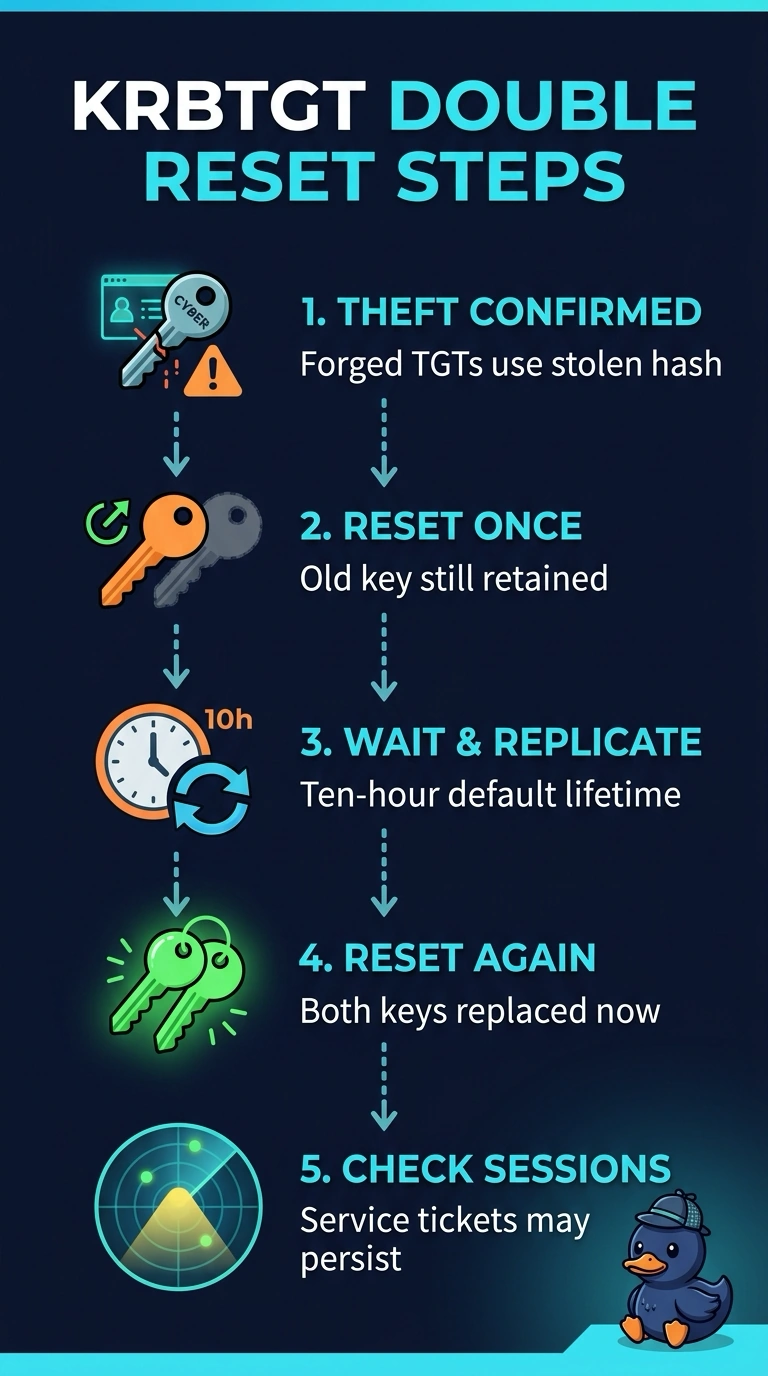
Changing a master key once still leaves the spare copy in the drawer; you have to cycle it twice to push the old secret out of rotation. The trap is resetting only standard user passwords or clearing DNS caches while leaving the domain's Kerberos ticket-signing secret intact.
Full Explanation
Resetting the KRBTGT account password twice with a full directory replication interval between resets invalidates forged ticket-granting tickets because Active Directory retains both the current and immediately previous KRBTGT password hashes. Cycling the account twice after replication completes overwrites both retained key versions, ensuring any forged tickets signed with the compromised secret fail validation across the domain. Forcing a single password reset on all standard user workstations without touching service accounts is ineffective because forged ticket-granting tickets rely on the domain's KRBTGT signing key rather than individual user credentials. Deleting and recreating every domain controller computer object inside Active Directory Users is needlessly destructive and disrupts directory services without cleanly rotating the ticket-signing secret. Clearing the local DNS resolver cache on affected member servers and restarting their web services fails because DNS name resolution has no role in Kerberos ticket verification. Microsoft specifies a 10-hour wait for default ticket lifetimes; when configured lifetimes differ, wait longer than the applicable maximum and confirm replication. Rotating KRBTGT invalidates TGTs signed with removed keys; it does not alone revoke every already-issued service ticket or active session.