
During a proactive threat hunt, an analyst discovers an active compromise on a payroll server and hands the case over to incident response, only to learn that the screenshots and ad hoc log copies lack integrity hashes and timestamps. Which playbook improvement prevents this problem?
Select an answer to reveal the explanation.
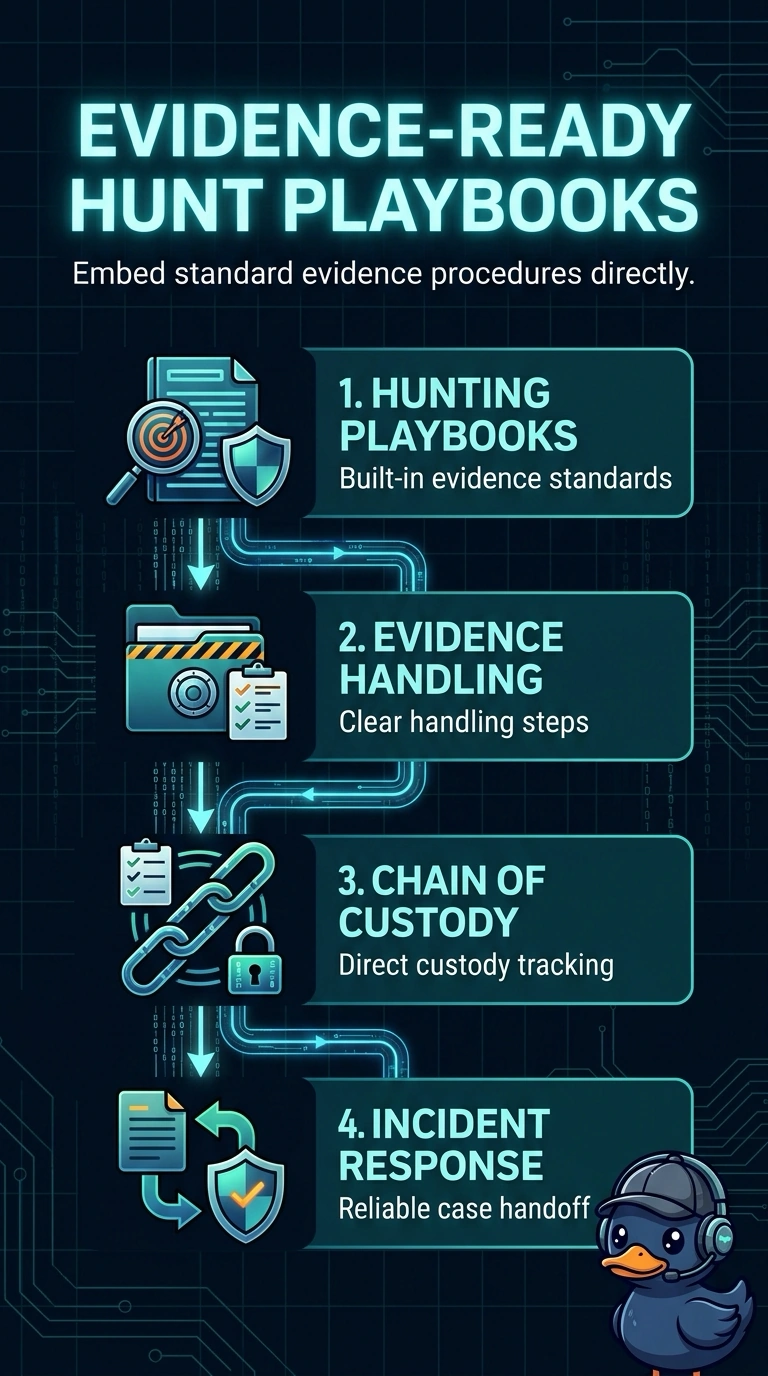
Short Explanation
Finding a real intrusion during a hunt is exciting, but sloppy notes can turn solid proof into unusable clutter the moment incident response takes over. You need forensic discipline built right into your hunting routine. The trap is treating proactive hunting as informal exploration with no evidence standards.
Full Explanation
Proactive hunts regularly uncover live intrusions that require legal, regulatory, or forensic follow-through, which is why Embedding evidence-handling standards and chain-of-custody steps directly into hunting playbooks is essential. Standardizing cryptographic hashing, UTC timestamps, and acquisition logging ensures that artifacts collected during a hunt remain verifiable when handed off to incident response. Choosing Requiring threat hunters to reboot any suspicious server immediately before documenting findings destroys volatile memory evidence and tips off an active adversary. Likewise, Restricting threat hunters to viewing summary dashboards rather than raw host or network records prevents analysts from validating hypotheses against underlying artifacts. Meanwhile, Deleting all intermediate hunt query outputs automatically at the end of every analyst shift erases valuable investigative context and forces responders to repeat work. As a caveat, playbooks should clearly define the exact handoff threshold so hunters escalate rather than performing invasive forensics outside their role. As an operational check, audit recent hunt-to-incident handoffs with the incident response lead to verify that hashing and timestamping steps were followed consistently.