
A SOC lead notices that junior hunters repeatedly launch playbook queries against SIEM indexes only to discover hours later that required endpoint fields are missing or unparsed. Which playbook improvement best prevents this wasted effort?
Select an answer to reveal the explanation.
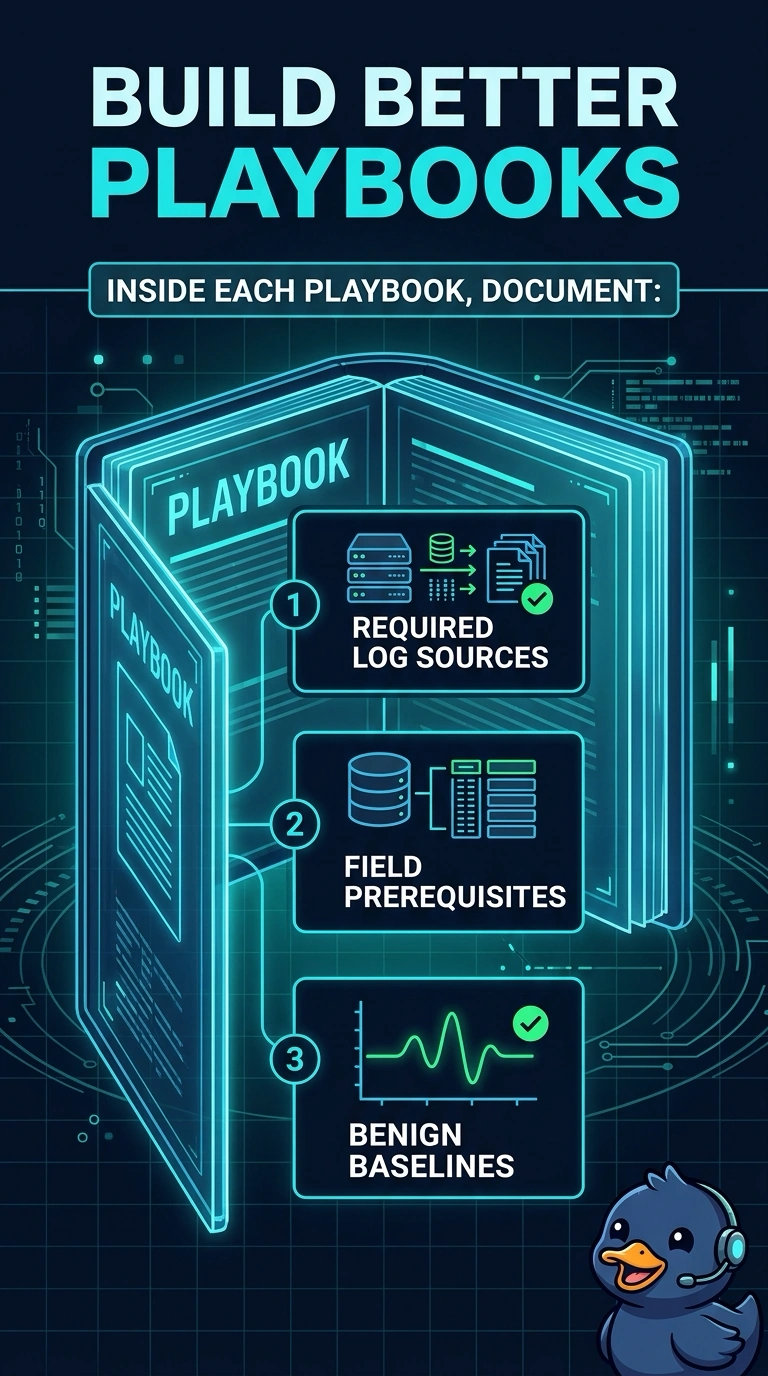
Short Explanation
You would not start cooking a recipe without checking if the pantry actually has the ingredients. Adding telemetry prerequisites and normal baselines to your playbooks saves hours of dead-end searching, whereas the trap is assuming every SIEM index is populated and parsed identically.
Full Explanation
Document required log sources, field prerequisites, and benign baselines inside each playbook ensures hunters verify that necessary telemetry is ingested and normalized before spending time on complex queries. Clear prerequisites also help analysts distinguish true anomalies from expected administrative noise in the environment. Choosing to Remove all hypothesis descriptions from playbooks so analysts focus solely on raw query syntax removes the analytical context needed to interpret results accurately. Similarly, Restrict threat hunting playbooks exclusively to senior incident responders during active breaches undermines proactive hunting and prevents junior staff from building repeatable skills. Meanwhile, Require analysts to rewrite every playbook query from scratch at the start of each shift introduces inconsistency, syntax errors, and unnecessary delay. As a process caveat, telemetry pipelines evolve over time, so playbook prerequisites can drift out of date after SIEM upgrades or agent changes. As an operational check, add a quick pre-flight validation query at the top of each playbook that confirms non-zero event counts and populated key fields over the past twenty-four hours.