
During a scheduled threat hunt, an analyst discovers evidence that an adversary is actively staging files on an internal server, and immediately contacts the server's system administrator over an unmonitored chat channel to reboot the host. What playbook failure does this represent?
Select an answer to reveal the explanation.
Short Explanation
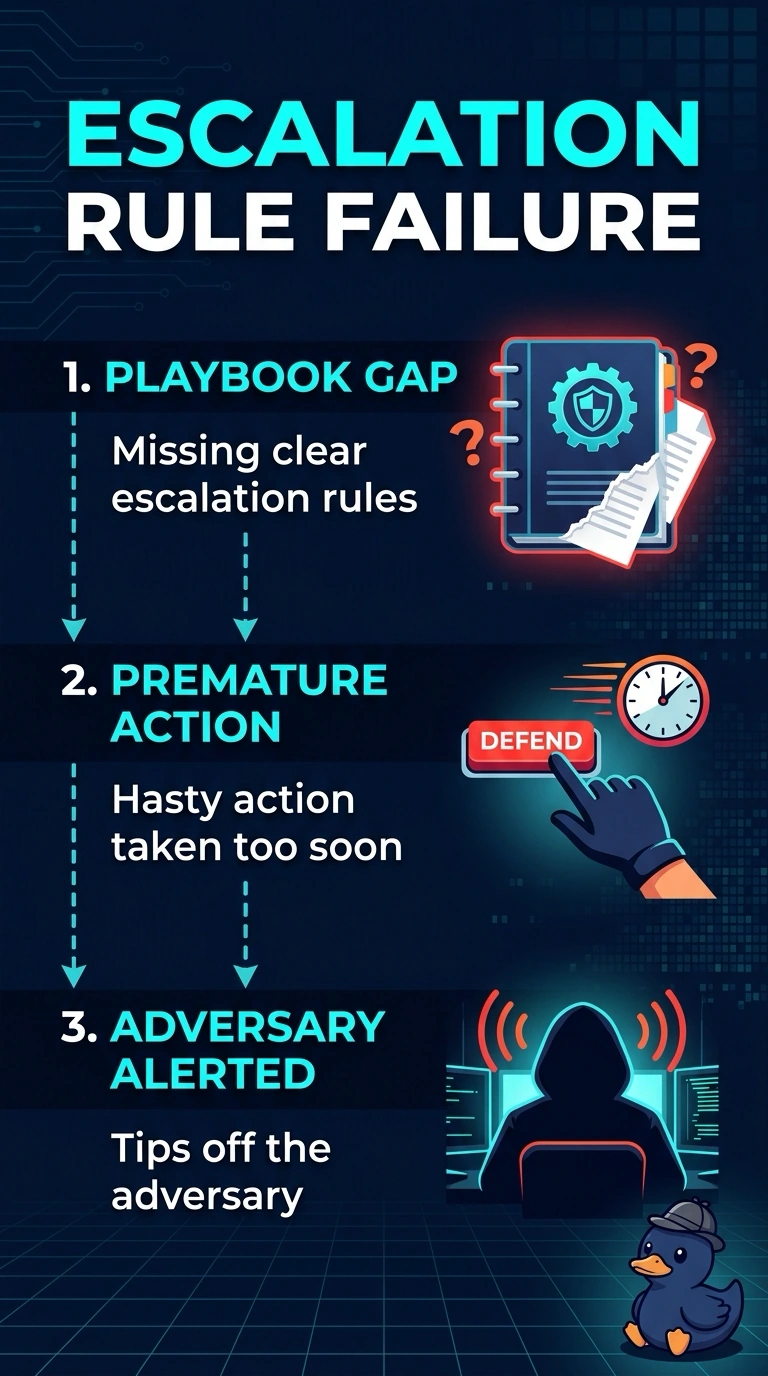
Think of spotting an active intruder like watching a suspect in your store—shouting across the aisle only tells them to run or hide their tracks. The trap is taking ad hoc remediation steps that tip off the attacker and destroy volatile memory evidence before incident response is ready.
Full Explanation
Lacking clear escalation rules to prevent premature actions that alert the adversary represents a critical playbook failure because uncoordinated reboots destroy volatile memory evidence and signal to the intruder that their presence has been discovered. Threat hunting playbooks must define exact handoff procedures to incident response so containment is synchronized across all affected hosts and accounts. By contrast, Using automated SIEM correlation rules instead of manually reviewing every raw firewall packet is a standard, scalable operational practice rather than a procedural failure. Similarly, Documenting disproven hunt hypotheses in a shared repository after an investigation concludes is a recommended maturity practice that prevents duplicate work. Finally, Correlating endpoint process telemetry with network flow records during initial scoping is an effective analytical technique for confirming activity rather than a mistake. One caveat is that immediate isolation may still be warranted if automated destructive activity like ransomware encryption is actively underway, provided it follows approved incident response channels. As an operational check, review your hunting runbooks to verify they specify out-of-band escalation contacts, volatile evidence preservation steps, and explicit prohibitions against uncoordinated host reboots.