
After a threat hunt reveals that an intruder spread across dozens of employee laptops using workstation-to-workstation remote administration protocols, the security team wants a preventive countermeasure. Which control most directly blocks this lateral movement path?
Select an answer to reveal the explanation.
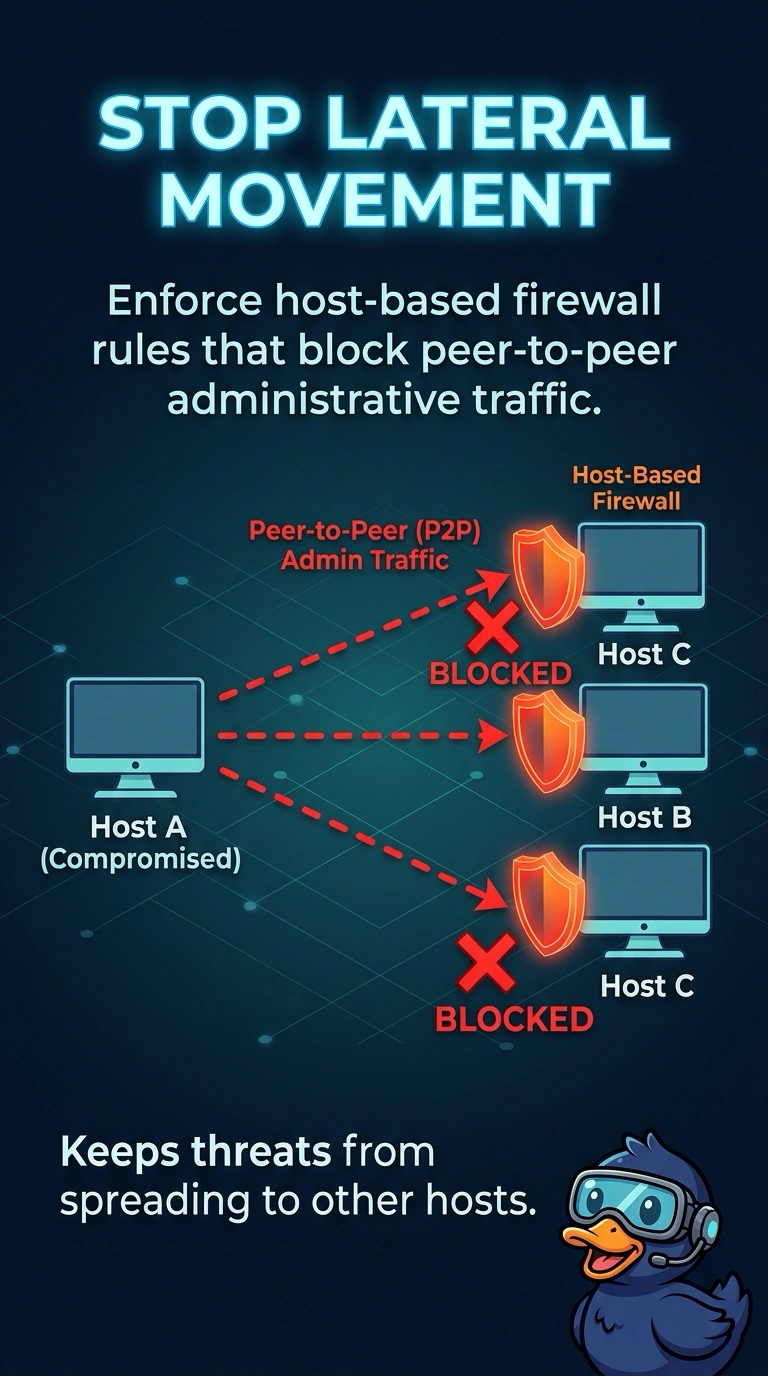
Short Explanation
Workstations rarely have any business administering each other, just like delivery trucks should not be driving through your living room. Blocking peer-to-peer management ports stops lateral spread cold, whereas simply keeping more logs only lets you watch the damage happen.
Full Explanation
The most direct preventive control is enforcing host-based firewall rules that block peer-to-peer administrative traffic. Blocking inbound management protocols between user workstations prevents an attacker who compromises one laptop from reaching neighboring endpoints on the same subnet, while still allowing authorized administration from designated management servers. Increasing the SIEM log retention period for perimeter web proxy access records improves historical visibility for external traffic but does nothing to block internal lateral movement. Disabling all outbound encrypted web traffic across every corporate user workstation would break essential business applications without restricting internal peer-to-peer paths. Replacing all user passwords weekly without changing internal network access paths leaves the underlying lateral reachability open if an attacker harvests fresh credentials or local tokens. As a caveat, verify whether IT support tools require exceptions from specific management jump hosts before enforcing strict blocks. For an operational check, test inbound administrative port reachability between two standard user workstations after deploying the host firewall policy.