
After a threat hunting team uncovers a new persistence mechanism during an incident and validates a query to detect it, what should the team do to keep its documented hunt playbooks effective?
Select an answer to reveal the explanation.
Short Explanation
A threat hunting playbook is a living recipe book, so every time you discover a new adversary trick, you write it into the margins. The trap is letting hard-won hunt knowledge evaporate in chat threads instead of updating shared procedures.
Full Explanation
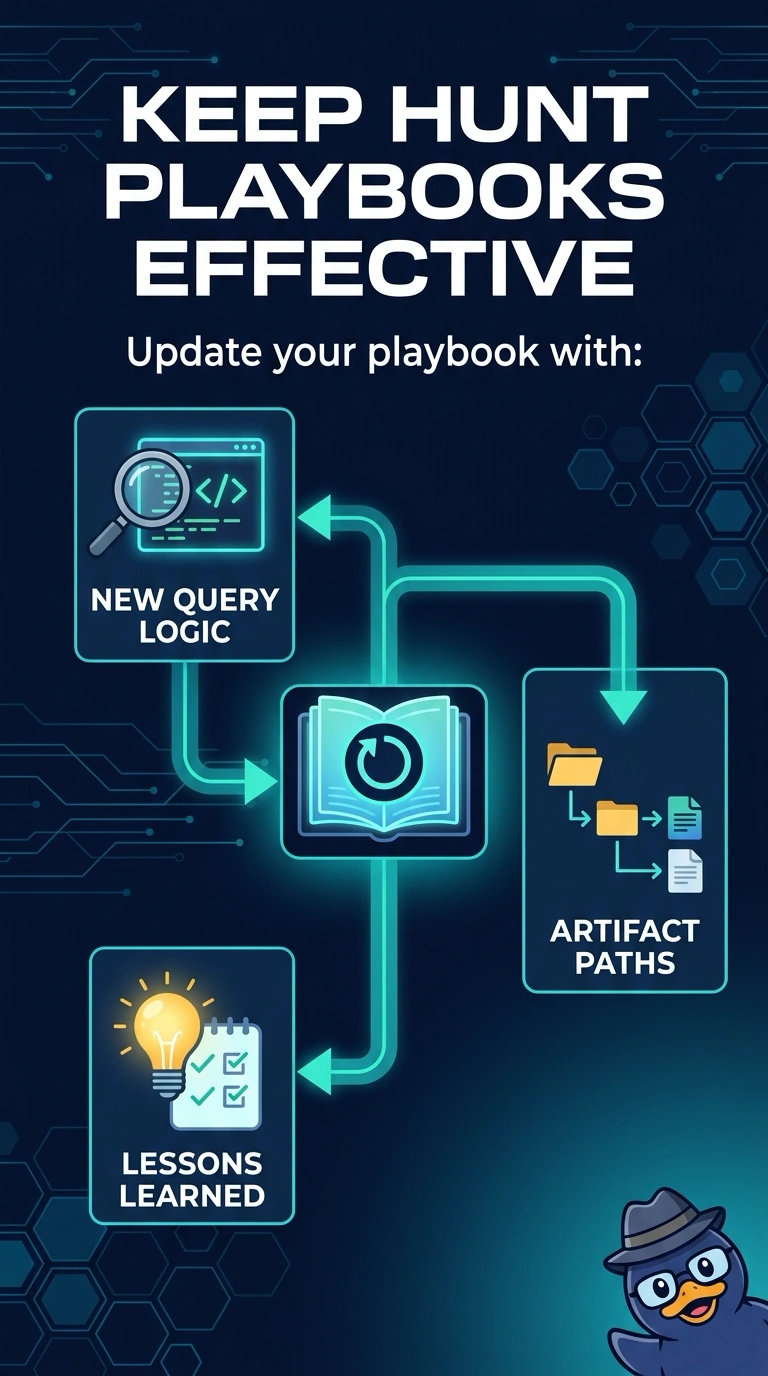
Choosing to Update the playbook with the new query logic, artifact paths, and lessons learned ensures that institutional knowledge from an active hunt becomes repeatable across the entire team. Documenting validated searches, expected benign noise, and exact host or log locations allows any analyst on any shift to execute the same check consistently. Deciding to Archive the existing playbook and rely on informal analyst chat logs for future hunts fragments procedural knowledge and forces future hunters to rediscover the same queries from scratch. Opting to Delete previous baseline queries to prevent analysts from running older checks creates dangerous regression blind spots, because adversaries continue to reuse older persistence techniques alongside newer ones. Choosing to Restrict playbook access exclusively to senior incident response leadership bottlenecks routine hunting operations and prevents frontline SOC analysts from applying proven detection steps. As a caveat, playbook updates should pass peer review before publication so unverified queries do not cause confusion. Conduct an operational check by running the updated playbook query in a staging or historical log set to confirm expected syntax and performance.