
A SaaS company's threat hunting team wants a low-noise deception countermeasure to detect adversaries who have gained internal network access and are searching developer wikis and shared configuration files for cloud credentials. Which approach best meets this goal?
Select an answer to reveal the explanation.
Short Explanation
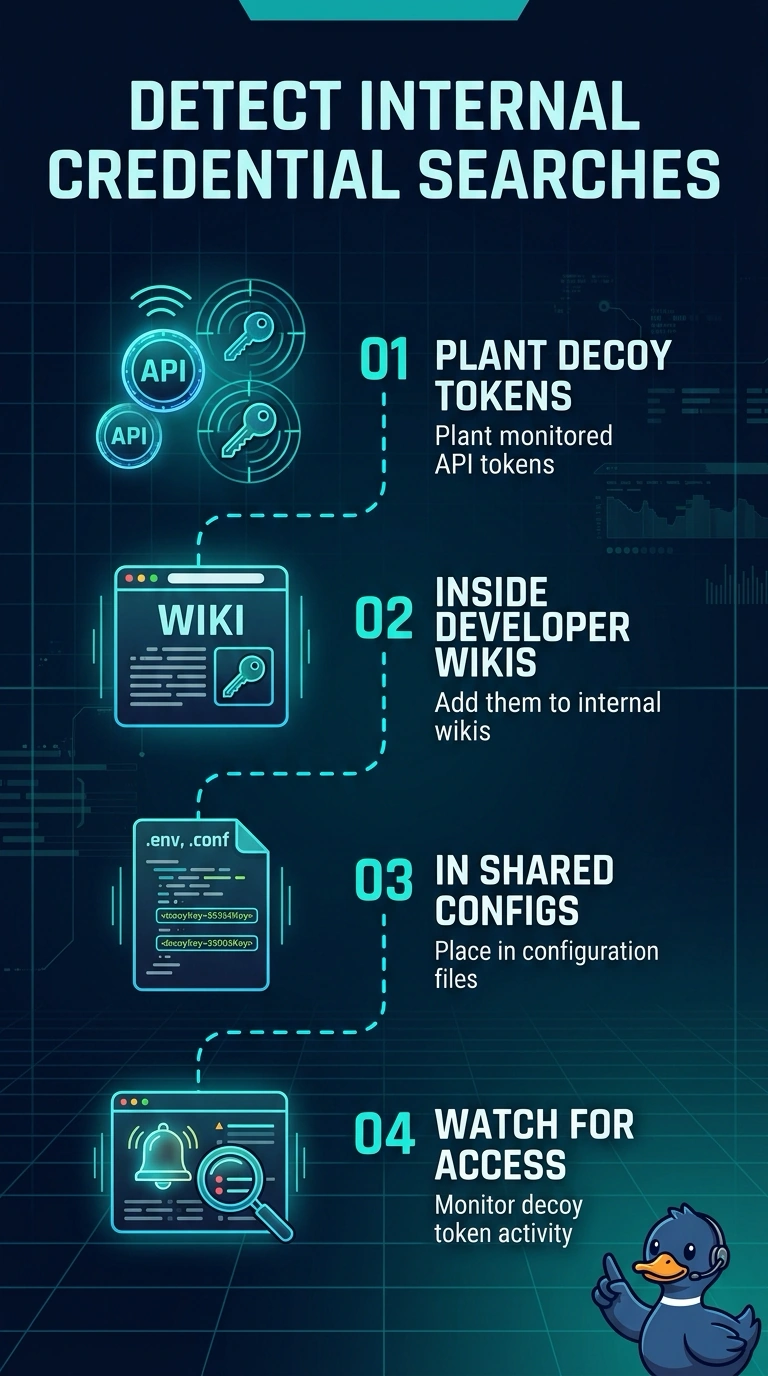
A fake API token sitting in an internal wiki is like a marked bill in a cash register—legitimate staff have no reason to touch it, so any use tells you an intruder is snooping. The trap is cranking up noisy logging or breaking developer workflows when a single decoy gives you a high-confidence tripwire.
Full Explanation
Deception countermeasures excel at detecting post-compromise reconnaissance because they rely on adversary curiosity rather than known malware signatures. Plant monitored decoy API tokens in internal wikis and configuration files works because those tokens serve no real operational purpose. Use of a monitored decoy token is a high-priority credential-access lead; secret scanners, indexing, security tests, and accidental copying can also trigger it, so establish a benign baseline and investigate actor context. Enable verbose debug logging across all production customer web applications is incorrect because debug logs generate massive noise and do not specifically surface internal wiki or configuration searching. Rotate every developer's workstation password on a weekly automated schedule is false because frequent password rotation creates user friction without detecting an attacker actively reading internal repositories. Block all internal HTTP traffic between engineering subnets and documentation servers is wrong because it disrupts legitimate engineering workflows rather than catching an intruder. As a caveat, decoy tokens must be clearly documented for the security team and isolated from production permissions so they cannot be mistaken for real leaks or cause operational impact. For an operational check, test the decoy token in a controlled manner to confirm that any usage triggers an immediate, high-priority SIEM alert.