
While reverse engineering a suspicious Windows binary, an analyst notices its static import table lists almost no networking or cryptographic functions, yet sandbox logs show it making encrypted outbound connections. What explains this discrepancy?
Select an answer to reveal the explanation.
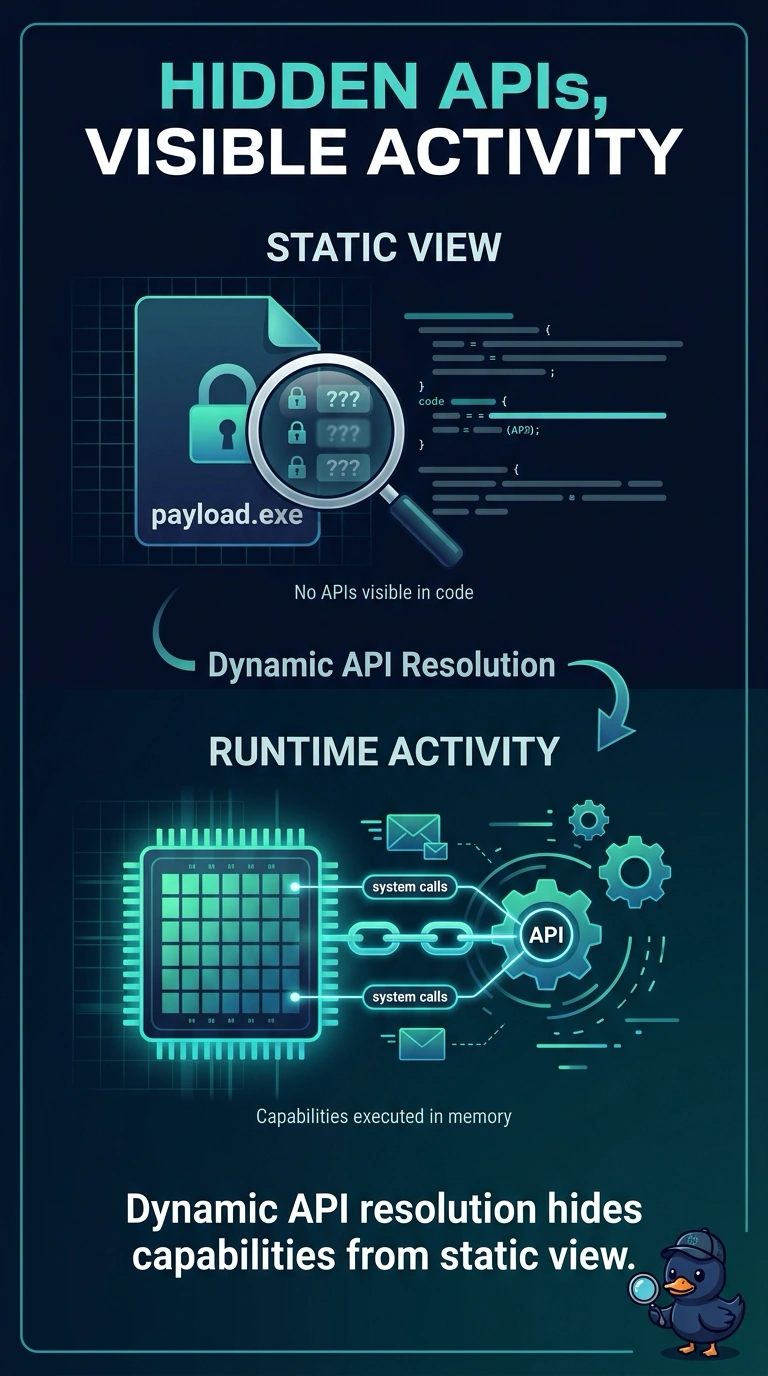
Short Explanation
An empty static import table does not mean a binary is harmless—it often means the malware is looking up its tools on the fly. The trap is trusting a clean-looking import list when you haven't checked what resolves at runtime.
Full Explanation
Dynamic API resolution is hiding capabilities from static view explains this gap because malware frequently resolves system library addresses at runtime using loader routines or hashed API names to evade static inspection. Because those functions are never declared in the standard import address table, basic static tools miss the binary's networking and cryptographic capabilities until execution or deeper disassembly. The binary contains no executable machine instructions at all fails because the sandbox confirmed active outbound network behavior, proving executable code ran. The operating system automatically strips all import tables fails because the Windows loader relies on import metadata to bind standard libraries and does not strip them from valid executables. The compiler linked every external library statically without imports fails because core operating system networking and socket operations still require system API calls rather than purely user-space static code. Keep in mind as a caveat that some legitimate software also uses dynamic loading for optional plugins or backward compatibility. As an operational check, inspect the minimal import table for dynamic loader functions and pair static disassembly with API monitoring in an isolated sandbox.