
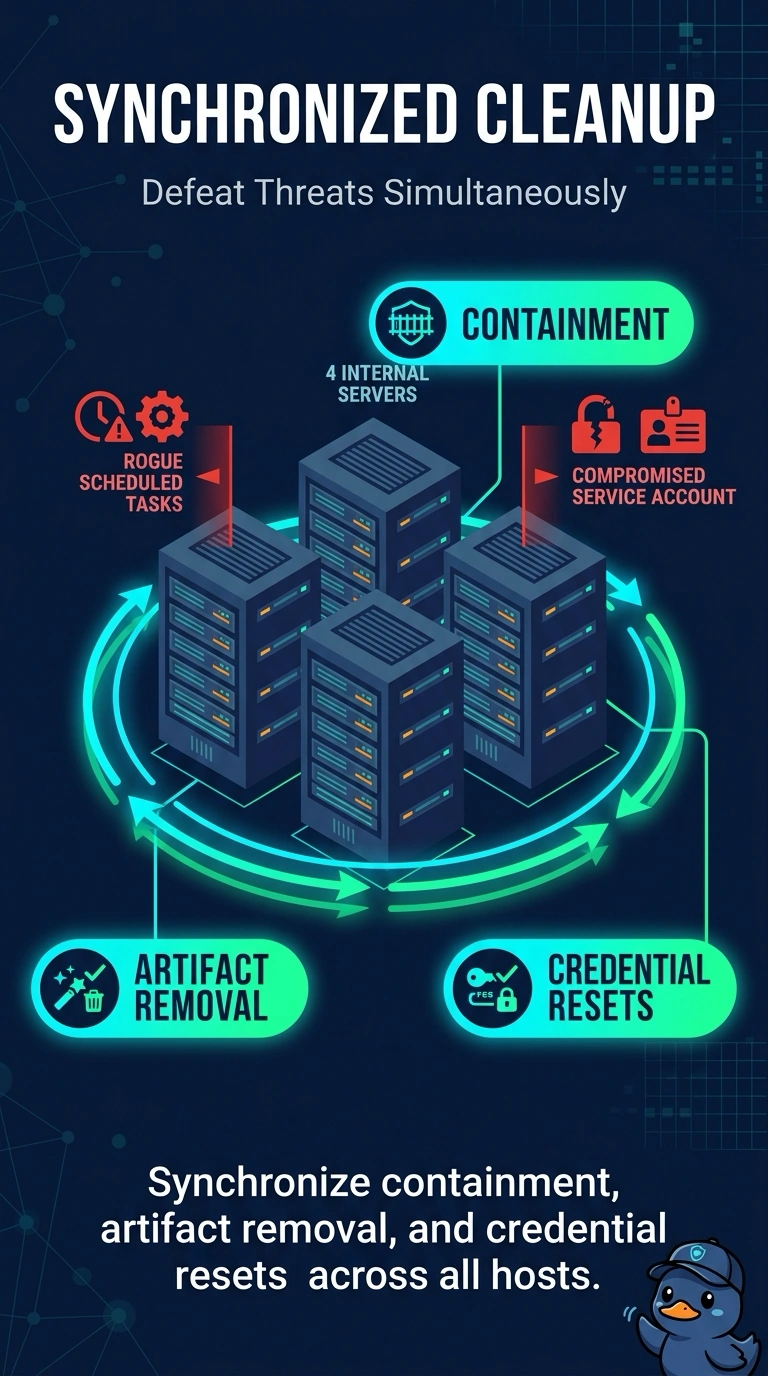
A threat hunting team confirms that an intruder has established persistence on four internal servers using rogue scheduled tasks and a compromised service account. Which remediation sequence best prevents the adversary from re-establishing access during cleanup?
Select an answer to reveal the explanation.
Short Explanation
Clearing pests from one room at a time only chases them into the rooms you have not checked yet. Your trap is fixing one server while the attacker still holds live credentials or another foothold. Coordinate isolation, cleanup, and credential resets together across every affected host.
Full Explanation
The team should Synchronize containment, artifact removal, and credential resets across all hosts, because piecemeal remediation alerts an active adversary and gives them time to pivot or redeploy persistence using surviving accounts or footholds. Isolating all affected systems together, removing rogue artifacts, and rotating compromised credentials in a coordinated window closes re-entry paths cleanly. Reboot each compromised server sequentially during business hours leaves persistent scheduled tasks intact and disrupts production without eliminating the attacker's access. Rotate only the initial phishing victim's password before containment fails because the compromised service account and remaining hosts still grant the intruder full control. Delete suspicious scheduled tasks without isolating active network sessions allows an active operator to recreate persistence or deploy backup tools before cleanup finishes. Caveat: rotating shared service account credentials requires coordination with application owners so critical services restart cleanly with updated secrets. Operational check: after the synchronized remediation window closes, re-run your validated persistence and authentication hunt queries across all four servers and adjacent subnets to confirm zero residual activity.