
Following a threat hunt that uncovered repeated memory-resident credential theft and process injection across finance workstations, a security engineer must deploy preventive host countermeasures that reduce reliance on signature detections. Which control most directly addresses this exposure?
Select an answer to reveal the explanation.
Short Explanation
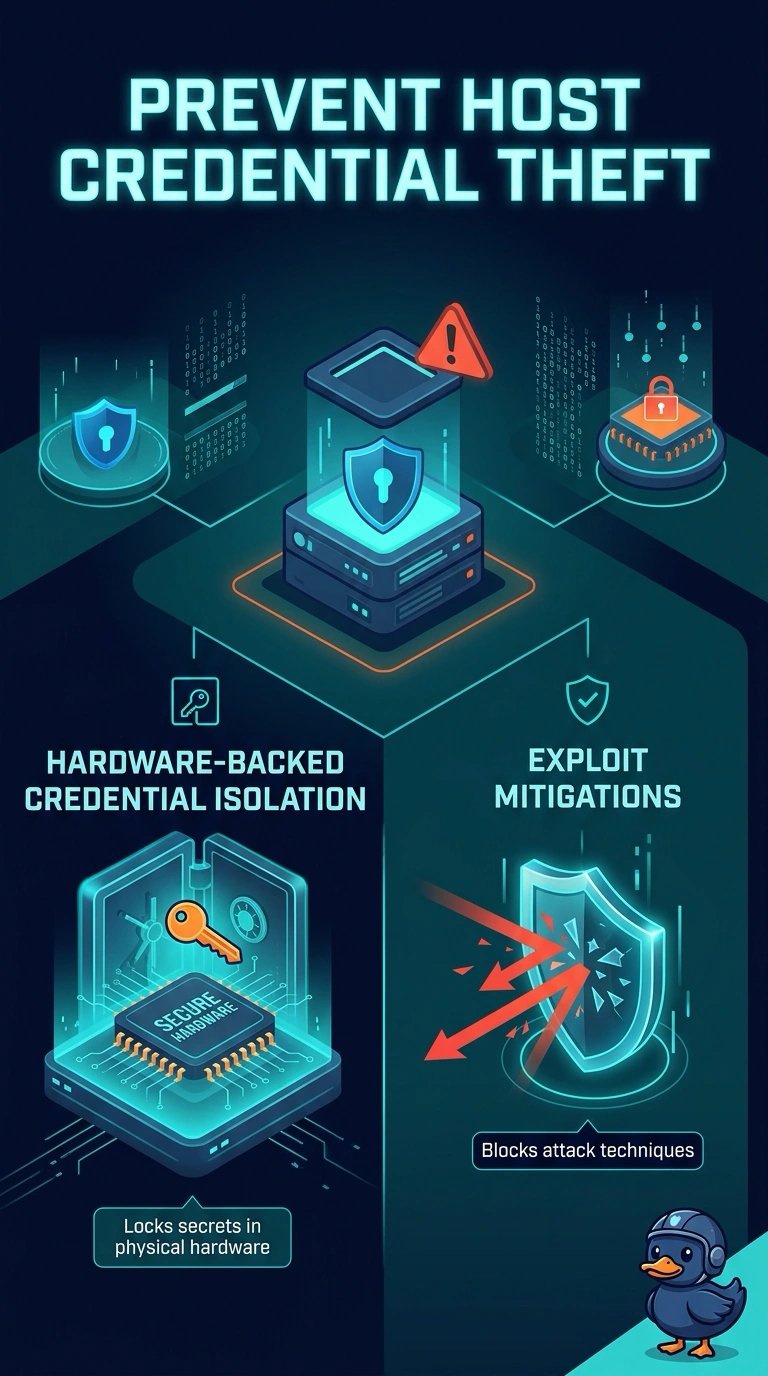
Locking the front door helps, but putting valuables inside a hardware vault stops thieves even if they slip into the hallway. Your trap is relying on disk scans to stop attacks that live purely in memory. Hardware-backed isolation and memory exploit mitigations protect secrets and processes at runtime.
Full Explanation
To counter memory-resident threats directly, teams should Enforce hardware-backed credential isolation and exploit mitigations. Credential Guard uses virtualization-based isolation for supported domain secrets, while separately configured exploit protections mitigate selected injection and execution techniques. Neither protects all credentials or prevents every injection method. Even if an attacker gains local execution, hardened memory protections raise the cost and difficulty of extracting plaintext credentials or injecting shellcode. Disable all local administrative accounts across every domain workstation breaks legitimate IT recovery workflows and does not stop memory injection inside standard user or service processes. Schedule weekly antivirus signature scans on all user home directories inspects files at rest on disk and misses fileless payloads operating solely in volatile memory. Block outbound ICMP echo requests at the corporate perimeter firewall addresses basic network diagnostics or ICMP tunneling rather than host-level memory injection and credential access. Caveat: virtualization-based protections require compatible hardware and driver testing to avoid stability issues on legacy workstations. Operational check: audit endpoint configuration management reports to confirm that credential isolation and memory-protection policies are active and enforced across all targeted finance endpoints.