
An incident responder must acquire volatile memory from a compromised server suspected of hosting a memory-resident payload. Which acquisition practice best preserves forensic integrity?
Select an answer to reveal the explanation.
Short Explanation
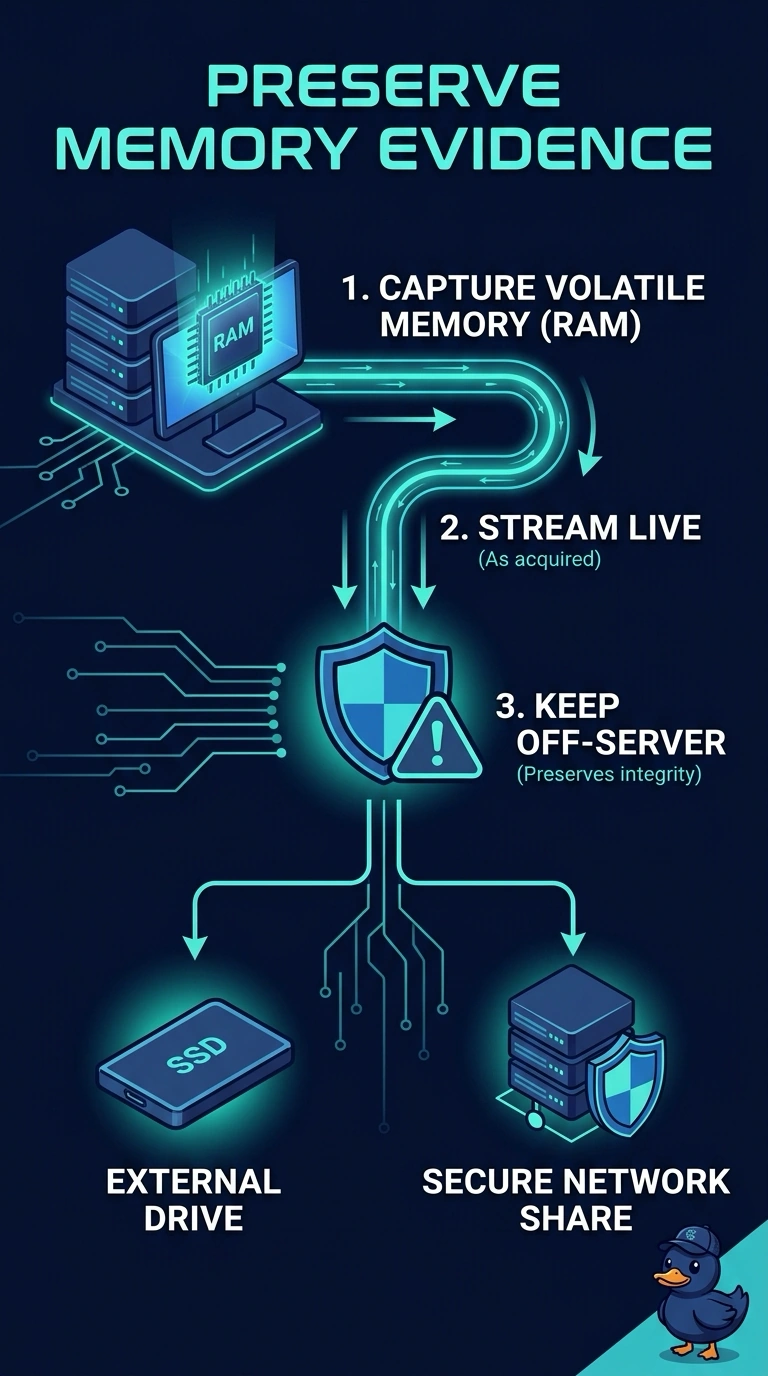
Writing a memory image onto the suspect's own hard drive is like dusting for fingerprints by wiping the counter first. You want that volatile evidence off the machine cleanly without overwriting disk artifacts.
Full Explanation
Stream the memory acquisition to an external drive or secure network share is the proper practice because writing gigabytes of memory data to the suspect host's local storage can overwrite unallocated disk clusters and destroy deleted forensic artifacts. Sending the capture directly to clean external media or a dedicated collection share preserves both the volatile memory state and the integrity of the local filesystem. Save the memory image directly to the local system drive fails because heavy local disk writes risk stomping over residual evidence and altering timestamps on the compromised host. Reboot the workstation first to clear fragmented memory pages fails because powering off or restarting the system erases volatile RAM contents, destroying the very memory-resident payload you are trying to capture. Copy only the browser executable binary from the program folder fails because a memory-resident attack executes in RAM without modifying the legitimate on-disk executable file. Keep in mind as a caveat that network streaming can generate noticeable traffic, so use a dedicated management or isolated capture interface when available. As an operational check, compute a cryptographic hash of the acquired memory image immediately upon completion and store it alongside your chain-of-custody records.