
During a threat hunt, analysts notice suspicious internal scanning from IP addresses that have no corresponding records in the endpoint detection console. Which process improvement best addresses this visibility gap?
Select an answer to reveal the explanation.
Short Explanation
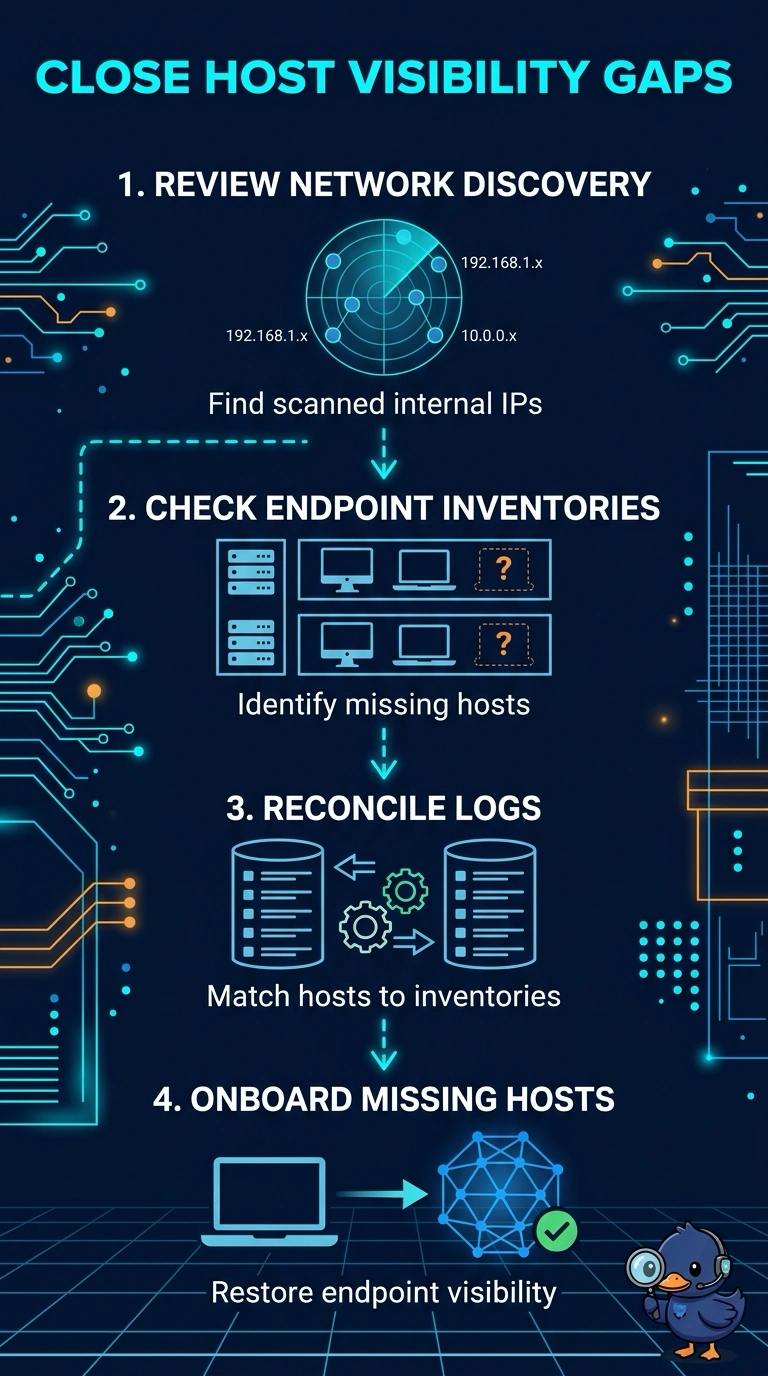
When a host communicates on your network without an endpoint agent, you have a visibility gap to close. Rather than silence alerts or leave the gap unchecked, reconcile network discovery logs with endpoint inventories to bring missing hosts into view.
Full Explanation
Unmanaged or shadow-IT assets create dangerous blind spots because endpoint-only hunts cannot see activity on hosts lacking telemetry agents. Reconciling network discovery logs with endpoint inventories directly addresses this gap by identifying active IP addresses without endpoint coverage, so you can deploy agents or isolate unauthorized devices. Disabling internal network scanning alerts to stop unmanaged hosts from triggering noise hides potentially threatening activity rather than restoring visibility. Deleting historical DHCP lease records weekly to reduce SIEM storage overhead destroys the attribution trail needed to map past IP activity to specific hardware. Relying exclusively on manual spreadsheet audits conducted once every two years leaves the environment exposed to months of unmonitored asset drift. An exam caveat is that some specialized appliances or guest devices cannot run standard endpoint agents, requiring network segmentation and passive monitoring instead. As a practical check, schedule automated comparisons between DHCP records, switch ARP tables, and active endpoint agent lists to flag unmonitored hosts promptly.