
During a quarterly defensive review, a threat hunting lead notices that a subset of branch-office servers has generated zero security alerts for several weeks. Which process check best determines whether this silence reflects a healthy environment or an analytical detection gap?
Select an answer to reveal the explanation.
Short Explanation
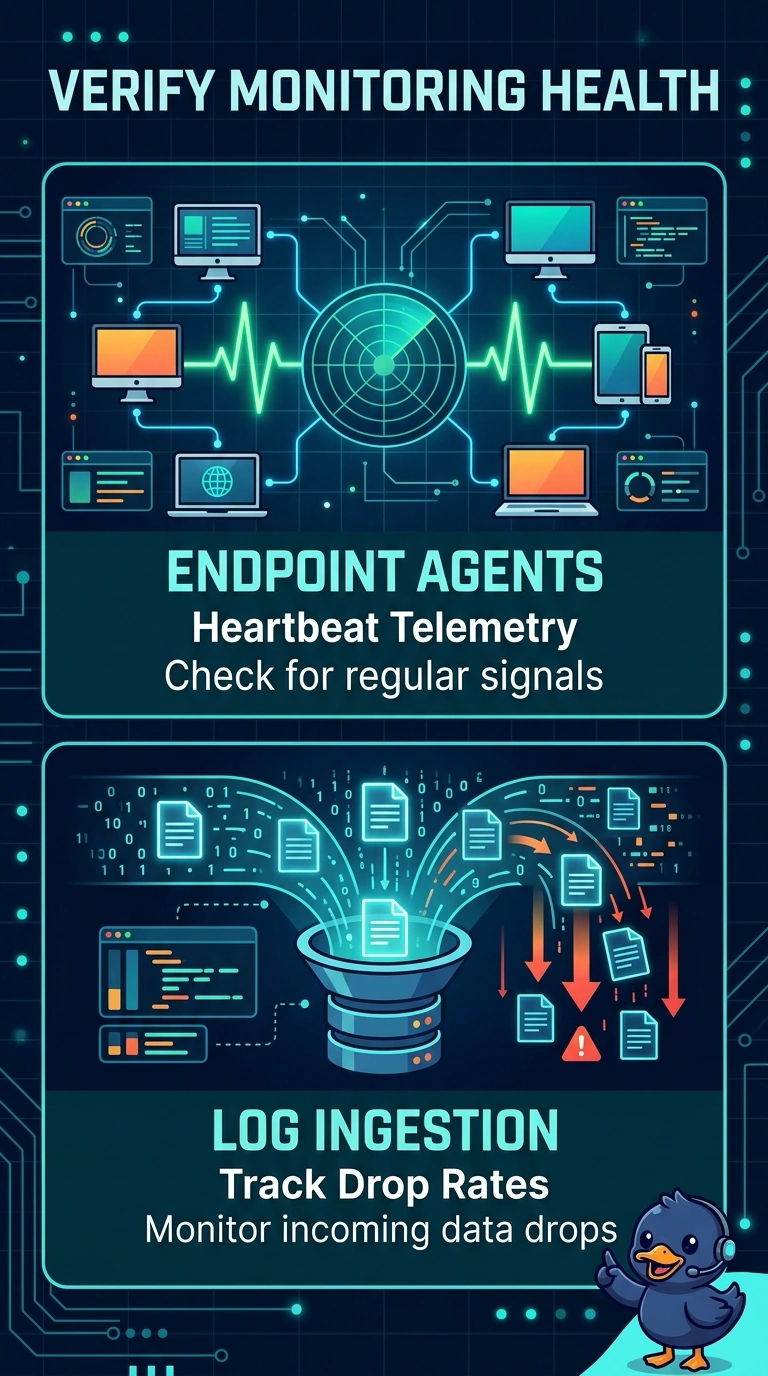
A silent dashboard only helps you if your sensors are actually awake and reporting. Monitoring endpoint agent heartbeat telemetry and log ingestion drop rates reveals broken pipelines and tampered agents before an attacker exploits the blind spot. The trap is assuming zero alerts means zero intrusions when your telemetry has quietly stopped arriving.
Full Explanation
The best check is Monitoring endpoint agent heartbeat telemetry and log ingestion drop rates. An absence of alerts can result from misconfigured log forwarders, expired agent certificates, or deliberate tampering by an adversary who disabled security services on a compromised host. Tracking continuous heartbeat signals and expected event-volume baselines confirms that telemetry is actively flowing into the SIEM. By comparison, Increasing the SIEM alert retention window to store historical notifications longer preserves past data but does not diagnose why current events are missing. Lowering the severity threshold on existing firewall port-scan signatures increases alert noise from network sensors without verifying endpoint visibility. Similarly, Scheduling quarterly manual reviews of archived perimeter firewall rulebases addresses static network policy rather than real-time sensor health. As a caveat, planned server maintenance or seasonal branch closures can cause legitimate drops in log volume, so correlate telemetry gaps with asset inventory status. For an operational check, configure an automated SIEM health watch that alerts when any critical server stops sending agent heartbeats or drops below its normal event rate.