
Following a series of hunts that produced dozens of new SIEM correlation rules, SOC analysts report that alert volume has doubled without uncovering real incidents. Which process step should the hunting team take to improve effectiveness?
Select an answer to reveal the explanation.
Short Explanation
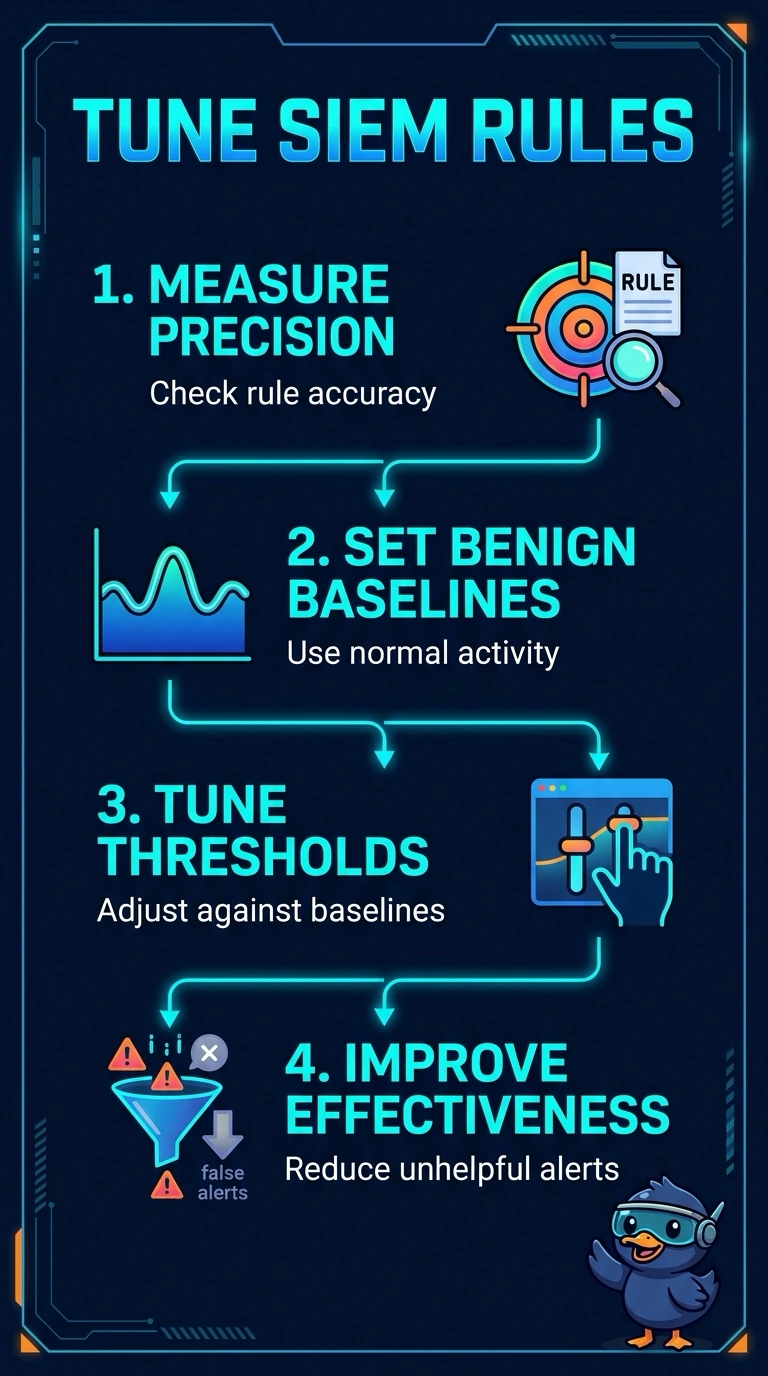
Doubling your SOC's alert queue without finding real threats does not make you safer—it just buries the real needle in a bigger haystack. The trap is either throwing away every new rule or letting noisy detections burn out your analysts. Measuring precision and tuning against benign baselines keeps your detections sharp and actionable.
Full Explanation
A mature threat hunting process closes the loop on new detections by ensuring they remain high-signal in production, which is why the team should Measure rule precision and tune thresholds against benign baselines. Adding exclusions for legitimate administrative tools and refining correlation logic preserves detection coverage while eliminating repetitive noise. Choosing to Disable all newly created rules permanently to restore quiet queues reintroduces the exact visibility blind spots the hunt was meant to close. Meanwhile, deciding to Ignore false positives because high alert volume proves thoroughness accelerates analyst burnout and causes genuine alerts to be missed. Finally, opting to Replace behavioral correlation rules with static file-hash alerts degrades resilience against minor payload changes. Caveat: overly aggressive exclusions can accidentally blind a rule to real living-off-the-land abuse if scope is too broad. As an operational check, track each rule's true-positive rate and analyst triage time over a two-week tuning window before marking it production-ready.