
While executing a scheduled hunt for unauthorized scheduled tasks, an analyst discovers an active outbound command-and-control session originating from a domain controller. What should the hunter do immediately according to threat hunting process best practices?
Select an answer to reveal the explanation.
Short Explanation
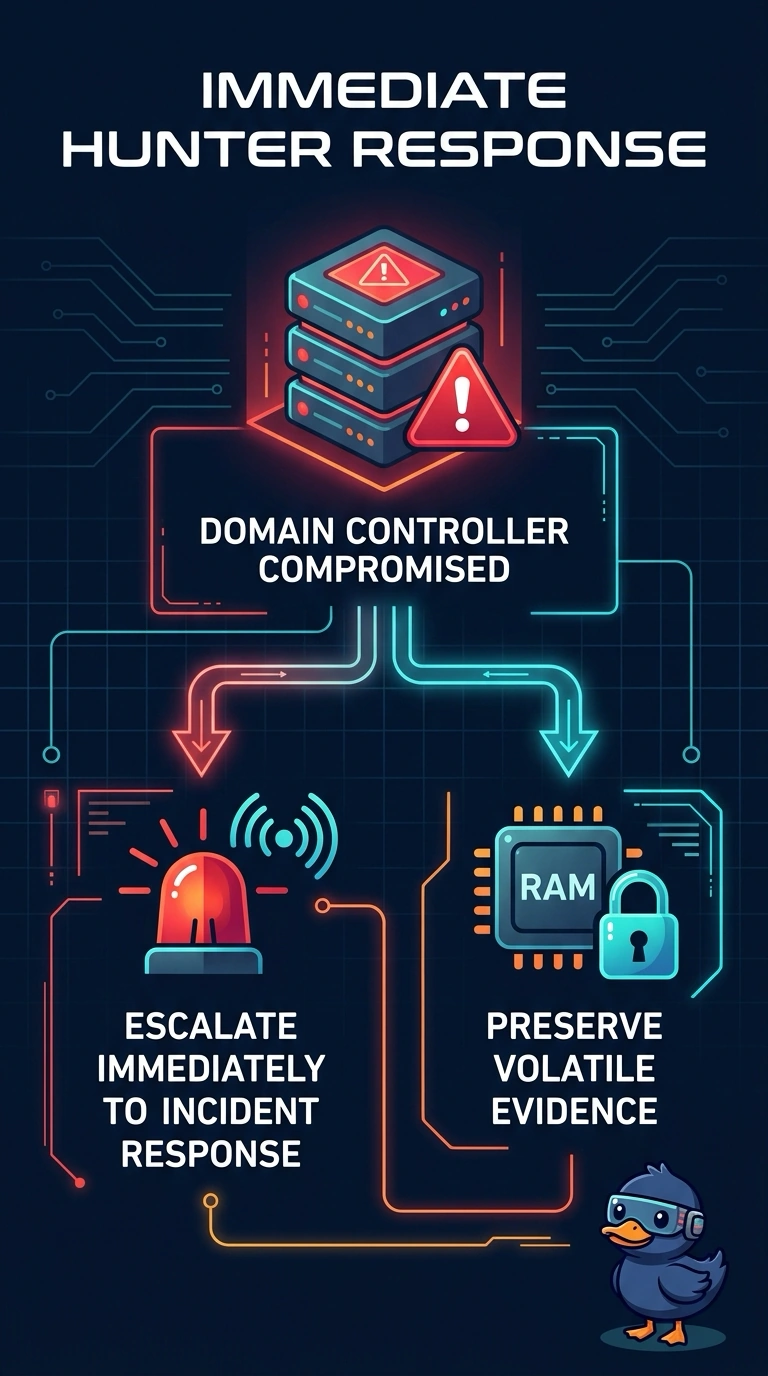
Finding a live intruder on a domain controller is like spotting smoke in a server room—you do not stand around taking notes while the fire spreads. The trap is treating an active compromise as a quiet research project or wiping memory before responders can see it. Escalate right away and protect volatile evidence so your team can contain the breach.
Full Explanation
When a threat hunt uncovers an active compromise on a tier-zero asset, the hunter must transition out of exploratory mode and Escalate immediately to incident response and preserve volatile evidence so containment and forensic acquisition proceed under formal incident procedures. Choosing to Continue gathering telemetry for several days before alerting anyone gives the adversary time to harvest domain credentials and expand persistence. Trying to Delete the suspicious task silently without notifying operations tips off the intruder and destroys investigative context without severing the active session. Likewise, choosing to Reboot the domain controller to clear all active memory state destroys volatile process and network artifacts while failing to remove disk-based persistence. Caveat: even during urgent escalation, coordinate isolation actions with infrastructure owners to avoid unintended directory outages. Coordinate containment immediately; collect volatile memory when feasible without materially delaying risk-driven containment, and document the decision.