
A security team places a monitored decoy account in its directory service with no assigned applications or legitimate login permissions. Why is an authentication attempt against this account especially valuable for threat hunting?
Select an answer to reveal the explanation.
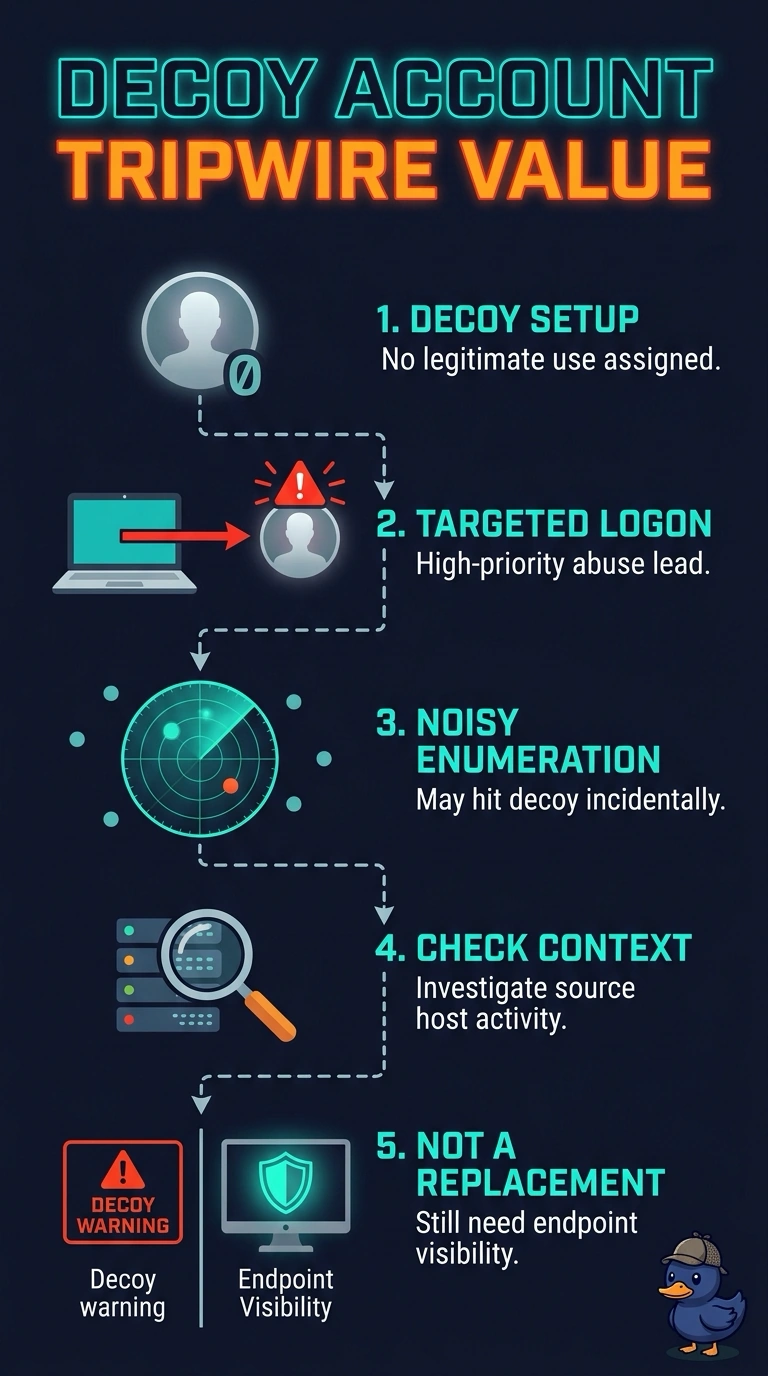
Short Explanation
When nobody in your organization has a reason to knock on a locked door, the first person who tries the handle tells you everything. The trap is thinking deception tools replace core endpoint monitoring instead of acting as high-signal tripwires.
Full Explanation
Unexpected authentication to a decoy account is a high-priority credential-abuse lead. The account has no assigned applications or legitimate login permissions, so a targeted logon attempt suggests credential abuse or internal reconnaissance consistent with domain account discovery. Routine directory enumeration can include the decoy, and tests or misconfigured tools can attempt authentication. Alert on meaningful targeted use and investigate source context instead of treating every directory query as confirmed unauthorized activity. By contrast, describing the decoy as automatically patching vulnerable directory controllers during authentication attributes impossible self-healing capabilities to a passive deception object. Believing legitimate users regularly authenticate to decoy accounts when resetting expired passwords contradicts the entire design, which has no user ownership or normal use. Claiming decoy accounts replace the need for endpoint detection agents across corporate workstations overstates deception, since attackers who avoid touching the decoy still require endpoint visibility to detect. For an operational check, verify SIEM rules fire on authentication targeting the decoy and trace the originating host.