
An analyst recovers a heavily obfuscated script from a compromised host that resists static string extraction. Which process step best reveals the payload's runtime behavior and command-and-control logic safely?
Select an answer to reveal the explanation.
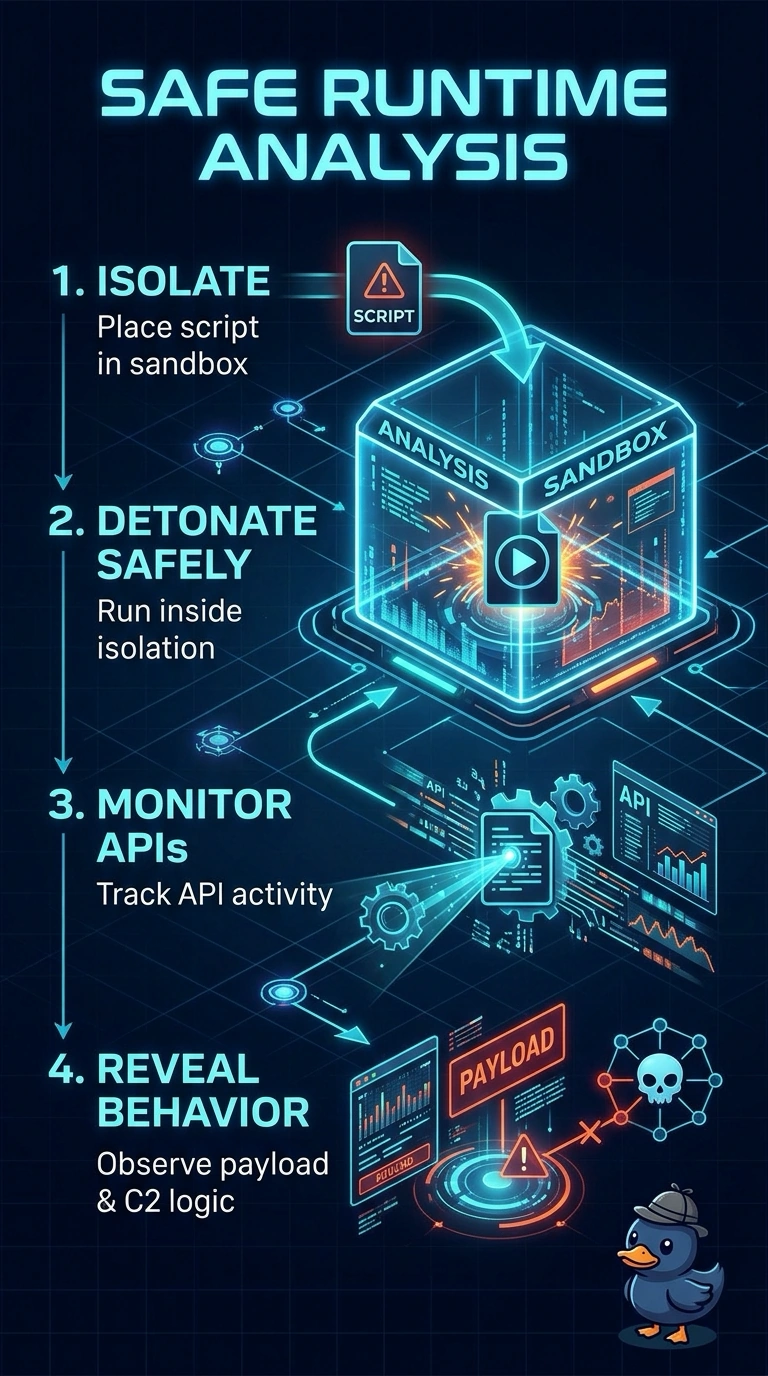
Short Explanation
When obfuscated code hides its intent from static inspection, running it in an isolated lab lets you watch the script reveal its own runtime secrets. The trap is risking your live production host or expecting a simple hash lookup to decode custom logic.
Full Explanation
Choosing "Detonating the script inside an isolated analysis sandbox with API monitoring" is correct because dynamic analysis in a segregated environment forces an obfuscated payload to deobfuscate itself in memory and expose system calls, file writes, and network callbacks without endangering enterprise assets. Conversely, "Executing the script directly on a production jump host with packet capture enabled" is dangerous because it gives live malware access to operational credentials and internal networks. Meanwhile, "Uploading the script to a public search engine to check for matching file hashes" only checks whether an identical file was seen elsewhere and fails completely on newly generated or uniquely obfuscated scripts, while also risking sensitive data exposure. Similarly, "Renaming the file extension and scanning it again with standard antivirus signatures" does not unpack obfuscated logic or reveal runtime command-and-control behavior. As a caveat, some payloads detect sandbox artifacts and delay execution, so analysts may need realistic simulated services. For an operational check, verify that your sandbox network is strictly segmented from production and review captured API and DNS records after execution.