
A global manufacturing SOC notices that different analysts investigating the same type of suspicious scheduled-task alert gather inconsistent evidence and miss key host artifacts during shift handoffs. What process improvement best resolves this inconsistency?
Select an answer to reveal the explanation.
Short Explanation
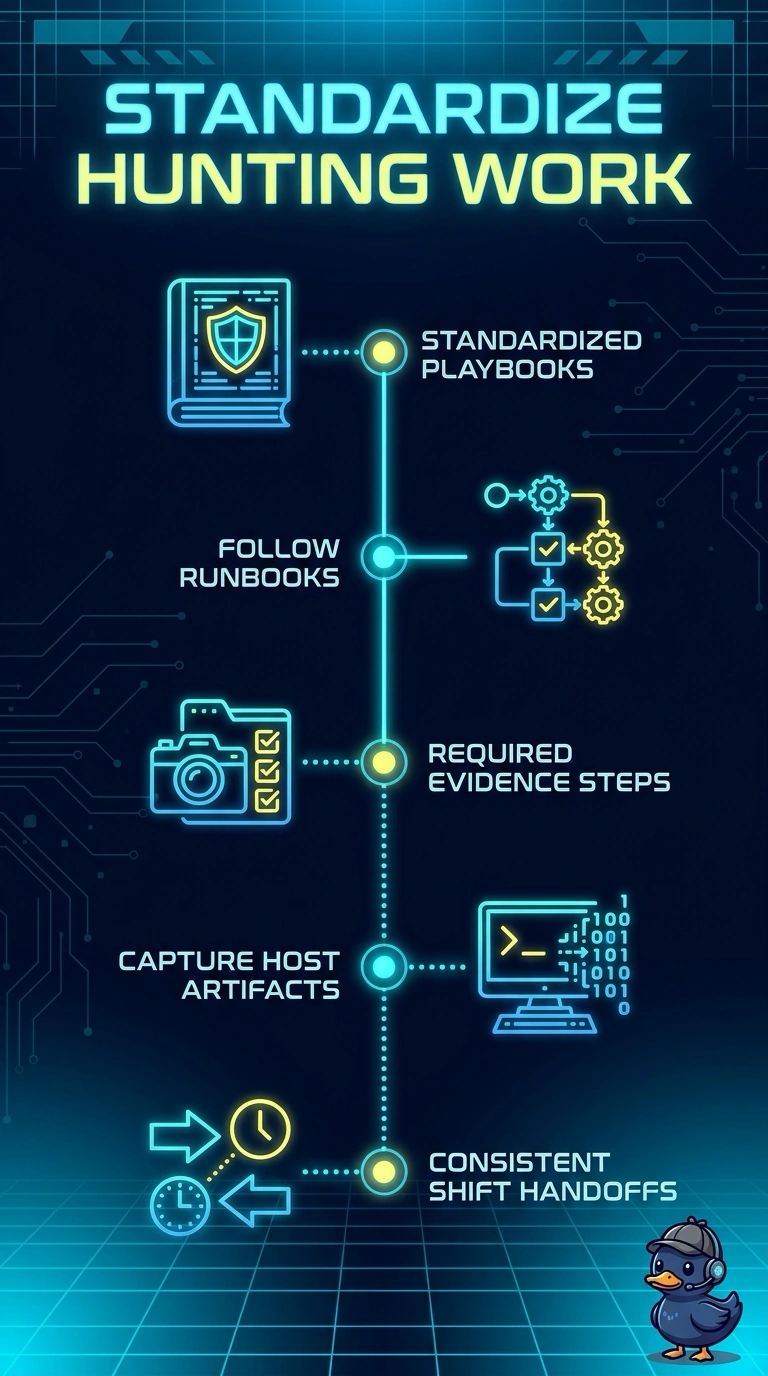
Imagine a relay race where every runner invents a different way to pass the baton—eventually someone drops it. When your team investigates alerts inconsistently across shifts, documented procedures keep every analyst on the same page. Avoid the trap of thinking extra log storage or informal chat alone fixes a workflow gap.
Full Explanation
Establishing standardized hunting playbooks and runbooks with required evidence steps ensures that every analyst collects the same host artifacts, executes consistent queries, and documents findings uniformly across shifts. Repeatable procedures eliminate guesswork during handoffs and turn individual tribal knowledge into a reliable team capability. Disabling low-priority alerts during overnight shift transitions reduces alert volume at the cost of creating dangerous blind spots that adversaries can exploit outside business hours. Relying on informal chat messages to share investigation notes leaves critical context fragmented and unsearchable, worsening handoff gaps rather than standardizing evidence collection. Increasing raw log retention without changing analyst workflows preserves historical data but does not guide analysts on which artifacts to inspect during an active investigation. One caveat is that static runbooks can become outdated as attacker tradecraft evolves, requiring periodic review after major incidents. As an operational check, audit recent closed tickets against your runbook checklist to verify that required artifacts were captured before handoff.