
While investigating a suspected kernel-level rootkit on a Linux web server, an analyst notices that standard operating system utilities show normal activity even though network sensors flag outbound traffic from the host. Which investigative approach best uncovers processes concealed from standard OS queries?
Select an answer to reveal the explanation.
Short Explanation
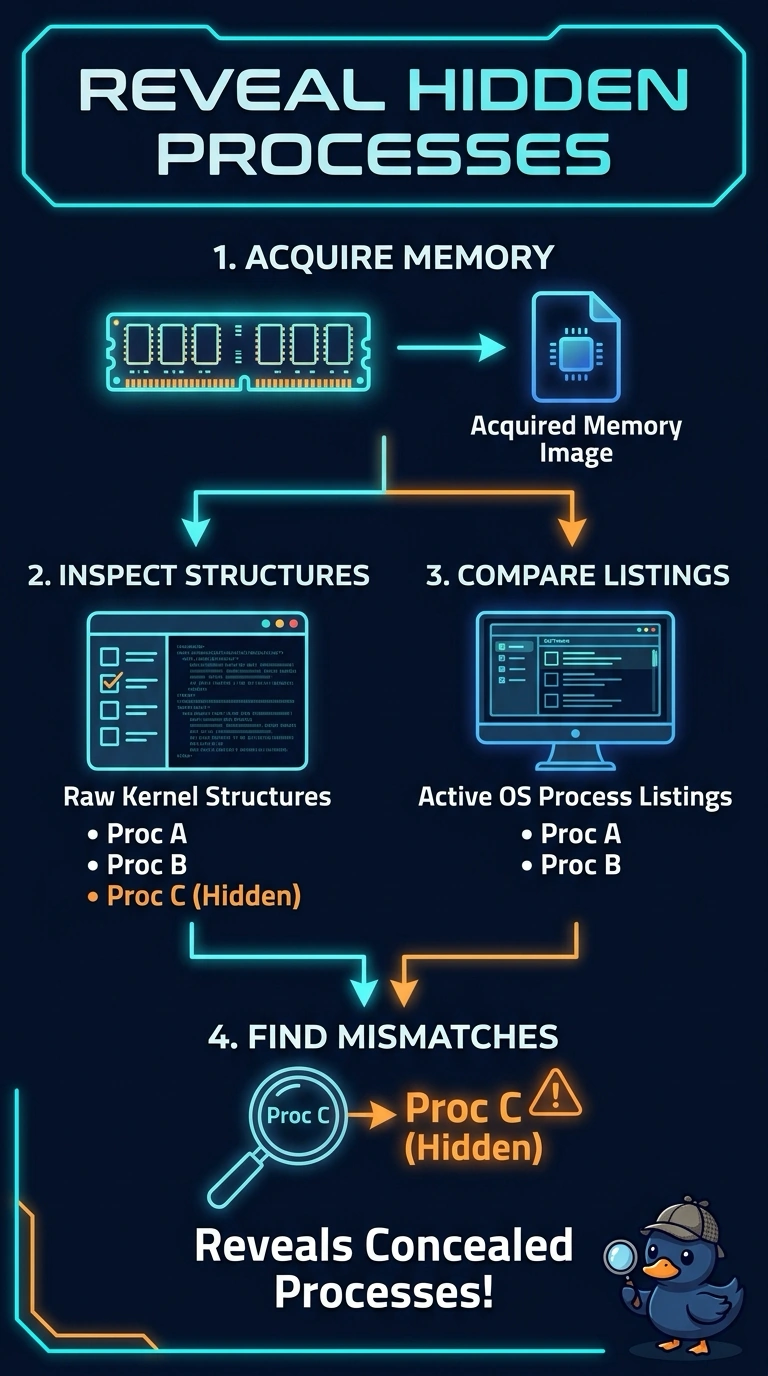
When a rootkit manipulates the operating system’s reporting tools, you can’t rely on those tools to reveal what is running. Compare raw kernel structures in an acquired memory image with active process listings for an independent view; bash history and firewall DNS caches can’t expose hidden host processes, and a source-code linter doesn’t inspect live kernel activity.
Full Explanation
Comparing raw kernel structures in an acquired memory image against active OS process listings is correct because kernel rootkits may hook system calls or unlink entries from standard process tables. Offline memory analysis examines underlying kernel allocations, so discrepancies can reveal processes concealed from ordinary queries. Reviewing local bash command history files fails because they record only interactive shell commands and can be cleared or bypassed by memory-resident payloads. Checking DNS resolver cache entries on the perimeter firewall appliance may confirm suspicious domain lookups, but it does not identify which hidden local process initiated a connection. Running a static source-code linter against the web application repository finds potential issues in application code, not active kernel-level concealment on the server. One caveat: volatile-memory acquisition and analysis require a compatible profile or symbol table for the exact Linux kernel version, or structures may be parsed inaccurately. As a practical check, cross-reference process identifiers recovered from raw memory scans with open network sockets in that same memory image to connect concealed processes to the flagged outbound traffic.