
Following a threat hunt that uncovered unauthorized remote administration binaries staged in user-writable directories on file servers, the security team wants a preventive control that blocks untrusted executables from running even if an attacker gains local access. Which countermeasure best meets this requirement?
Select an answer to reveal the explanation.
Short Explanation
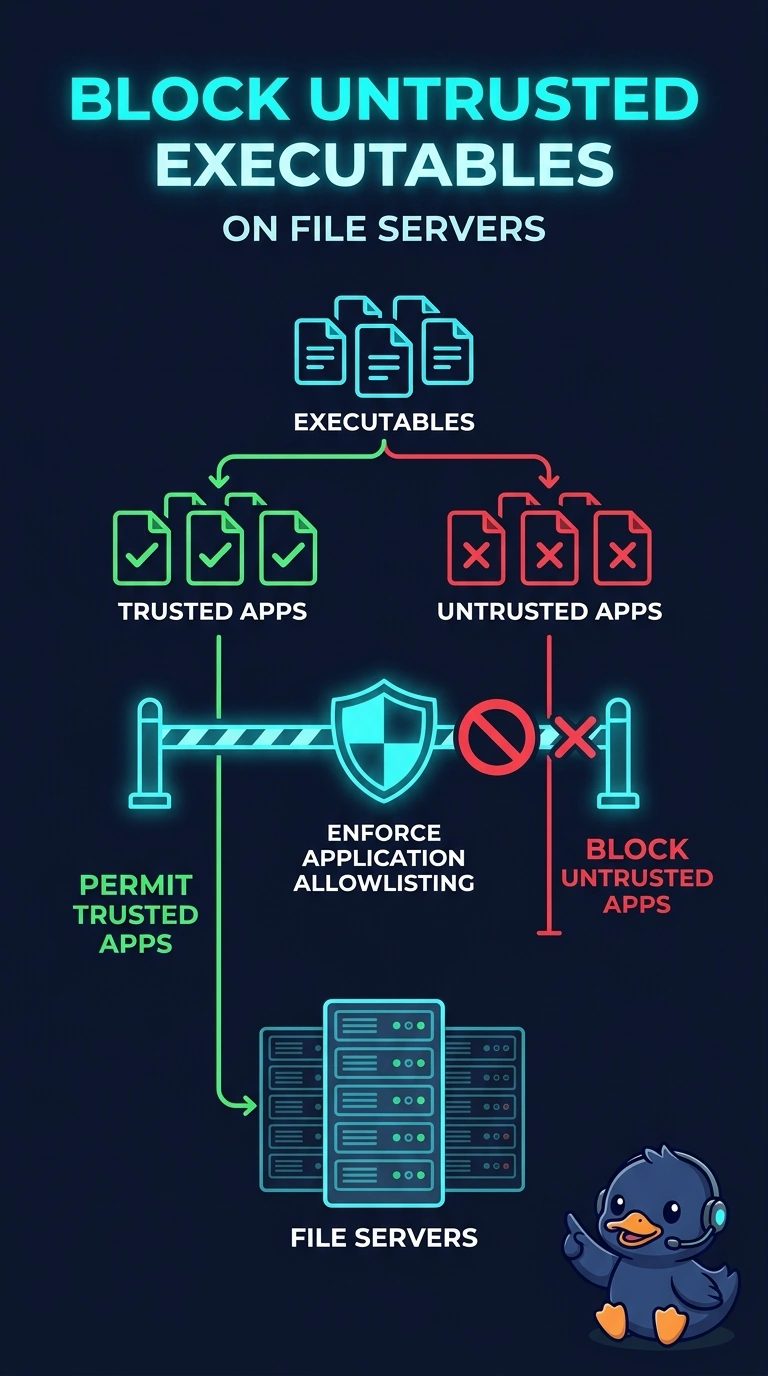
Think of allowlisting like a strict guest list at a secure facility: if a program is not explicitly approved, it does not get through the door. This stops unapproved binaries in user-writable folders cold, even when an intruder already has local access. Avoid the trap of choosing scanning or logging improvements when you need active execution prevention.
Full Explanation
Enforcing application allowlisting policies on the file servers directly prevents unauthorized executables and unapproved scripts from launching, regardless of where an attacker stages them. By permitting only code authorized by the configured publisher, signature, hash, or other policy rules; a valid signature alone is not universal approval, the control blocks rogue remote administration tools even after local filesystem access is obtained. Increasing the frequency of weekly vulnerability scans on the servers helps identify missing patches but does not prevent an attacker from executing newly dropped binaries between scans. Archiving firewall session logs to offline cold storage monthly supports long-term forensic retention rather than real-time execution prevention on endpoints. Rotating TLS certificates on external load balancers every quarter strengthens external transport cryptography without restricting local program execution on internal file servers. One caveat is that overly strict allowlisting can break legitimate administrative updates if software publishers or paths are not maintained in the policy. As an operational check, deploy allowlisting in audit mode first to baseline approved administrative tools before switching to enforcement.