
A cybersecurity manager wants to evaluate whether a quarterly threat hunting program is actually improving the organization's defensive posture. Which metric best reflects hunt effectiveness?
Select an answer to reveal the explanation.
Short Explanation
Measuring a hunt by how much data you collect is like judging a detective by the weight of their filing cabinet. What matters is whether your hunts actually uncover blind spots and turn findings into lasting detections. The trap is confusing busywork metrics like log volume or patch counts with real hunting outcomes.
Full Explanation
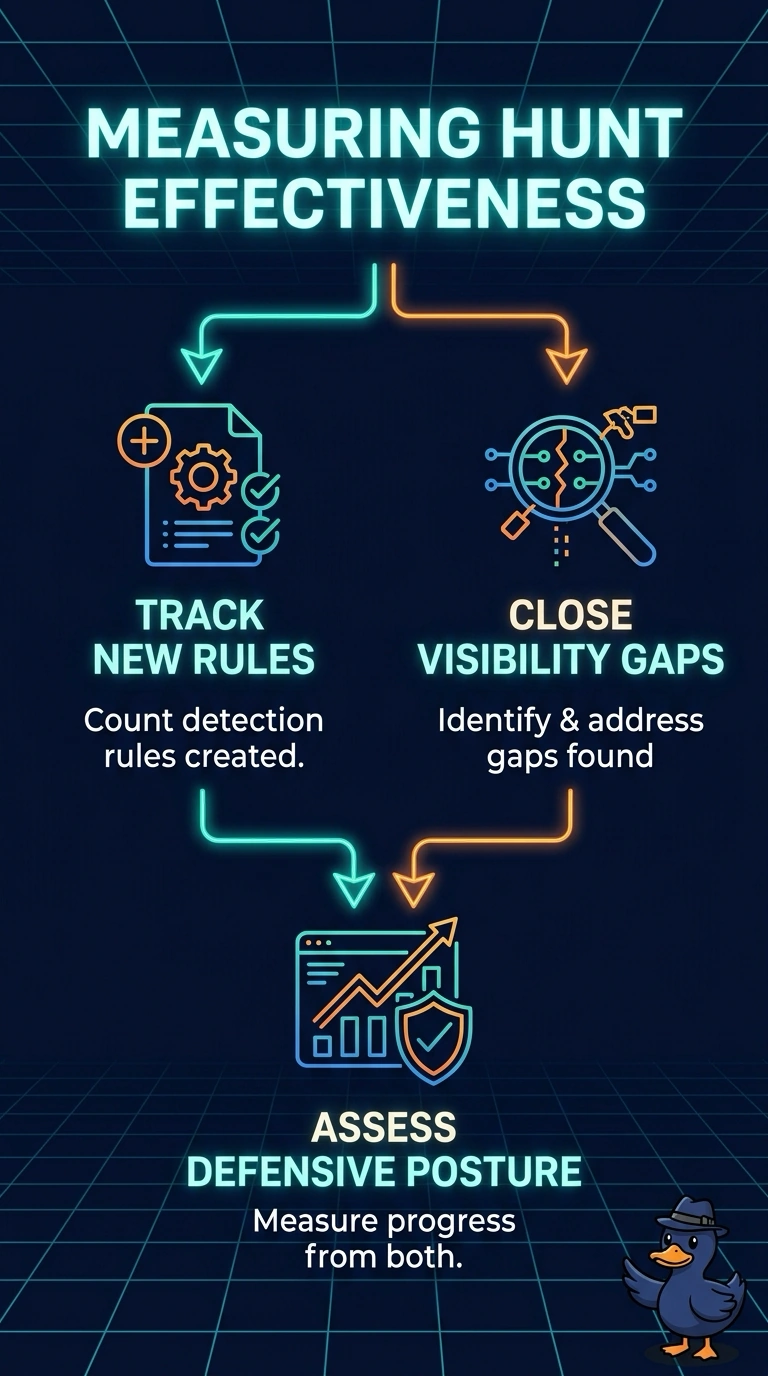
Number of new detection rules and visibility gaps addressed directly measures whether hunting hypotheses translate into durable improvements in monitoring coverage and automated detection capability. Total number of raw firewall events ingested into the SIEM platform only tracks telemetry volume and storage consumption without showing whether analysts can detect adversaries inside that data. Average time spent by analysts reviewing daily phishing reports measures reactive SOC alert triage rather than proactive hypothesis-driven hunting outcomes. Percentage of endpoints running the latest operating system patches reflects vulnerability management hygiene rather than the value produced by threat hunting engagements. As a caveat, counting new rules without tuning them can inflate false-positive noise, so rule quality matters alongside quantity. As an operational check, review your post-hunt tracking board each quarter to verify how many validated findings became tested SIEM detections or closed logging gaps.