
A post-hunt review reveals that intruders evaded perimeter domain-blocklists by using legitimate cloud file-sharing APIs for command-and-control communication. What change to the organization's detection methodology best addresses this gap?
Select an answer to reveal the explanation.
Short Explanation
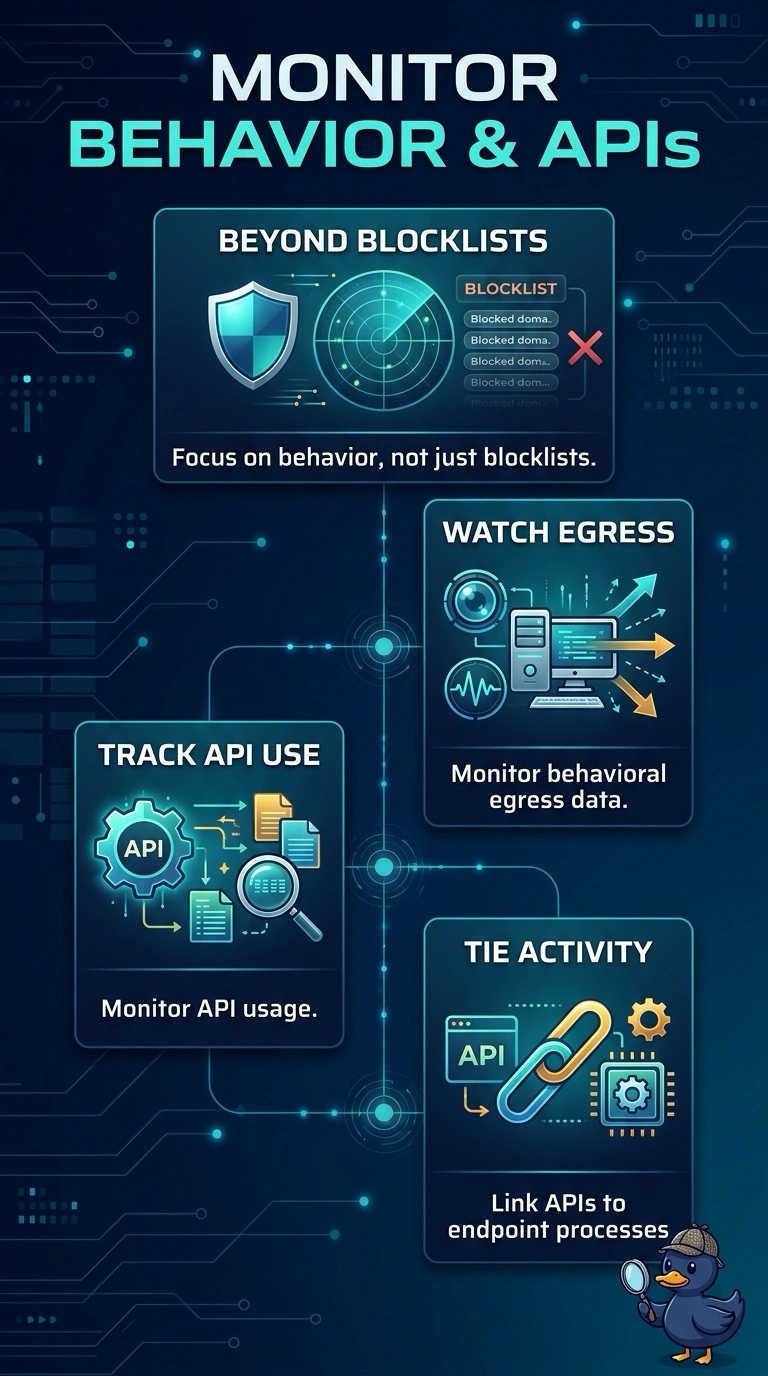
Blocking a major cloud provider is like shutting down the highway because a getaway car used it—you will break the business before stopping the attacker. Your detection methodology has to focus on which local process is talking and how it behaves.
Full Explanation
When adversaries abuse trusted cloud services for command and control, traditional domain reputation blocklists fail because those domains serve legitimate business traffic. To close this gap, defenders must Shift toward behavioral egress and API-usage monitoring tied to endpoint processes, enabling analysts to spot unusual binaries, off-hours polling intervals, or unauthorized tenant access. Choosing to Add the public cloud provider's primary API domains to the global firewall deny list causes widespread operational outages for authorized users and SaaS integrations. Choosing to Rely exclusively on static file hashes of downloaded payloads at the perimeter ignores living-off-the-land and script-based techniques that never match static signatures. Choosing to Increase the frequency of external vulnerability scans against perimeter web servers assesses inbound exposure rather than outbound abuse of legitimate cloud channels. As a caveat, behavioral egress monitoring requires baseline awareness of approved cloud sync clients to avoid overwhelming analysts with benign traffic. Operationally, correlate proxy destination logs with endpoint process-creation telemetry to verify that only approved applications initiate connections to sanctioned cloud APIs.