
After a threat hunt uncovers telemetry blind spots and unmonitored lateral paths in a cloud environment, the lead hunter prepares a briefing for engineering leadership. What should this presentation emphasize to drive durable outcomes?
Select an answer to reveal the explanation.
Short Explanation
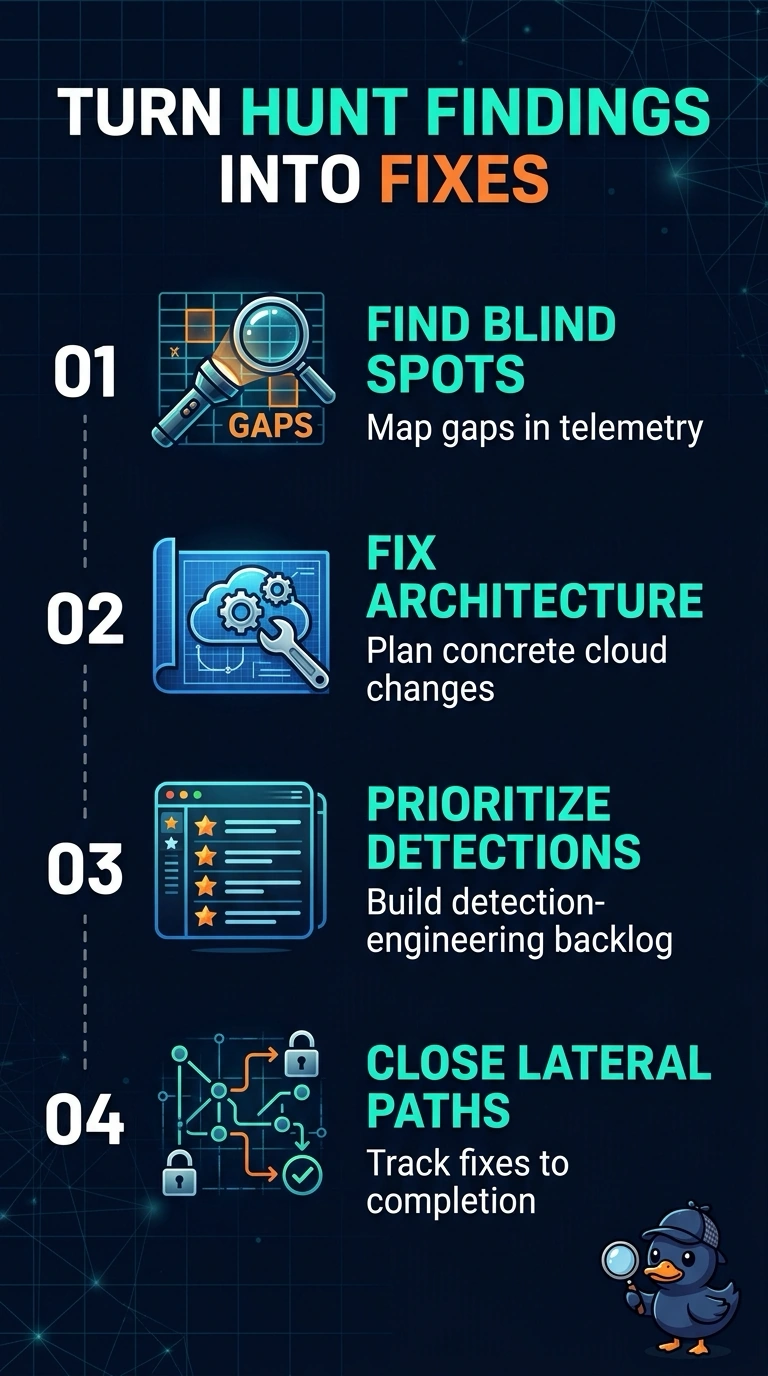
Engineering leaders want to know what to build next, not wade through raw hex output from your terminal. The trap is presenting vanity query counts or low-level packet details that leave teams unsure how to fix the underlying gap. Framing your hunt findings as concrete architectural changes and prioritized backlog items turns discoveries into lasting defense.
Full Explanation
Threat hunting only delivers lasting security outcomes when its discoveries reshape engineering priorities and close systemic blind spots. When briefing engineering leadership, the presentation should highlight Concrete architectural fixes and prioritized detection-engineering backlog items for blind spots so product and platform teams can schedule telemetry onboarding, segmentation changes, and automated rule development. Presenting Raw packet capture excerpts and unparsed hex strings from test hosts overwhelms engineering stakeholders with forensic minutiae that obscure the structural root cause. Reporting A count of total log lines queried during the three-week hunt sprint measures analyst effort rather than defensive improvement and fails to guide remediation. Citing Vendor marketing claims comparing theoretical detection rates in labs offers no actionable insight into the organization's actual cloud visibility gaps. Keep in mind the caveat that engineering teams balance security work against feature delivery, so every proposed backlog item should clearly state the risk reduced. As an operational check, assign an owner and target sprint to each detection or telemetry item and verify closure in the next hunt cycle.