
After a threat hunt confirms unauthorized access to a repository containing regulated customer records, the lead hunter must brief the organization's legal and compliance officers. What should this briefing prioritize?
Select an answer to reveal the explanation.
Short Explanation
Legal and compliance teams need the facts that govern breach notifications, not the soldering iron you used to trace the wire. The trap is handing counsel raw packet details or admin commands when your briefing must clarify what data was touched and when.
Full Explanation
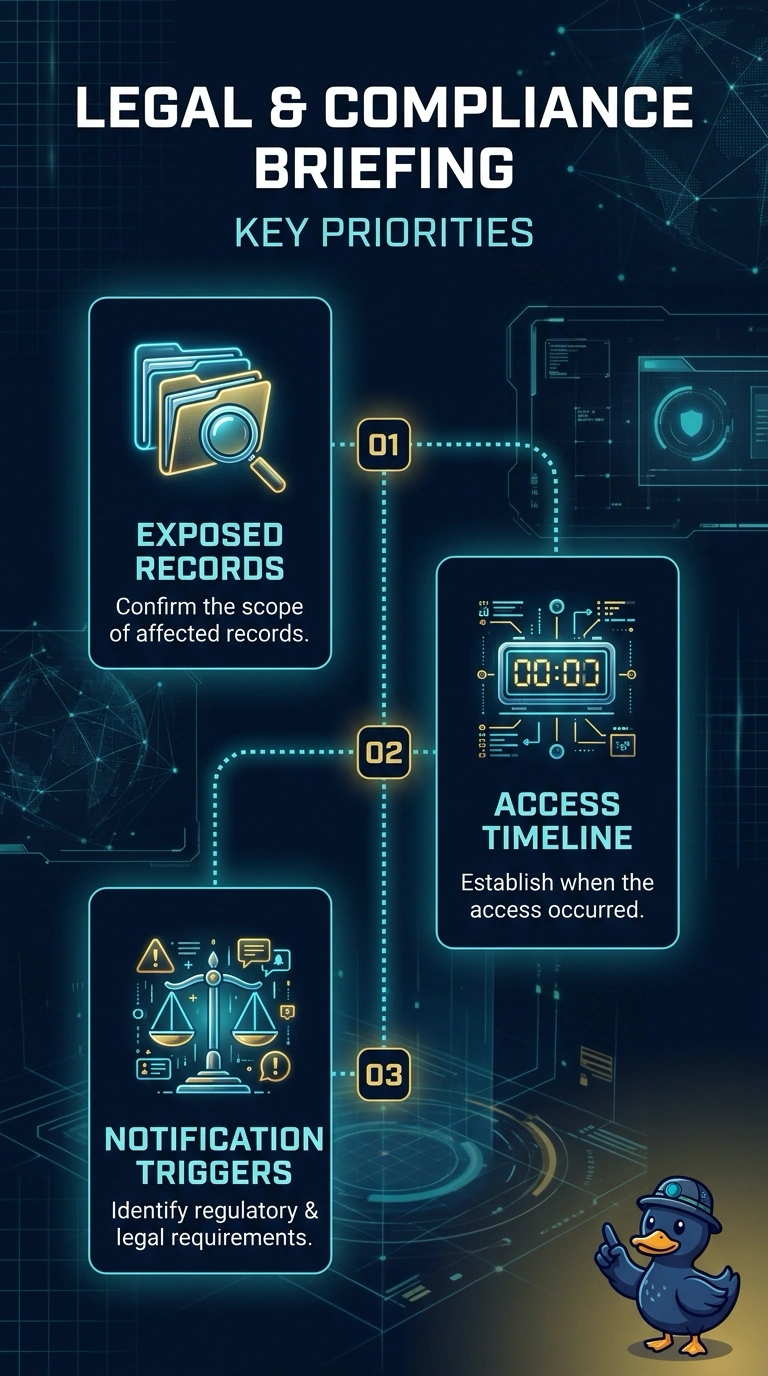
Confirmed scope of exposed records, access timeline, and regulatory notification triggers should be prioritized because legal and compliance officers must determine statutory reporting deadlines, contractual disclosures, and liability exposure. Presenting verified facts about which data classes were accessed and the exact dwell window enables timely, accurate decisions without technical ambiguity. Raw packet captures, hexadecimal payload offsets, and custom YARA signature syntax is incorrect because low-level forensic artifacts belong in technical handoffs for malware analysts and detection engineers rather than compliance briefings. Detailed CPU utilization graphs and SIEM ingestion parser tuning metrics for SOC staff is wrong since platform health statistics do not answer regulatory questions about customer data exposure. Step-by-step command-line instructions for rotating local Linux SSH daemon configuration keys fails because remediation procedures are meant for system administrators executing containment. As a caveat, clearly distinguish confirmed exfiltration from unverified access so counsel does not over- or under-report. For an operational check, cross-reference your timeline against data-classification inventories before finalizing the briefing.