
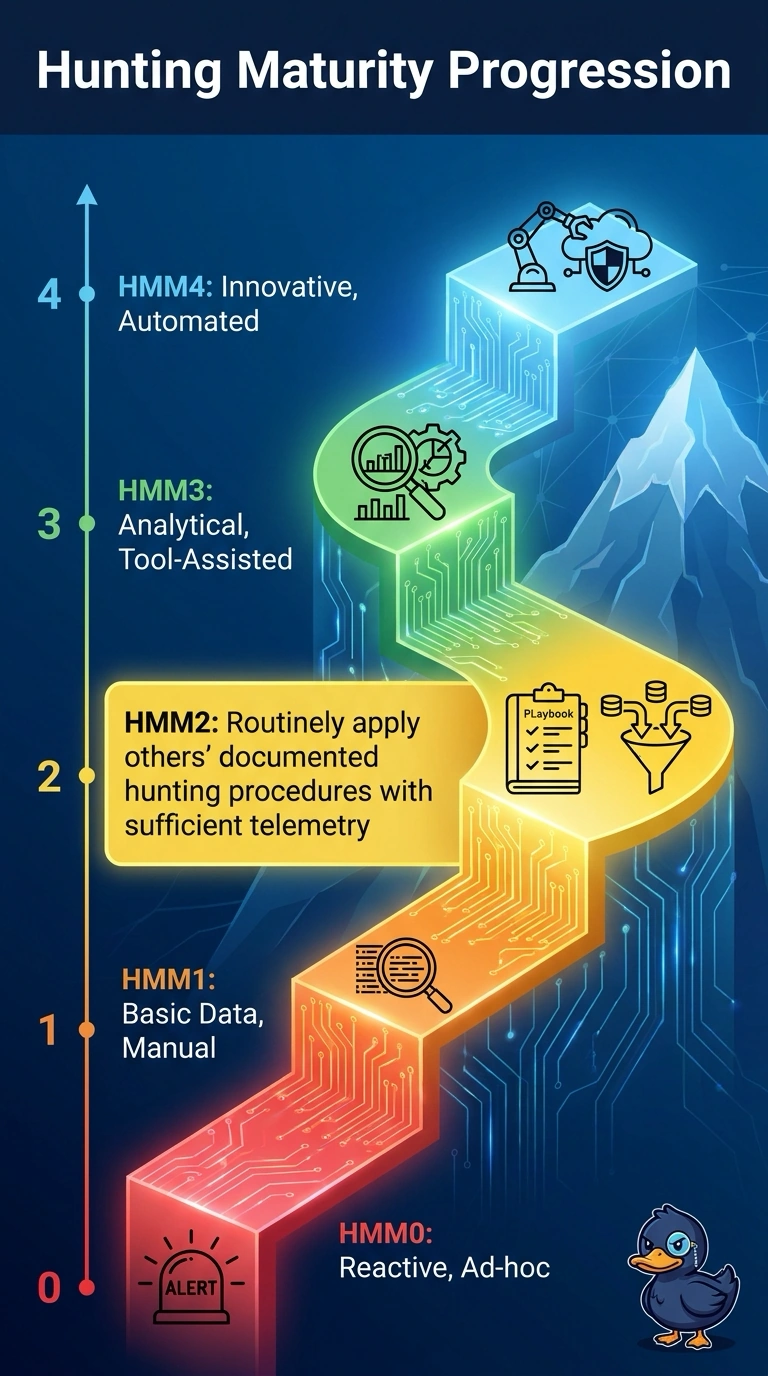
A financial firm's SOC already collects centralized endpoint and network logs and searches them ad hoc when urgent alerts arrive, placing it at HMM1. Which operational change advances the team to Threat Hunting Maturity Model level HMM2?
Select an answer to reveal the explanation.
Short Explanation
You’re on the right track when you routinely use others’ documented hunting procedures with the telemetry you have. That procedural step advances your SOC to HMM2; fully automated containment without analyst review is premature before consistent hunting habits are in place.
Full Explanation
Routinely applying others’ documented hunting procedures with sufficient telemetry is the defining step that moves an organization from HMM1 Minimal to HMM2 Procedural. At HMM2, you apply procedures developed by others; scheduling intelligence-led hunts alone does not establish this level. Deploying fully automated machine learning containment without human analyst review is premature and risky: even HMM4 automation relies on validated analytics rather than blind blocking. Reducing centralized log retention to twenty-four hours degrades visibility and makes multi-day threat hunting impossible. Eliminating proactive hunting and relying strictly on perimeter firewall signatures would regress the program toward HMM0 rather than advance maturity. As a program caveat, reaching HMM2 requires dedicated analyst time so daily alert triage does not crowd out scheduled hunts. As an operational check, audit the SOC calendar and hunt tracker to confirm that intelligence-driven hunts are executed on a recurring cadence and have documented outcomes.