
A security team deploys behavioral SIEM rules designed to catch encoded script execution, yet the rules never fire during testing even though endpoint process-creation events appear in the SIEM. Investigation shows the logs contain executable names but no arguments. What gap caused this failure?
Select an answer to reveal the explanation.
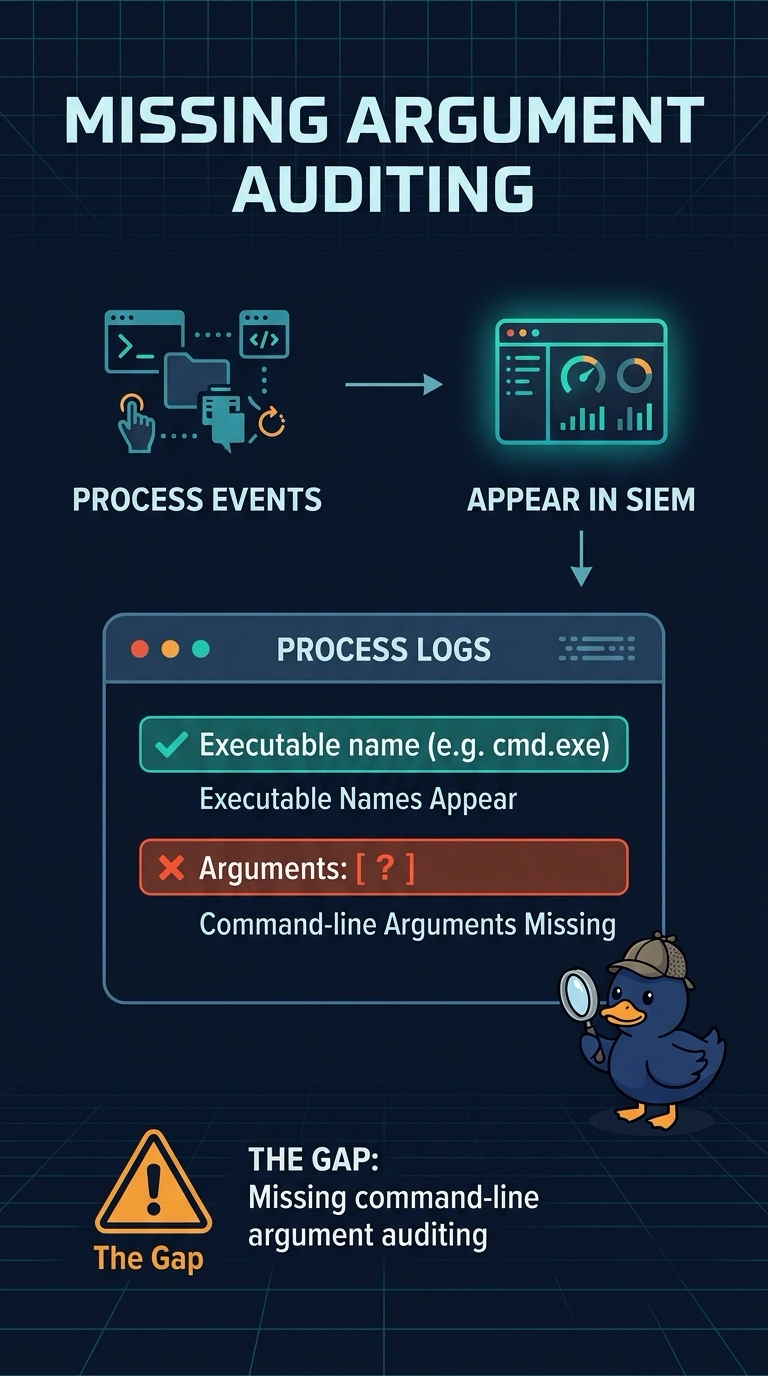
Short Explanation
Your SIEM rules cannot spot suspicious flags or encoded strings if the endpoint never records what followed the executable name. The trap is blaming agent connectivity or DNS blocking when process events are arriving intact, just stripped of their command-line arguments.
Full Explanation
Missing command-line argument auditing in process logs caused the silent failure because behavioral rules searching for encoded parameters or suspicious flags cannot match when only the executable image name is recorded. Complete failure of endpoint agent network connectivity would prevent process-creation events from reaching the SIEM at all, whereas the scenario confirms those events arrive. Overly aggressive firewall blocking of internal DNS traffic disrupts name resolution rather than stripping command-line fields from local endpoint audit records. Expired TLS certificates on external threat intelligence feeds affect feed downloads and indicator enrichment rather than local process telemetry completeness. As a caveat, enabling full command-line logging can occasionally capture sensitive credentials passed as CLI arguments, requiring appropriate SIEM access controls and sanitization. As an operational check, run a benign test script with a distinct harmless flag and verify that the full command-line string appears in the parsed SIEM field.