
After a threat hunt uncovers compromised servers communicating over encrypted HTTPS sessions that perimeter sensors could not inspect, a security architect needs an outcome-focused fix. Which architectural change best restores visibility into encrypted command-and-control traffic?
Select an answer to reveal the explanation.
Short Explanation
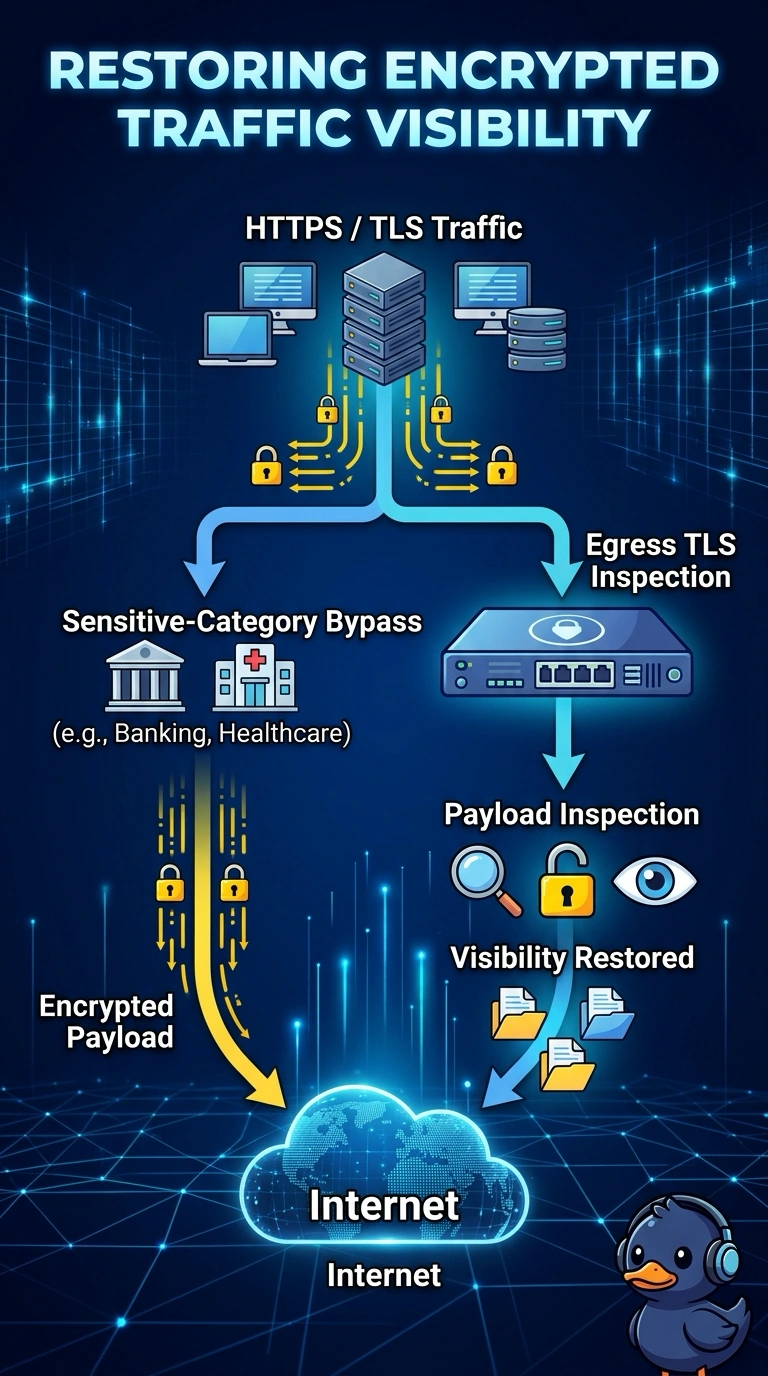
Encryption protects your business traffic, but it also gives command-and-control channels a dark tunnel straight out the door. Terminating TLS at an egress proxy with proper privacy bypasses restores visibility, whereas simply keeping firewall logs longer still leaves payloads opaque.
Full Explanation
To eliminate encrypted visibility blind spots, organizations rely on deploying egress TLS inspection with sensitive-category bypasses to restore encrypted payload visibility. By decrypting outbound web traffic at a controlled egress proxy, network intrusion sensors and data-loss tools can inspect URI paths, headers, and payloads while excluding regulated categories such as healthcare or banking portals. Disabling all outbound HTTPS traffic across every corporate user workstation is operationally unworkable because modern cloud and web services require encrypted transport. Replacing all endpoint detection agents with perimeter packet counters would eliminate vital host-level process context without revealing encrypted packet contents. Increasing firewall log retention without inspecting encrypted sessions preserves metadata longer, yet payloads inside TLS tunnels remain unreadable to signature engines. As a caveat, TLS inspection can break certificate-pinned applications and requires strict key management and privacy governance. For an operational check, verify in proxy logs that decrypted inspection events populate URL and header fields for standard outbound web traffic while excluded categories remain bypassed.