
During a post-incident review, a threat hunting lead discovers that compromised workstations communicated with an external command-and-control server over HTTPS for weeks without triggering any web-proxy content alerts. Proxy logs show the connections occurred, but payload details are missing. Which analytical gap most likely caused this?
Select an answer to reveal the explanation.
Short Explanation
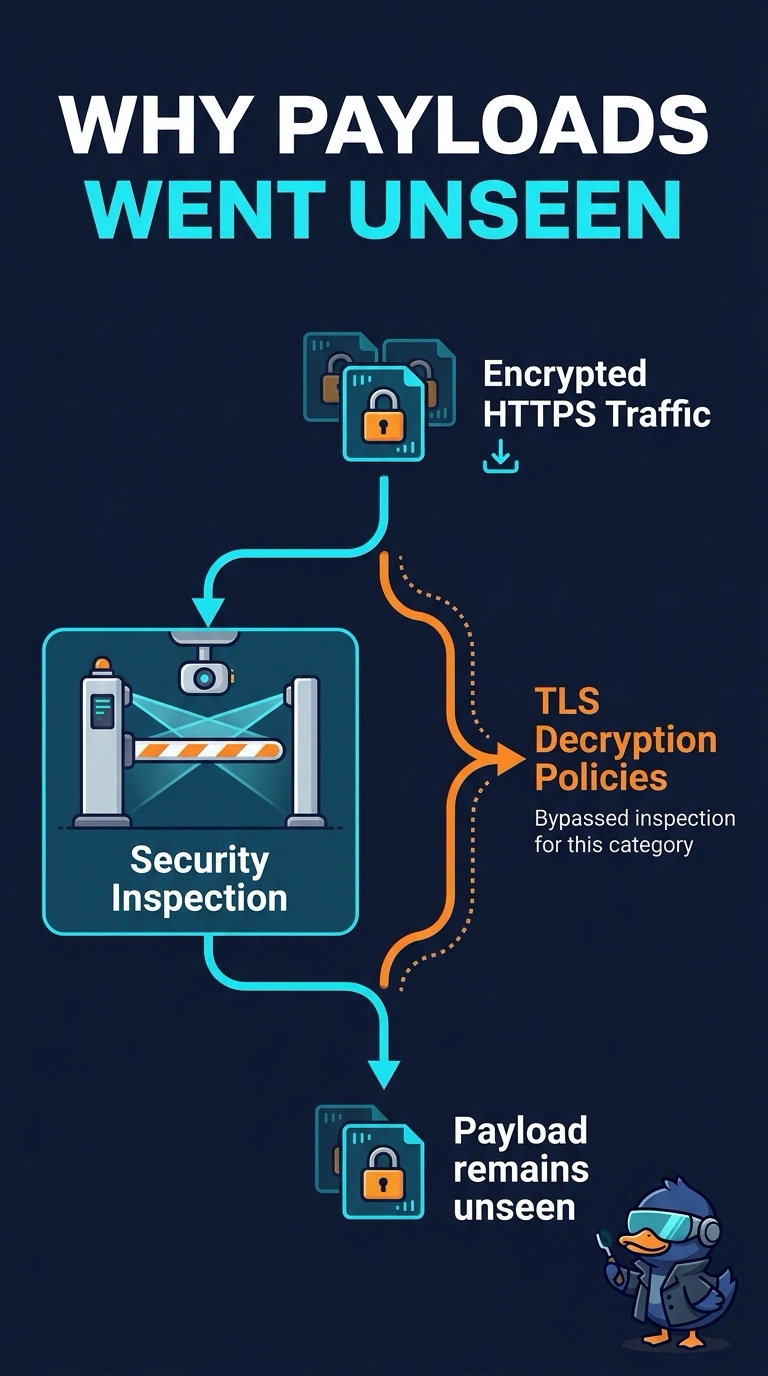
If your proxy logs show a connection happened but cannot see what traveled inside, your TLS inspection has a blind spot—like watching armored trucks pass a tollbooth without checking the cargo. The trap is blaming DNS speed or endpoint browsers when your decryption policy simply let encrypted C2 slip through.
Full Explanation
Modern adversaries routinely wrap command-and-control traffic inside HTTPS to evade signature-based network sensors. TLS decryption policies bypassed inspection for that traffic category explains why the proxy recorded connection metadata while missing payload-level indicators; if a destination category, certificate pinning rule, or exception list skips TLS inspection, content-inspection engines only see opaque encrypted streams. Endpoint hard drives failed to record the browser's local bookmark history is incorrect because malware C2 agents rarely use interactive browser bookmarks and proxy payload visibility depends on network inspection rather than local bookmarks. Internal DNS servers resolved the external domain name too quickly for logging is false because DNS resolution speed does not prevent a web proxy from inspecting subsequent HTTPS payloads. The SIEM dashboard used an incompatible color scheme for HTTPS alert widgets is wrong because visual formatting does not alter whether proxy sensors decrypt and inspect traffic. As a caveat, organizations must still balance TLS decryption coverage against privacy regulations for sensitive categories like healthcare or banking. For an operational check, review proxy decryption bypass lists and verify with test traffic that non-exempt external HTTPS sessions are properly inspected and logged.